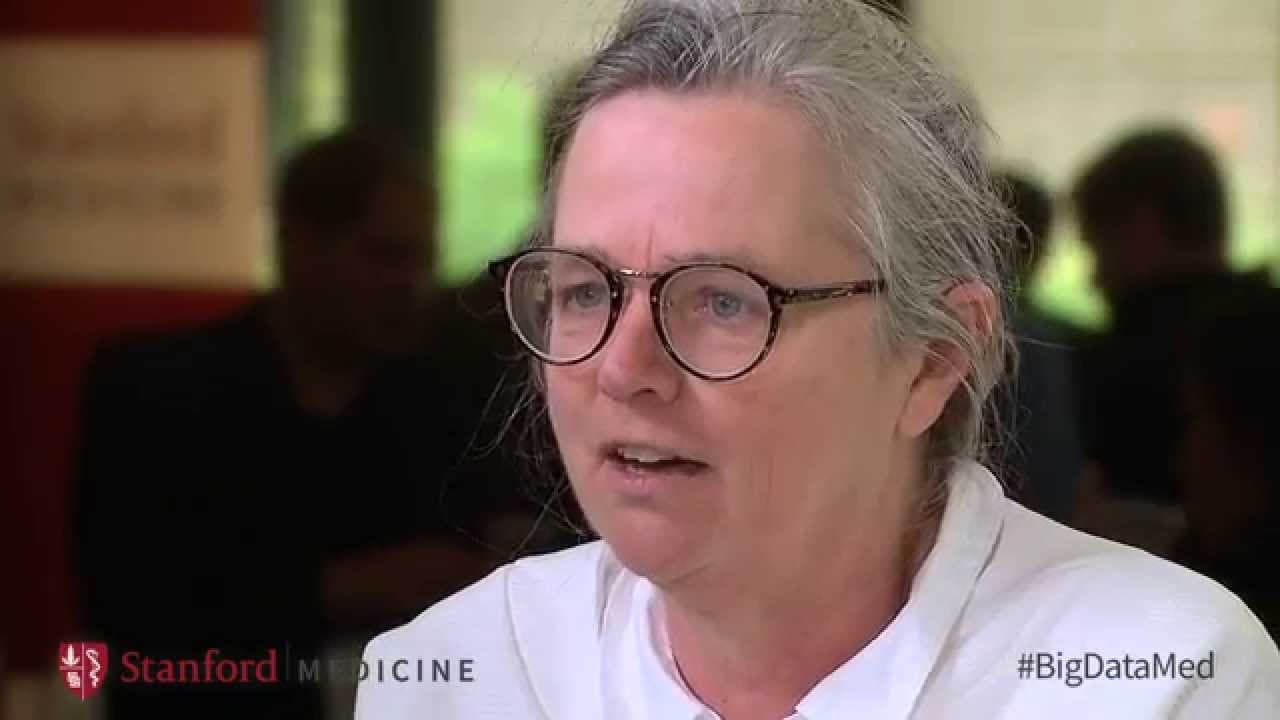
Susan Holmes, Stanford University: Big Data in Biomedicine Conference
TL;DR
Dr. Holmes discusses the challenges and importance of working with heterogeneous data sets in genomics and microbiome research.
Transcript
Dr Holmes thanks so much for joining me well thank you for having me I'm excited that we have this conference right here at Stanford I'm excited too it's it's great what has been your favorite thing that you've seen so far well I haven't seen a lot but I'm interested in genomics so that was something that I was interested in but a lot of people are... Read More
Key Insights
- 👨🔬 Genomics research at Stanford University focuses on the interaction between data analysis and medicine.
- 😃 Big messy data sets in genomics and microbiome research consist of heterogeneous data types, requiring careful integration.
- 🖐️ The microbiome plays a crucial role in gastrointestinal and mental health due to its chemical production in the gut.
- 👨🔬 Research projects include studying antibiotic resistance and identifying which species contribute to negative effects after antibiotics.
- 👨🔬 Personal habits can change based on microbiome research, such as avoiding wheat due to Celiac disease.
- 🧑🏭 Distinguishing between fact and fiction in microbiome research requires rigorous experiment design and data normalization techniques.
- 👤 Developing user-friendly software tools for data analysis helps researchers stay connected with their data.
Install to Summarize YouTube Videos and Get Transcripts
Explore YouTube Video Summarizer or Get YouTube Transcript Extractor
Questions & Answers
Q: What does it mean to work with big messy data sets in genomics and microbiome research?
Big messy data sets refer to heterogeneous data with different types, such as brain scans, genetics, and clinical information. It involves integrating and analyzing various data points to gain insights.
Q: Why is the microbiome important for gastrointestinal and mental health?
The microbiome, considered an organ in the gut, produces chemicals that can affect the brain, overall health, kidneys, and liver. Understanding the combination of species responsible for chemical production is crucial for understanding its impact.
Q: Have you personally changed any habits based on your research on the microbiome?
Yes, after discovering that I had Celiac disease, I stopped eating wheat and experienced improved health. I had previously experienced headaches, which were caused by wheat, showing the connection between the gut and the nervous system.
Q: How do you separate fact from fiction when dealing with the excitement surrounding the microbiome?
Dr. Holmes relies on careful experiment design, data normalization techniques, and the development of software tools to analyze and present the data accurately. She emphasizes the importance of respecting and maximizing the quality of data.
Summary & Key Takeaways
-
Dr. Holmes is interested in genomics and the interaction between data analysis and medicine at the Stanford conference.
-
She describes big messy data sets as heterogeneous data with various types, such as brain scans, genetics, and clinical information.
-
Dr. Holmes is working on projects related to antibiotic resistance and the microbiome's impact on gastrointestinal and mental health.
Read in Other Languages (beta)
Share This Summary 📚
Summarize YouTube Videos and Get Video Transcripts with 1-Click
Try YouTube Summary with ChatGPT & Claude or YouTube Transcript Generator
Explore More Summaries from Stanford 📚





Summarize YouTube Videos and Get Video Transcripts with 1-Click
Try YouTube Summary with ChatGPT & Claude or YouTube Transcript Generator