Analogy as the Core of Cognition

TL;DR
Analogy is central to human cognition, acting as the mechanism that links disparate concepts and ideas. It plays a crucial role in categorization, allowing us to see the common essence between different things. This process is not just limited to simple comparisons but extends to complex thought processes, scientific discovery, and everyday decision-making.
Transcript
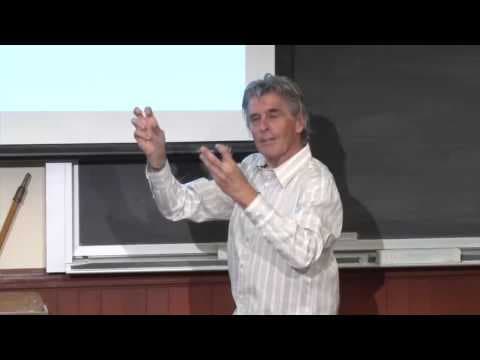
Stanford University thank you for your help with the uh seating um we very much appreciate it uh with a lecture of the fame and stature of Douglas hoffstead we get a fantastic turnout and it's marvelous uh don't worry if someone who was coming to meet you here uh hasn't arrived they will at least hear the lecture out in the lobby so there's a chanc... Read More
Key Insights
- Analogy is the core mechanism that enables categorization, helping us understand and relate different concepts by perceiving their common essence.
- The process of analogy-making is not limited to deliberate reasoning but occurs spontaneously and continuously in our minds.
- Concepts expand through repeated analogies, evolving from basic ideas to complex structures over time.
- Even unique concepts can become categories through a process called pluralization, where they are generalized to include multiple instances.
- The human mind can chunk information hierarchically, allowing us to handle complex concepts as easily as simple ones.
- Word choice is guided by analogy, with every word selection involving a subconscious battle between competing analogies.
- Blends and errors in language often reveal the underlying analogical processes at work in our cognition.
- Strokes of genius, such as scientific discoveries, often arise from analogical thinking, as demonstrated by Einstein's development of the photon concept.
Install to Summarize YouTube Videos and Get Transcripts
Explore YouTube Video Summarizer or Get YouTube Transcript Extractor
Questions & Answers
Q: How does analogy contribute to human cognition?
Analogy contributes to human cognition by serving as the mechanism that allows us to categorize and understand the world. It enables us to perceive common essences between different concepts, facilitating the expansion and evolution of our knowledge. This process is spontaneous and continuous, influencing everything from simple language use to complex scientific discoveries.
Q: What role does analogy play in categorization?
Analogy plays a crucial role in categorization by allowing us to see the shared essence between different things, thus enabling us to group them into categories. This process helps us make sense of new information by relating it to existing knowledge, thereby expanding and refining our conceptual understanding over time.
Q: Can analogy-making occur without conscious reasoning?
Yes, analogy-making often occurs without conscious reasoning. It is a spontaneous and continuous process that happens in the background of our cognition. Many analogies are fleeting and serve no immediate purpose, yet they contribute to our understanding and categorization of the world.
Q: How do concepts expand through analogy?
Concepts expand through analogy by generalizing from specific instances to broader categories. Repeated analogies allow us to see new instances of a concept, leading to an expanded understanding. This process involves pluralization, where a single concept becomes a category encompassing multiple instances.
Q: What is pluralization in the context of analogy and cognition?
Pluralization is the process by which a single concept or instance becomes generalized into a category with multiple instances. It illustrates how analogy allows us to expand our understanding by relating new experiences to existing concepts, thus creating broader categories in our cognition.
Q: How does analogy influence language and word choice?
Analogy influences language and word choice by guiding the selection of words based on the perceived similarities between different concepts. Every word choice involves a subconscious battle between competing analogies, with the chosen word reflecting the essence of the situation as understood through analogy.
Q: What do language errors and blends reveal about cognition?
Language errors and blends reveal the underlying analogical processes at work in our cognition. They highlight the constant competition between different analogies in our minds, showing how our thoughts and language are shaped by the analogical connections we make between concepts.
Q: How do analogies contribute to scientific discoveries?
Analogies contribute to scientific discoveries by allowing researchers to draw connections between seemingly unrelated concepts, leading to new insights and breakthroughs. For example, Einstein's development of the photon concept was driven by an analogy between the behavior of light and the properties of an ideal gas, illustrating how analogical thinking can lead to revolutionary ideas.
Q: What is Douglas Hofstadter’s Fluid Analogies Research Group?
The Fluid Analogies Research Group is a research group led by Douglas Hofstadter and associated with Indiana University’s Center for Research on Concepts and Cognition. Its work grew out of his exploration of fluid concepts, creative analogies, and how people think through substitution and analogy.
Q: What fields does Douglas Hofstadter connect in his study of cognition?
Douglas Hofstadter connects cognition with language, artificial intelligence, translation, art, literature, and potentially neurobiology. His interdisciplinary work investigates how people construct knowledge of the world and how thought relates to language.
Q: What is Gödel, Escher, Bach really about according to Douglas Hofstadter?
Gödel, Escher, Bach is about how animacy arises, rather than simply being a book about three men. It examines links among the features and structures of three very different creative and intellectual accomplishments.
Summary
This video features a lecture by Douglas Hofstadter, a renowned cognitive scientist, on the topic of analogy as the core of cognition. In the lecture, Hofstadter emphasizes that analogy-making is not just a small part of thinking, but rather the driving force behind it. He discusses various examples of analogies, such as the connection between exponents and subscripts, and the concept of shadow and its expansion into various metaphorical uses. Hofstadter also explores the idea that concepts expand through repeated analogies, and that there is no fundamental difference between single entities and categories. He highlights the hierarchical structure of concepts and the ability of the human mind to chunk information. Additionally, Hofstadter discusses the transient and fleeting nature of analogies, which can occur spontaneously and without a specific purpose. He concludes by explaining that analogy-making is a fundamental aspect of human cognition, connecting various concepts and allowing for the expansion of knowledge.
Questions & Answers
Q: What is the main focus of Hofstadter's lecture?
The main focus of Hofstadter's lecture is the role of analogy in cognition.
Q: How does Hofstadter define analogy-making?
Hofstadter defines analogy-making as the perception of common essence between two things. It is the process of recognizing similarities and connections between different mental representations.
Q: What are some examples of analogies that Hofstadter discusses?
Hofstadter discusses various examples of analogies, such as the connection between exponents and subscripts, the concept of shadow and its expansion into metaphorical uses, and the analogy between the Gulf Stream and a shadow created by England.
Q: How does analogy contribute to the expansion of concepts?
Analogies contribute to the expansion of concepts by allowing for the recognition of new instances and the generalization of existing concepts. Through repeated analogies, concepts become larger and more complex, incorporating multiple lower-level concepts.
Q: Is there a fundamental difference between thinking with basic concepts and thinking with complex concepts?
No, there is no fundamental difference between thinking with basic concepts and thinking with complex concepts. Both types of concepts are equally valid and familiar to the human mind, even though they may differ in complexity and hierarchical structure.
Q: Are all categories visual objects?
No, not all categories are visual objects. Categories can include words of all types, including adverbs, prepositions, pronouns, verbs, and nouns. Categories are not limited to sensory experiences and can be evoked by various circumstances.
Q: How does analogy-making retrieve information from different levels of concepts?
Analogy-making retrieves one thing from each level of concepts by connecting different instances and generalizing their shared essence. Analogies allow for the retrieval of information stored in various levels of conceptual hierarchies.
Q: What does Hofstadter mean by the transient and fleeting nature of analogies?
Hofstadter means that analogies can occur spontaneously and briefly, without a specific purpose. They are fleeting connections between different mental representations and can disappear quickly if not observed or interpreted consciously.
Q: What is the overall significance of analogy-making in cognition?
The overall significance of analogy-making in cognition is that it is the driving force behind thinking and the expansion of knowledge. Analogies connect and relate different concepts, allowing for the exploration of new ideas and the generalization of existing knowledge.
Q: How does Hofstadter conclude his lecture?
Hofstadter concludes his lecture by emphasizing the fundamental role of analogy in cognition and the connections it forms between concepts. He highlights the hierarchical structure of concepts, the ability of the human mind to chunk information, and the transient nature of analogies. He concludes that analogy-making is a crucial aspect of human cognition and allows for the expansion of knowledge.
Takeaways
Hofstadter's lecture on analogy as the core of cognition highlights the fundamental role that analogy-making plays in human thinking. Analogies have the power to connect different concepts and generalize knowledge, contributing to the expansion of our understanding of the world. Analogies can occur spontaneously and fleetingly, and they are not limited to visual objects or specific purposes. Concepts can expand through repeated analogies, and there is no fundamental difference between thinking with basic concepts and complex concepts. Analogy-making allows us to retrieve information from various levels of conceptual hierarchies and build larger, more complex mental structures. Overall, analogy-making is essential to human cognition and the exploration of new ideas.
Summary & Key Takeaways
-
Analogy is not a minor aspect of cognition but its core, acting as the 'motor' that drives thought processes. It enables categorization by allowing us to perceive common essences between different things, thus facilitating understanding and communication.
-
Concepts are formed and expanded through analogy, starting from basic ideas and evolving into complex constructs. This process involves chunking, where simpler concepts are combined into larger, more sophisticated ones, allowing us to navigate intricate ideas effortlessly.
-
Analogy-making is a continuous, spontaneous process that influences everything from everyday language use to groundbreaking scientific discoveries. Errors and blends in language highlight the constant analogical battles occurring in our minds, underscoring the centrality of analogy in cognition.
Read in Other Languages (beta)
Share This Summary 📚
Summarize YouTube Videos and Get Video Transcripts with 1-Click
Try YouTube Summary with ChatGPT & Claude or YouTube Transcript Generator
Explore More Summaries from Stanford 📚

Summarize YouTube Videos and Get Video Transcripts with 1-Click
Try YouTube Summary with ChatGPT & Claude or YouTube Transcript Generator