Why Is Citizen Kane Considered a Masterpiece?
TL;DR
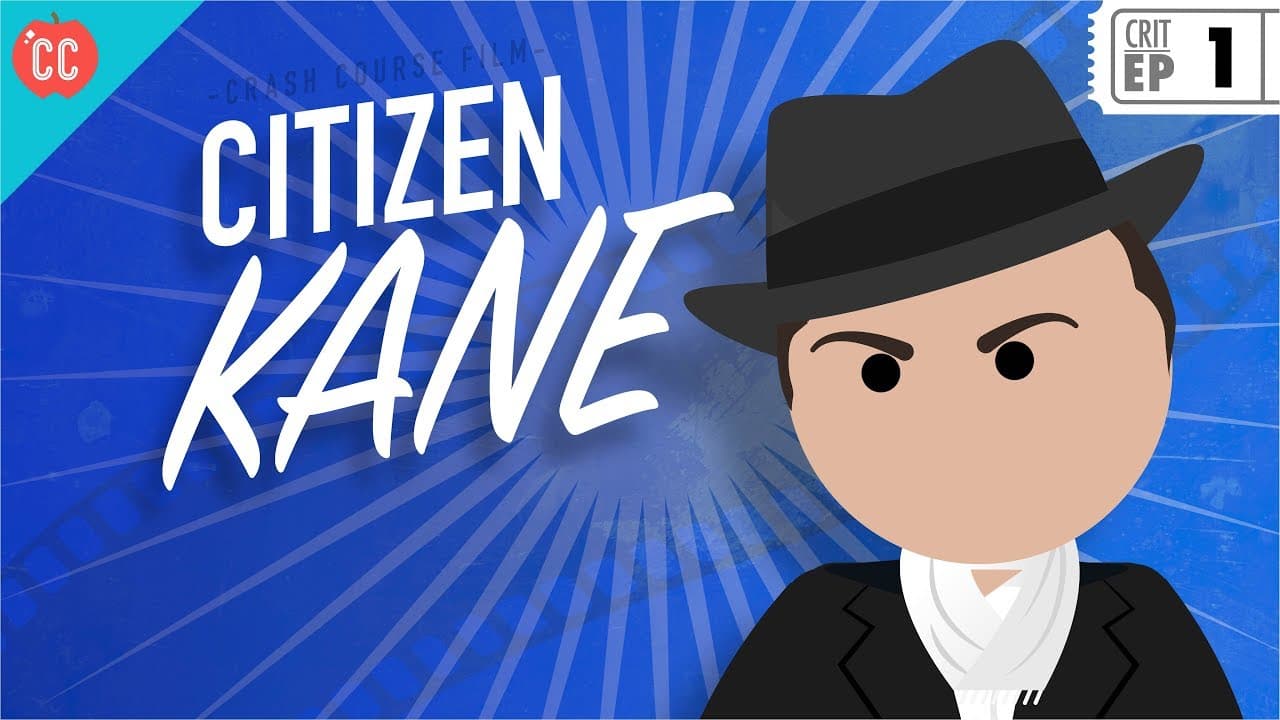
Citizen Kane is acclaimed for its technical innovation, storytelling, and influence on cinema. Orson Welles' ambitious project introduced techniques like deep focus and unique camera angles, reshaping film narrative. Its story of Charles Foster Kane explores themes of power and loss, resonating with audiences and critics alike. Despite initial controversy and mixed reception, it later gained recognition as a cinematic landmark.
Transcript
Thanks to Curiosity Stream for supporting Crash Course. Hello! As you might have noticed, I’m not Craig or Lily. My name’s Michael Aranda, and I’ll be your host for the last third of Crash Course Film. Now, since we’re getting to know each other, let me ask you a question: What’s your favorite film? Maybe there’s a movie that makes you wanna get ... Read More
Key Insights
- Citizen Kane is often cited as one of the greatest films due to its technical innovations and narrative structure.
- Orson Welles, at 23, was given unprecedented creative control, allowing him to experiment extensively.
- The film's use of deep focus lenses was groundbreaking, keeping all elements of a scene in focus simultaneously.
- Citizen Kane's narrative is told through flashbacks, enhancing its storytelling by providing multiple perspectives.
- The film's protagonist, Charles Foster Kane, is loosely based on real-life tycoon William Randolph Hearst.
- Despite initial commercial struggles, Citizen Kane's reputation grew, especially after its re-release in the 1950s.
- Technical tricks, such as blending matte drawings with physical sets, created immersive environments on a limited budget.
- The film's themes of lost childhood and the complexities of power and wealth continue to resonate with audiences.
Install to Summarize YouTube Videos and Get Transcripts
Explore YouTube Video Summarizer or Get YouTube Transcript Extractor
Questions & Answers
Q: How did Citizen Kane influence modern filmmaking?
Citizen Kane influenced modern filmmaking through its innovative use of deep focus, allowing all elements of a scene to remain in focus, and its narrative structure using flashbacks. These techniques offered new ways to tell stories visually and narratively, inspiring filmmakers to experiment with cinematography and storytelling, thus shaping the evolution of cinema.
Q: What are the main themes explored in Citizen Kane?
Citizen Kane explores themes such as the loss of childhood, human flaws, and the complexities of power and wealth. The film delves into Charles Foster Kane's life, highlighting how his pursuit of power and material wealth leads to personal downfall, reflecting broader societal issues and the impact of personal choices on one's legacy.
Q: Why is deep focus significant in Citizen Kane?
Deep focus is significant in Citizen Kane because it allows the audience to see all elements of a scene clearly, from foreground to background. This technique, pioneered by cinematographer Gregg Toland, enables viewers to engage more fully with the film's complex narrative, as it encourages them to notice details and make connections within the story.
Q: What role did Orson Welles play in the creation of Citizen Kane?
Orson Welles played a pivotal role in the creation of Citizen Kane as its director, co-writer, and lead actor. Given unprecedented creative control by RKO, Welles brought innovative ideas and techniques to the film, drawing from his theater background to craft a cinematic masterpiece that combined technical innovation with compelling storytelling.
Q: How does Citizen Kane's narrative structure enhance its storytelling?
Citizen Kane's narrative structure enhances its storytelling by using flashbacks and multiple perspectives to reveal the life of Charles Foster Kane. This approach allows the film to explore different facets of Kane's character and the impact of his actions, creating a rich, multi-layered narrative that engages audiences and invites deeper analysis.
Q: What controversy surrounded the release of Citizen Kane?
The release of Citizen Kane was surrounded by controversy due to its perceived parallels with the life of William Randolph Hearst, a powerful media mogul. Hearst's influence led to attempts to suppress the film, affecting its initial commercial success. However, critical acclaim and subsequent re-releases helped it gain recognition as a cinematic classic.
Q: How does Citizen Kane use visual effects to enhance its narrative?
Citizen Kane uses visual effects, such as matte paintings combined with physical sets, to create immersive environments and enhance its narrative. These techniques allowed the filmmakers to depict grand settings and dramatic scenes on a limited budget, contributing to the film's innovative storytelling and its ability to convey complex themes visually.
Q: Why is Citizen Kane often regarded as the greatest film ever made?
Citizen Kane is often regarded as the greatest film ever made due to its groundbreaking technical innovations, compelling narrative, and lasting influence on cinema. Orson Welles' creative vision introduced new storytelling techniques and visual styles that have inspired generations of filmmakers, making it a benchmark for excellence in filmmaking.
Summary & Key Takeaways
-
Citizen Kane is celebrated for its innovative techniques and complex narrative, which have influenced countless films. Orson Welles' creative control allowed for experiments in cinematography, such as deep focus and unique camera angles, that were revolutionary at the time. The film explores themes of power, loss, and memory through the life of Charles Foster Kane, resonating with audiences and critics for decades.
-
The film's protagonist, Charles Foster Kane, is a powerful newspaper magnate whose life story unfolds through interviews and flashbacks. This narrative style, combined with technical innovations like deep focus lenses and creative set design, set a new standard for storytelling in cinema. Despite initial commercial challenges, Citizen Kane's reputation grew over time, cementing its status as a masterpiece.
-
Orson Welles' Citizen Kane introduced groundbreaking cinematic techniques that reshaped storytelling in film. The use of deep focus, innovative camera angles, and narrative through flashbacks provided a fresh perspective on cinema. The film's exploration of themes like childhood loss and the complexities of wealth and power continues to captivate audiences, making it a timeless piece of cinematic history.
Read in Other Languages (beta)
Share This Summary 📚
Summarize YouTube Videos and Get Video Transcripts with 1-Click
Try YouTube Summary with ChatGPT & Claude or YouTube Transcript Generator
Explore More Summaries from CrashCourse 📚




Summarize YouTube Videos and Get Video Transcripts with 1-Click
Try YouTube Summary with ChatGPT & Claude or YouTube Transcript Generator