JWST CO2 Discovery on Europa // Fullmetal Exoplanet // Lunar Starship Engine Test
TL;DR
Space exploration updates: metal exoplanet, carbon dioxide on Europa, Dyson spheres, and more discoveries.
Transcript
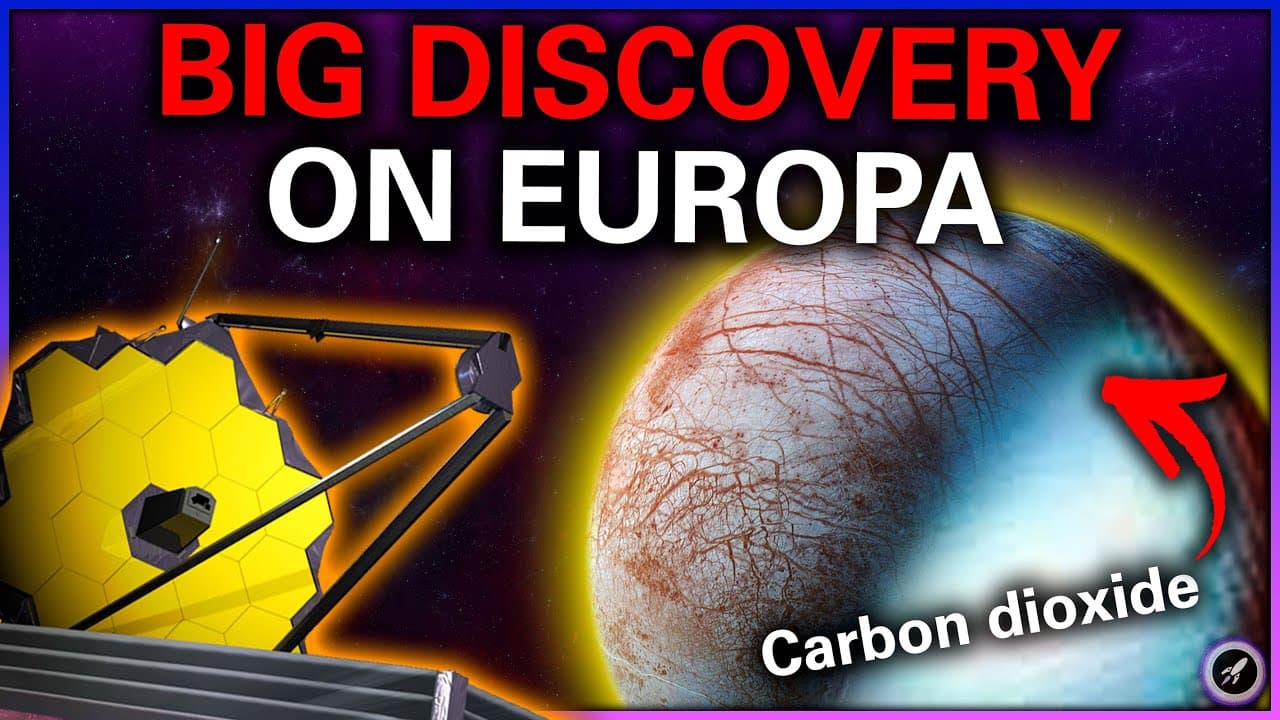
James Webb detects carbon dioxide on the surface of Europa a full metal exoplanet searching for tiny Dyson spheres and learning how black holes eat so quickly all this and more in this week's space bites last week we talked about a hycian world where you've got this planet with a thick hydrogen atmosphere surrounding a very deep water ocean could b... Read More
Key Insights
- 🙂 Glisa 367b's unusual composition sheds light on planet formation and potential catastrophic events in planetary systems.
- 🤨 Europa's unexpected carbon dioxide source raises questions about its geological activity and potential habitability.
- 💨 Techno signatures offer a way to detect advanced civilizations through their industrial emissions in exoplanet atmospheres.
- 👽 Dyson spheres present a novel approach to finding advanced alien societies by detecting their energy-harvesting structures.
- 🖤 Black hole feeding behaviors influence galaxy chemistry and provide insight into supermassive black hole growth in the early universe.
- 🚒 SpaceX's successful engine tests for the lunar Starship show progress in developing systems for future Moon missions.
- 🍳 Record-breaking summer temperatures and their global impact highlight the urgency of addressing climate change.
Install to Summarize YouTube Videos and Get Transcripts
Explore YouTube Video Summarizer or Get YouTube Transcript Extractor
Questions & Answers
Q: How did Glisa 367b form and what makes it unique?
Glisa 367b likely formed from a colossal collision stripping away its mantle, leaving behind its dense metal core, making it a rare metal exoplanet.
Q: How did James Webb Space Telescope detect carbon dioxide on Europa, and what implications does this have?
The detection of carbon dioxide on Europa suggests possible interactions between the moon's subsurface ocean and surface, prompting further investigation into the moon's geology and potential for life.
Q: What are techno signatures, and how can they aid in the search for advanced civilizations?
Techno signatures are indicators of technological civilizations, such as specific atmospheric chemicals produced by industry, offering a new approach to detecting advanced alien societies.
Q: How do Dyson spheres relate to the search for extraterrestrial life, and what new insights have recent studies provided?
Dyson spheres, if built efficiently, could emit specific thermal signatures detectable in space, potentially revealing the presence of advanced civilizations that harness their star's energy.
Summary & Key Takeaways
-
Astronomers found Glisa 367b, an ultra short period metal exoplanet stripped of its mantle and crust, revealing a core of iron and nickel.
-
James Webb Space Telescope detected carbon dioxide on Europa's surface, hinting at possible ocean interactions.
-
The search for techno signatures, Dyson spheres, and black hole feeding behaviors offer insights into potential extraterrestrial life and advanced civilizations.
Read in Other Languages (beta)
Share This Summary 📚
Summarize YouTube Videos and Get Video Transcripts with 1-Click
Try YouTube Summary with ChatGPT & Claude or YouTube Transcript Generator
Explore More Summaries from Fraser Cain / Universe Today Podcast 📚





Summarize YouTube Videos and Get Video Transcripts with 1-Click
Try YouTube Summary with ChatGPT & Claude or YouTube Transcript Generator