English Google Webmaster Central office-hours hangout
TL;DR
Google discusses web search queries and SEO practices.
Transcript
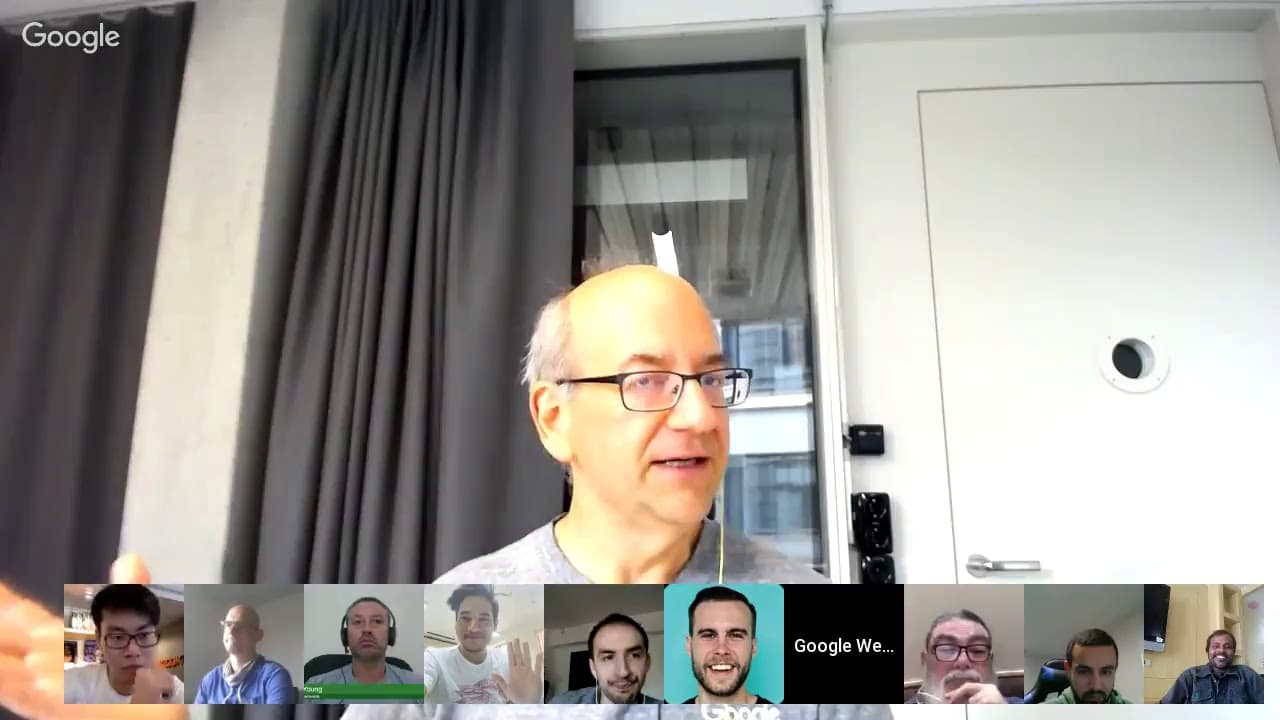
okay.what everyone to today's Google Webmaster central office hours hangouts my name is John Mueller I'm a webmaster trends analyst here at Google in Switzerland and part of what we do is these office hours hangouts where webmasters and publishers can come in and ask any kind of web search related question that maybe we can help answer and it looks... Read More
Key Insights
- Google's algorithms evaluate page relevance individually but also consider overall site quality for ranking.
- The so-called 'Fred update' was not a single update but a series of ongoing improvements to enhance search quality.
- Google assesses Panda based on indexed pages, ignoring non-indexed content, which can be managed using 'noindex' tags.
- Different search engines use varied algorithms, leading to differences in search rankings across platforms.
- Keyword stuffing is discouraged; Google prefers naturally written content without focusing on keyword density.
- Older domains may have an advantage due to established signals, but new sites can outrank them with superior content.
- Alt text for images is beneficial for accessibility and SEO, though not necessary if image ranking isn't desired.
- Canonical links help indicate preferred pages for indexing, unrelated to manual penalties which focus on content quality.
Install to Summarize YouTube Videos and Get Transcripts
Explore YouTube Video Summarizer or Get YouTube Transcript Extractor
Questions & Answers
Q: Can page relevance affect site quality?
Page relevance can influence site quality as Google evaluates individual pages and the overall site. A highly relevant page contributes positively, but it does not single-handedly determine the site's quality. Google examines both individual page content and the collective quality of a website.
Q: What was the impact of the Fred update on e-commerce sites?
The 'Fred update' was not a specific update but part of Google's ongoing improvements to enhance search quality. It wasn't targeted at e-commerce sites specifically. To recover from ranking drops, webmasters should focus on improving overall site quality rather than minor tweaks.
Q: How does Google handle Panda assessments?
Google assesses Panda based on indexed pages, ignoring non-indexed content. Webmasters can manage low-quality content using 'noindex' tags. This ensures that only high-quality content impacts the site's overall quality assessment by Google's algorithms.
Q: Why do search rankings differ across search engines?
Different search engines use varied algorithms, leading to differences in search rankings. Google, Bing, and others have unique methods for crawling, indexing, and ranking, which explains why a site may rank differently on each platform.
Q: Is keyword stuffing considered bad practice?
Yes, keyword stuffing is discouraged by Google. The focus should be on naturally written content that provides value to users. Google's algorithms are designed to understand naturally written text rather than artificially manipulated keyword densities.
Q: Do older domains have an advantage in search rankings?
Older domains may have an advantage due to established signals and recognition. However, new sites can outrank them by offering significantly better content or innovative business models. Google's focus is on content quality and user relevance.
Q: Is alt text necessary for images?
Alt text is beneficial for accessibility and can improve SEO by providing context for images. However, if image ranking in Google Image Search isn't desired, lack of alt text is less of an issue. Alt text also aids users with screen readers.
Q: How do canonical links relate to manual penalties?
Canonical links help indicate preferred pages for indexing and are unrelated to manual penalties. Manual actions focus on content quality and adherence to webmaster guidelines. Canonical links are a tool for managing duplicate content and preferred indexing.
Summary & Key Takeaways
-
Google Webmaster Central office hours provide a platform for webmasters to ask questions about search queries and SEO practices. John Mueller, a webmaster trends analyst at Google, addresses various concerns related to page relevance, algorithm updates, and search engine differences.
-
The session clarifies that Google's 'Fred update' was not a standalone update but part of continuous efforts to improve search quality. Webmasters are encouraged to focus on enhancing overall site quality rather than minor tweaks to recover from ranking drops.
-
Google's evaluation of sites for Panda is based on indexed pages, not the entire site content. Webmasters can use 'noindex' tags to manage low-quality content. Differences in search engine algorithms also explain varying rankings across different platforms.
Read in Other Languages (beta)
Share This Summary 📚
Summarize YouTube Videos and Get Video Transcripts with 1-Click
Try YouTube Summary with ChatGPT & Claude or YouTube Transcript Generator
Explore More Summaries from Google Search Central 📚


Summarize YouTube Videos and Get Video Transcripts with 1-Click
Try YouTube Summary with ChatGPT & Claude or YouTube Transcript Generator