What Is the Nervous System and How Does It Work?
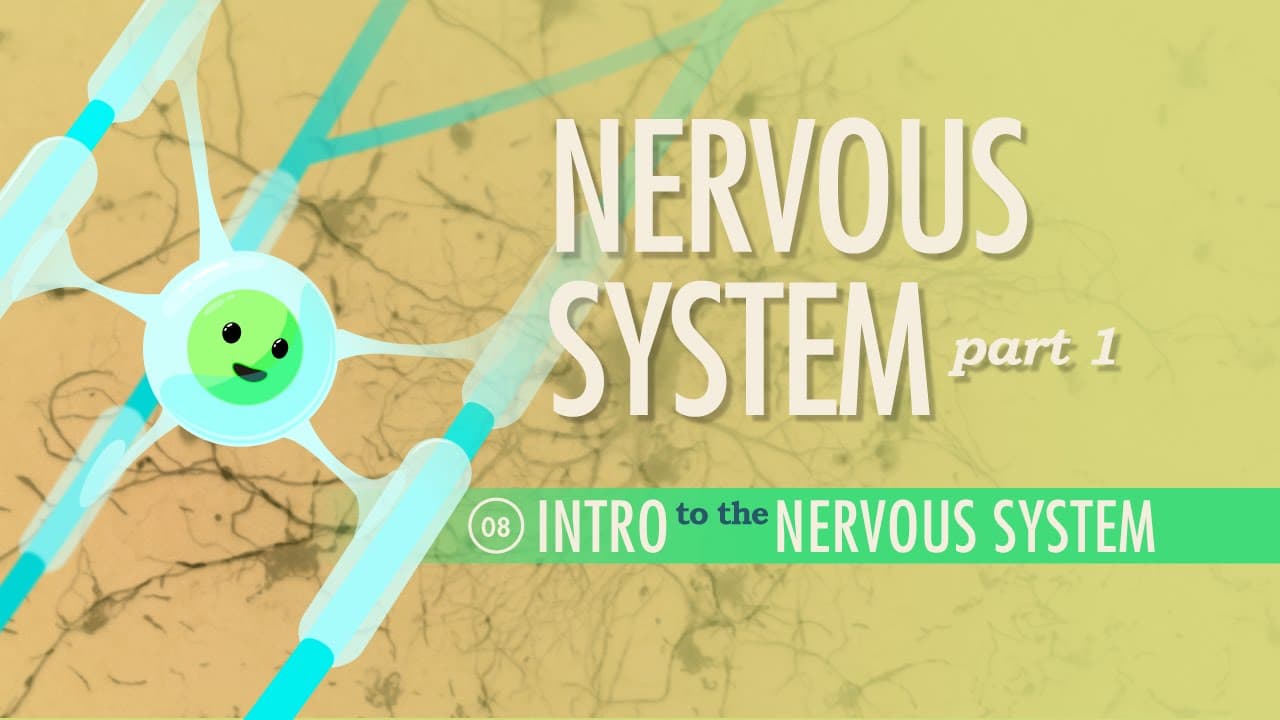
TL;DR
The nervous system controls all bodily functions, including sensory input, integration, and motor output. It consists of the central nervous system (brain and spinal cord) and the peripheral nervous system (nerves connecting to the body), with neurons serving as the main signal transmitters supported by glial cells that provide essential protection and support.
Transcript
This morning was a typical morning for me. I woke up thinking about that dream that I keep having about the guy in the sloth suit, and then I got dressed because I was cold, and then I made some toast with butter ‘cause I was hungry, and then I let the dog out ‘cause she was whining and staring and me, and then I made some tea but I let it cool off... Read More
Key Insights
- The nervous system is essential for controlling all bodily functions, including sensory input, integration, and motor output.
- The central nervous system consists of the brain and spinal cord, acting as the main control center for bodily functions.
- The peripheral nervous system connects the central nervous system to the rest of the body, facilitating communication between the brain and muscles.
- Neurons are specialized cells responsible for transmitting signals, and they are supported by glial cells, which outnumber neurons.
- Different types of glial cells perform various functions, such as anchoring neurons, providing immune defense, and insulating neurons with myelin sheaths.
- Neurons are long-lived, irreplaceable, and have high metabolic demands, requiring abundant glucose and oxygen to function.
- Neurons are classified by structure (multipolar, bipolar, unipolar) and function (sensory, motor, interneurons), each playing a distinct role in the nervous system.
- The nervous system's complexity allows for rapid response to stimuli, such as a spider crawling on the skin, through a coordinated effort of sensory, motor, and interneurons.
Install to Summarize YouTube Videos and Get Transcripts
Explore YouTube Video Summarizer or Get YouTube Transcript Extractor
Questions & Answers
Q: What are the main functions of the nervous system?
The nervous system's main functions include sensory input, integration, and motor output. Sensory input involves detecting stimuli through sensory receptors, integration processes and interprets this information, and motor output involves responding to stimuli by activating muscles or glands.
Q: How is the nervous system organized?
The nervous system is organized into two main parts: the central nervous system (CNS) and the peripheral nervous system (PNS). The CNS includes the brain and spinal cord, while the PNS consists of nerves that connect the CNS to the rest of the body, facilitating communication and response.
Q: What roles do glial cells play in the nervous system?
Glial cells support neurons by providing structural support, protection, and insulation. They help anchor neurons, facilitate material exchange, provide immune defense, and insulate neurons with myelin sheaths, ensuring efficient signal transmission and overall neural health.
Q: Why are neurons considered irreplaceable?
Neurons are considered irreplaceable because they are amitotic, meaning they do not divide and regenerate like other cells. Once neurons assume their roles, they cannot be replaced, making their longevity and proper function crucial for maintaining nervous system health throughout an individual's life.
Q: How do neurons transmit signals?
Neurons transmit signals through electrical impulses that travel along their axons. These impulses are generated by changes in electrical charge across the neuron's membrane, allowing the neuron to communicate with other neurons, muscles, or glands, facilitating rapid responses to stimuli.
Q: What is the difference between sensory, motor, and interneurons?
Sensory neurons (afferent) transmit impulses from sensory receptors to the CNS, motor neurons (efferent) send impulses from the CNS to muscles and glands, and interneurons (association neurons) connect sensory and motor neurons within the CNS, playing a key role in processing and response.
Q: What is the significance of the myelin sheath?
The myelin sheath is an insulating layer around axons, produced by glial cells like oligodendrocytes and Schwann cells. It increases the speed and efficiency of electrical signal transmission along the axon, ensuring rapid and precise communication within the nervous system.
Q: How does the nervous system respond to a spider crawling on the skin?
When a spider crawls on the skin, sensory neurons detect the stimulus and send signals to the CNS. Interneurons process the information, and motor neurons may trigger a reflexive action, such as moving the leg or hand, demonstrating the nervous system's ability to quickly respond to external stimuli.
Summary & Key Takeaways
-
The nervous system is crucial for controlling bodily functions, including sensory input, integration, and motor output. It comprises the central nervous system (brain and spinal cord) and the peripheral nervous system (nerves connecting the body to the brain).
-
Neurons, supported by glial cells, are responsible for transmitting signals throughout the nervous system. Glial cells provide support, protection, and insulation for neurons, playing essential roles in maintaining neural function.
-
Neurons are classified by structure and function, allowing for the organization of sensory input, motor output, and integration processes. This organization enables the nervous system to respond quickly to external stimuli.
Read in Other Languages (beta)
Share This Summary 📚
Summarize YouTube Videos and Get Video Transcripts with 1-Click
Try YouTube Summary with ChatGPT & Claude or YouTube Transcript Generator
Explore More Summaries from CrashCourse 📚





Summarize YouTube Videos and Get Video Transcripts with 1-Click
Try YouTube Summary with ChatGPT & Claude or YouTube Transcript Generator