Annual Percentage Rate vs Annual Percentage Yield
TL;DR
This video discusses how to calculate the annual percentage rate (APR) and annual percentage yield (APY) for different scenarios, highlighting the impact of compounding interest.
Transcript
in this video we're going to talk about how to calculate the annual percentage rate the apr and the apy the annual percentage yield so let's do it through a math problem a credit card company charges 0.5 per month for any unpaid balance calculate the apr so the apr or the annual percentage rate that's equal to the periodic rate which we'll call cap... Read More
Key Insights
- ☠️ The APR is calculated by multiplying the periodic interest rate by the number of periods per year.
- ✋ The APY takes into account compounded interest and can be significantly higher than the APR for higher interest rates.
- ✋ Higher compounding frequency leads to a slightly higher APY due to interest being charged on previous accumulated interest.
- ✋ Payday loans often have high APRs to compensate for the risk of non-repayment.
- 🤱 The APY takes into account both interest charges and fees associated with the loan.
- 🆘 The APY can help borrowers understand the true cost of borrowing and make informed financial decisions.
- ❓ APR and APY calculations are essential in comparing different loan options and understanding the impact of compounding.
Install to Summarize YouTube Videos and Get Transcripts
Explore YouTube Video Summarizer or Get YouTube Transcript Extractor
Questions & Answers
Q: How is the APR calculated for a credit card charging 0.5% interest per month?
The APR is calculated by multiplying the periodic rate (0.5%) by the number of periods per year (12). In this case, the APR would be 6% per year.
Q: What is the difference between APR and APY?
The APR is a simple interest calculation that doesn't take into account compounded interest, while the APY considers compounding. APY can be significantly higher than APR for higher interest rates.
Q: How is the APY calculated from the APR?
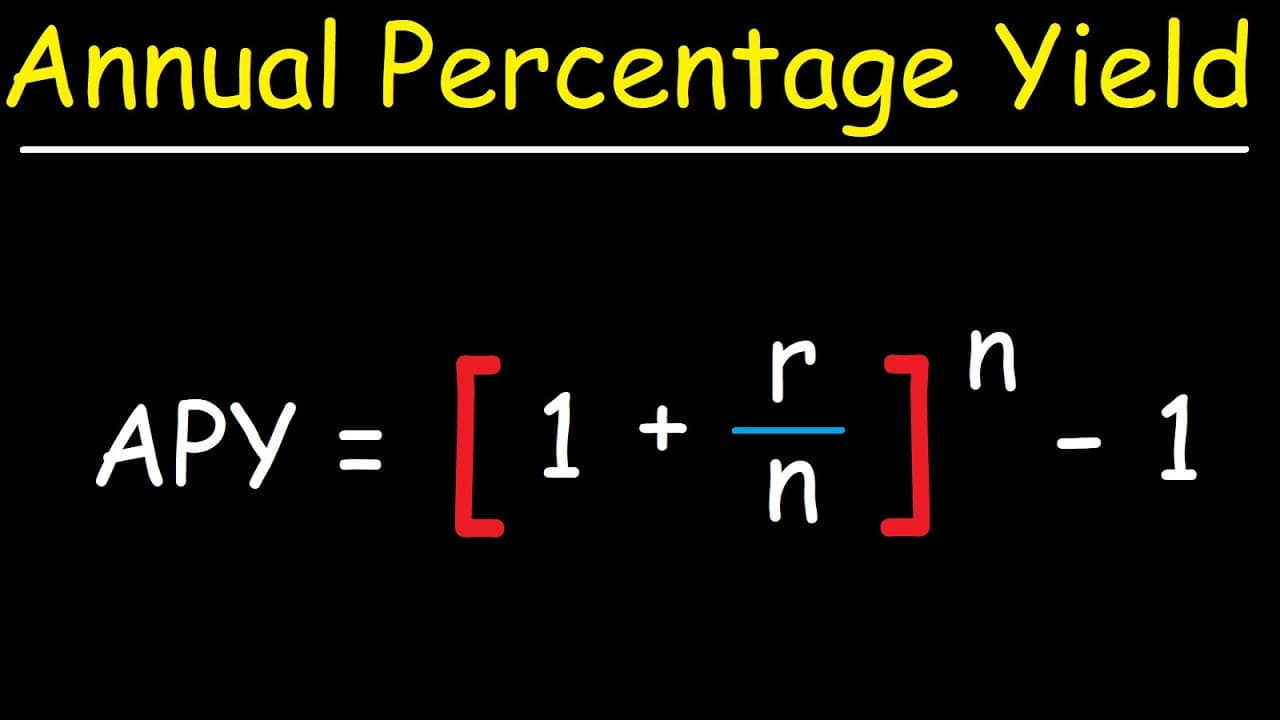
The APY is calculated using the formula 1 + r/n, raised to the power of n-1, where r is the interest rate (APR) as a decimal and n is the number of compounding periods per year.
Q: Why is the APY higher for daily compounding compared to monthly compounding?
Daily compounding results in more frequent compounding periods, allowing the interest to be charged not only on the principal but also on the accumulated interest. This leads to a slightly higher APY.
Summary & Key Takeaways
-
The APR is calculated by multiplying the periodic interest rate by the number of periods per year. For example, if a credit card charges 0.5% per month, the APR would be 6% per year.
-
The APY takes into account the effect of compounded interest and can be calculated using a formula. In the video, the APY is calculated for different scenarios, with higher interest rates resulting in a significant difference between APR and APY.
-
When calculating the APY, the interest rate (APR) is converted into a decimal, divided by the number of compounding periods per year, and then raised to the power of the number of compounding periods minus one.
Read in Other Languages (beta)
Share This Summary 📚
Summarize YouTube Videos and Get Video Transcripts with 1-Click
Try YouTube Summary with ChatGPT & Claude or YouTube Transcript Generator
Explore More Summaries from The Organic Chemistry Tutor 📚





Summarize YouTube Videos and Get Video Transcripts with 1-Click
Try YouTube Summary with ChatGPT & Claude or YouTube Transcript Generator