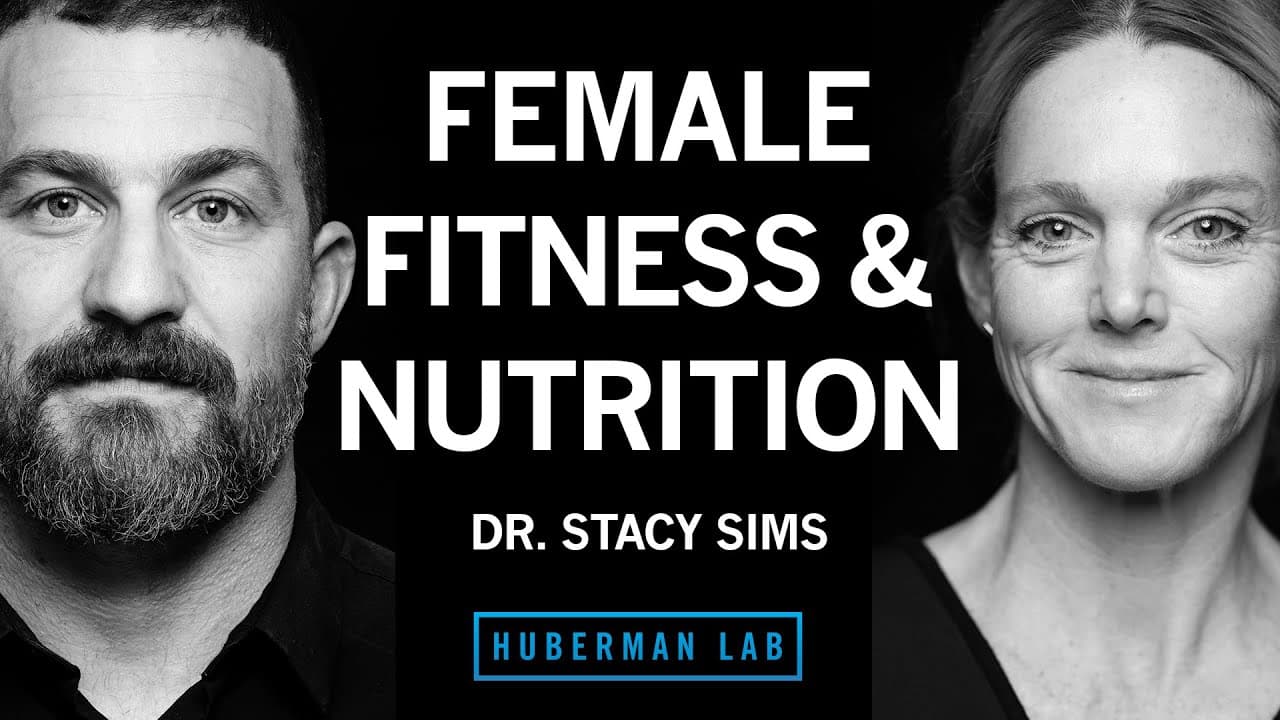
How to Optimize Female Exercise & Nutrition
TL;DR
Hormones significantly influence women's exercise and nutrition needs. Women benefit from fueling before workouts to avoid stress and muscle breakdown. Resistance training is crucial, especially as women age, to maintain strength and bone health. Understanding menstrual cycles helps tailor training and nutrition for better performance and health.
Transcript
welcome to the huberman Lab podcast where we discuss science and science-based tools for everyday life I'm Andrew huberman and I'm a professor of neurobiology and Opthalmology at Stanford School of Medicine my guest today is Dr Stacy Sims Dr Stacy Sims is an exercise physiologist and a nutrition scientist and a world expert in all t... Read More
Key Insights
- Hormones like estrogen and progesterone impact women's training and nutrition needs.
- Women generally should not train fasted as it increases cortisol and stress.
- Pre-workout nutrition enhances performance and reduces stress for women.
- Resistance training is essential for women, especially post-40, to maintain strength.
- Menstrual cycle phases can affect training intensity and recovery in women.
- High-intensity interval training is beneficial but should be balanced with recovery.
- Oral contraceptives can influence mood, performance, and hormonal balance.
- Cold exposure should be moderate for women to avoid excessive vasoconstriction.
Install to Summarize YouTube Videos and Get Transcripts
Explore YouTube Video Summarizer or Get YouTube Transcript Extractor
Questions & Answers
Q: How does fasting affect women differently than men?
Fasting can be detrimental for women, increasing cortisol and stress levels, which may lead to hormonal imbalances and muscle loss. Women have different metabolic needs and benefit from fueling before workouts to maintain energy balance and support hormonal health.
Q: Why is resistance training important for women?
Resistance training is crucial for women to build and maintain muscle mass, increase bone density, and enhance overall strength. This becomes especially important as women age, as it helps counteract the natural decline in muscle mass and bone density, reducing the risk of osteoporosis and improving longevity.
Q: How do menstrual cycles impact women's training?
Menstrual cycles influence training by affecting energy levels, recovery, and motivation. During the low hormone phase, women may perform better and recover faster. Understanding individual cycle patterns can help women optimize their training intensity and recovery strategies for better performance.
Q: What are the effects of oral contraceptives on women's fitness?
Oral contraceptives can alter hormonal balance, potentially affecting mood, energy levels, and performance. They may also impact muscle growth and recovery. Women using oral contraceptives should monitor their body's response to training and adjust their nutrition and exercise accordingly.
Q: How does cold exposure affect women differently?
Women may experience excessive vasoconstriction and stress from very cold exposure. Moderate cold exposure, around 55-56°F, can provide benefits without overwhelming the body's stress response. Women should adjust cold exposure to avoid negative impacts on their health and performance.
Q: What is the role of high-intensity interval training for women?
High-intensity interval training (HIIT) is effective for improving cardiovascular fitness and metabolic health in women. It should be performed with adequate recovery to maximize benefits and prevent overtraining. HIIT can help balance hormonal responses and support body composition goals.
Q: Why should women track their menstrual cycles for fitness?
Tracking menstrual cycles helps women understand their hormonal fluctuations and how these affect energy, recovery, and performance. This knowledge allows women to tailor their training and nutrition to align with their cycle, optimizing health outcomes and exercise effectiveness.
Q: How does caffeine consumption differ for women?
Caffeine can increase cortisol and affect insulin sensitivity, particularly in perimenopausal women. It's important for women to monitor their response to caffeine, especially if they experience hypoglycemia or anxiety. Adjusting caffeine intake and timing can help manage these effects.
Summary & Key Takeaways
-
Women should focus on fueling before workouts to prevent cortisol spikes and muscle loss. Resistance training is crucial for maintaining strength, especially as women age. Understanding menstrual cycles can help tailor exercise and nutrition for optimal performance and health.
-
Hormonal fluctuations throughout the menstrual cycle affect women's exercise and nutritional needs. Women should avoid fasting and instead consume protein before workouts to enhance performance and recovery. Resistance training is vital for long-term health and strength, particularly for women over 40.
-
High-intensity interval training is effective for women but should be combined with adequate recovery. Oral contraceptives can impact mood and performance, and cold exposure should be moderate to prevent excessive stress on the body. Personalized approaches based on individual cycles can optimize health and fitness outcomes.
Read in Other Languages (beta)
Share This Summary 📚
Summarize YouTube Videos and Get Video Transcripts with 1-Click
Try YouTube Summary with ChatGPT & Claude or YouTube Transcript Generator
Explore More Summaries from Andrew Huberman 📚


Summarize YouTube Videos and Get Video Transcripts with 1-Click
Try YouTube Summary with ChatGPT & Claude or YouTube Transcript Generator