What Was the Stono Rebellion and Its Impact?
TL;DR
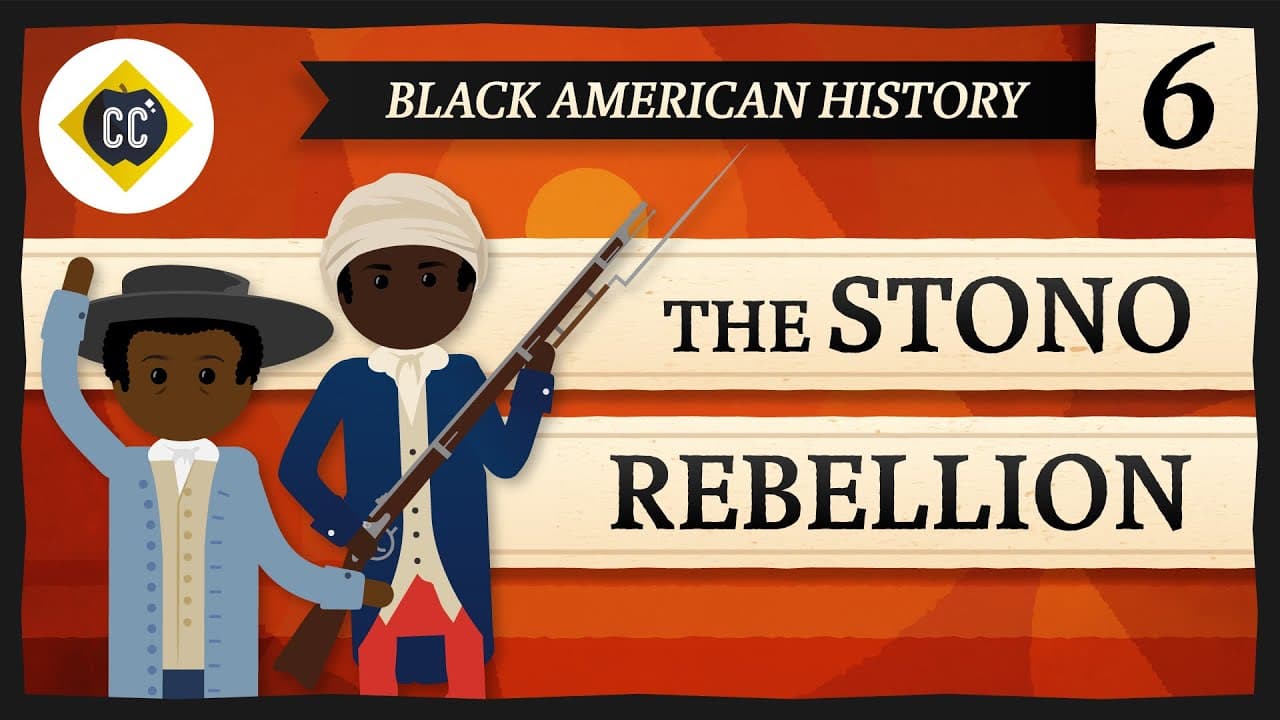
The Stono Rebellion, led by Jemmy in 1739, was a significant revolt by enslaved Black Americans seeking freedom, showcasing their bravery and defiance against slavery. After the rebellion, South Carolina enacted stricter laws to control enslaved populations, including bans on literacy, further entrenching systemic oppression and highlighting ongoing resistance among Black Americans.
Transcript
Hi, I’m Clint Smith, and this is Crash Course Black American History. As we’ve mentioned before, enslaved people resisted their condition in a range of different ways. Oftentimes those ways were small and personal. Slowing down the pace of work, pretending to be sick, purposely misplacing your tools. Things that might slow down the ef... Read More
Key Insights
- 🔶 Enslaved resistance ranged from subtle acts to large rebellions like the Stono Rebellion, reflecting defiance against slavery.
- 🥺 Stono Rebellion led by Jemmy in 1739 highlighted bravery and determination of enslaved Black Americans seeking freedom.
- 🤕 Legislation post-rebellion further oppressed enslaved people through bans on literacy, reinforcing control and preventing uprisings.
- 🥺 White fear of rebellion and loss of power led to harsher laws and policies targeting enslaved individuals.
- ❓ Stono Rebellion's legacy symbolizes the ongoing resistance of Black Americans against oppression throughout history.
- 🤍 The rebellion exposed the brutal consequences of challenging slavery and the systemic oppression enforced by white authorities.
- 🤍 The Stono Rebellion spurred changes in demographics and policies in South Carolina, aiming to maintain white control and prevent future uprisings.
Install to Summarize YouTube Videos and Get Transcripts
Explore YouTube Video Summarizer or Get YouTube Transcript Extractor
Questions & Answers
Q: What were some small acts of resistance by enslaved people prior to larger uprisings?
Enslaved people resisted through acts like slowing work pace, feigning illness, or misplacing tools to assert some autonomy within the oppressive system.
Q: What motivated the Stono Rebellion in South Carolina in 1739?
The growing Black population, Spanish offering freedom in Florida, and harsh treatment under slavery motivated Jemmy and others to revolt for their freedom.
Q: How did white authorities respond to the Stono Rebellion?
White authorities blamed the rebellion on enslaved people and enacted stricter laws, like banning literacy, to maintain control and prevent future uprisings.
Q: What impact did the Stono Rebellion have on the demographics and treatment of enslaved people in South Carolina?
The rebellion led to reduced slave importations, increased European immigration, and some minor improvements in treatment, but slavery continued with oppressive conditions.
Summary & Key Takeaways
-
Enslaved people resisted in various ways from small acts to large uprisings like the Stono Rebellion.
-
Stono Rebellion in 1739 led by Jemmy aimed at freedom, showcasing bravery and defiance.
-
Legislation post-rebellion tightened control over enslaved people, emphasizing illiteracy and reinforcing slavery.
Read in Other Languages (beta)
Share This Summary 📚
Summarize YouTube Videos and Get Video Transcripts with 1-Click
Try YouTube Summary with ChatGPT & Claude or YouTube Transcript Generator
Explore More Summaries from CrashCourse 📚


Summarize YouTube Videos and Get Video Transcripts with 1-Click
Try YouTube Summary with ChatGPT & Claude or YouTube Transcript Generator