Confessions of a Trans-Care Propagandist | Sara Stockton | EP 342
TL;DR
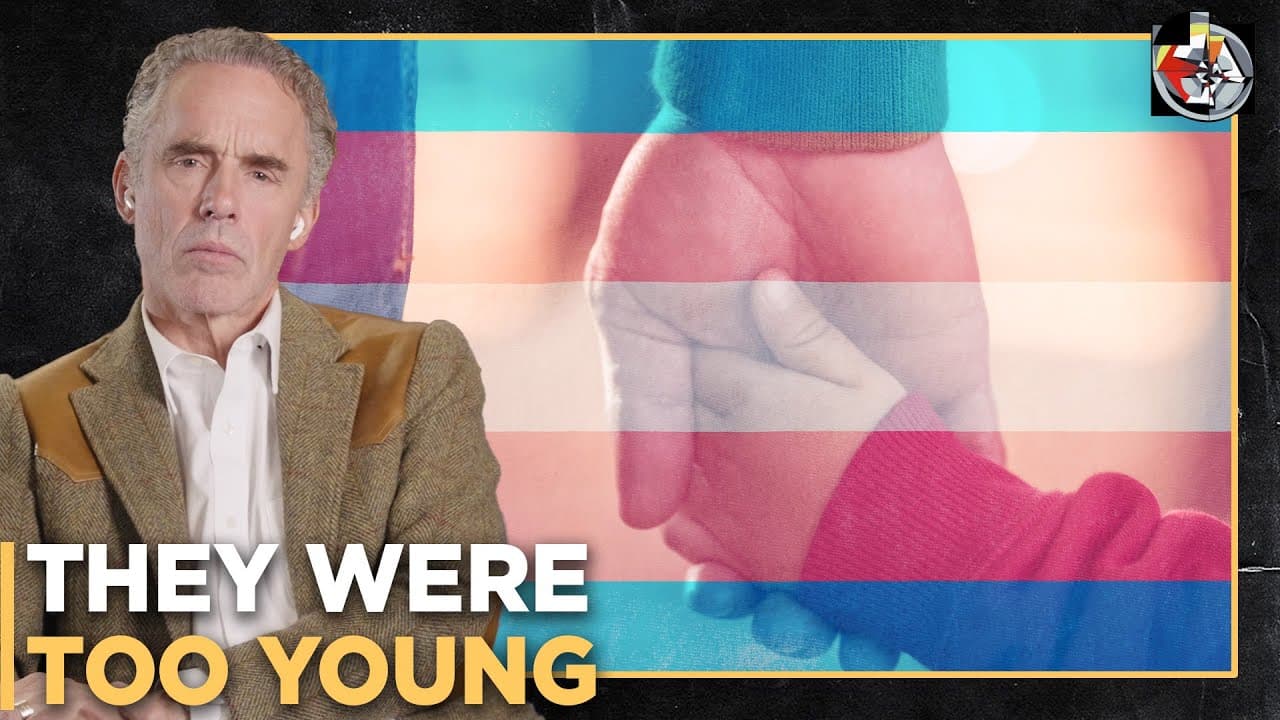
Gender affirmation therapy raises concerns for children, with therapists questioning the rushed diagnostic process and lack of trauma-informed care.
Transcript
should accept yourself just the way you are what does that say about who I should become is that just now off the table because I'm already good enough in every way so am I done or something get the hell up get your act together adopt some responsibility put your life together develop a vision unfold all those manifold possibilities that lurk withi... Read More
Key Insights
- 😍 The rush towards gender affirmation therapy often overlooks the need for comprehensive assessment and trauma-informed care.
- 🤳 The diagnostic process for gender dysphoria has become oversimplified, focusing solely on subjective self-identification rather than a multi-dimensional approach.
- 🧑⚕️ The normalization of terms like "deadnaming" and the expansion of the LGBTQ+ acronym without clear definitions can perpetuate confusion and harm mental health.
Install to Summarize YouTube Videos and Get Transcripts
Explore YouTube Video Summarizer or Get YouTube Transcript Extractor
Questions & Answers
Q: Why is there concern about the rushed diagnostic process for gender affirmation therapy?
Therapists worry that the limited time for assessment fails to consider the long-term consequences of irreversible procedures, potentially placing children at risk.
Q: How has the diagnostic process for gender dysphoria changed over time?
The diagnostic process now focuses primarily on subjective self-identification, disregarding the multi-dimensional aspects of identity and overlooking potential underlying mental health issues.
Q: What concerns arise from the current language usage around gender affirmation therapy?
The normalization of terms like "deadnaming" and the expansion of the LGBTQ+ acronym without clear definitions raise concerns about the impact on mental health and perpetuation of confusion.
Q: Why is there a lack of trauma-informed care in relation to gender affirmation therapy?
Surgeries and procedures are performed without adequate consideration of the potential psychological trauma associated with body dysmorphia and identity confusion.
Key Insights:
- The rush towards gender affirmation therapy often overlooks the need for comprehensive assessment and trauma-informed care.
- The diagnostic process for gender dysphoria has become oversimplified, focusing solely on subjective self-identification rather than a multi-dimensional approach.
- The normalization of terms like "deadnaming" and the expansion of the LGBTQ+ acronym without clear definitions can perpetuate confusion and harm mental health.
- The lack of trauma-informed care in relation to gender affirmation therapy raises concerns about the long-term psychological impact on children.
Summary & Key Takeaways
-
Therapists are concerned about the rush towards gender affirmation therapy, with limited time for comprehensive assessment and consideration of long-term consequences.
-
The diagnostic process for gender dysphoria has become oversimplified, focusing solely on subjective self-identification rather than a multi-dimensional evaluation.
-
The terminology used increasingly normalizes suicide, with the emphasis on "deadnaming" and the careless use of language, such as the "plus" in LGBTQ+.
-
Concerns arise regarding the lack of trauma-informed care, as therapists perform surgeries and procedures without addressing the psychological impact on children.
Read in Other Languages (beta)
Share This Summary 📚
Summarize YouTube Videos and Get Video Transcripts with 1-Click
Try YouTube Summary with ChatGPT & Claude or YouTube Transcript Generator
Explore More Summaries from Jordan B Peterson 📚






Summarize YouTube Videos and Get Video Transcripts with 1-Click
Try YouTube Summary with ChatGPT & Claude or YouTube Transcript Generator