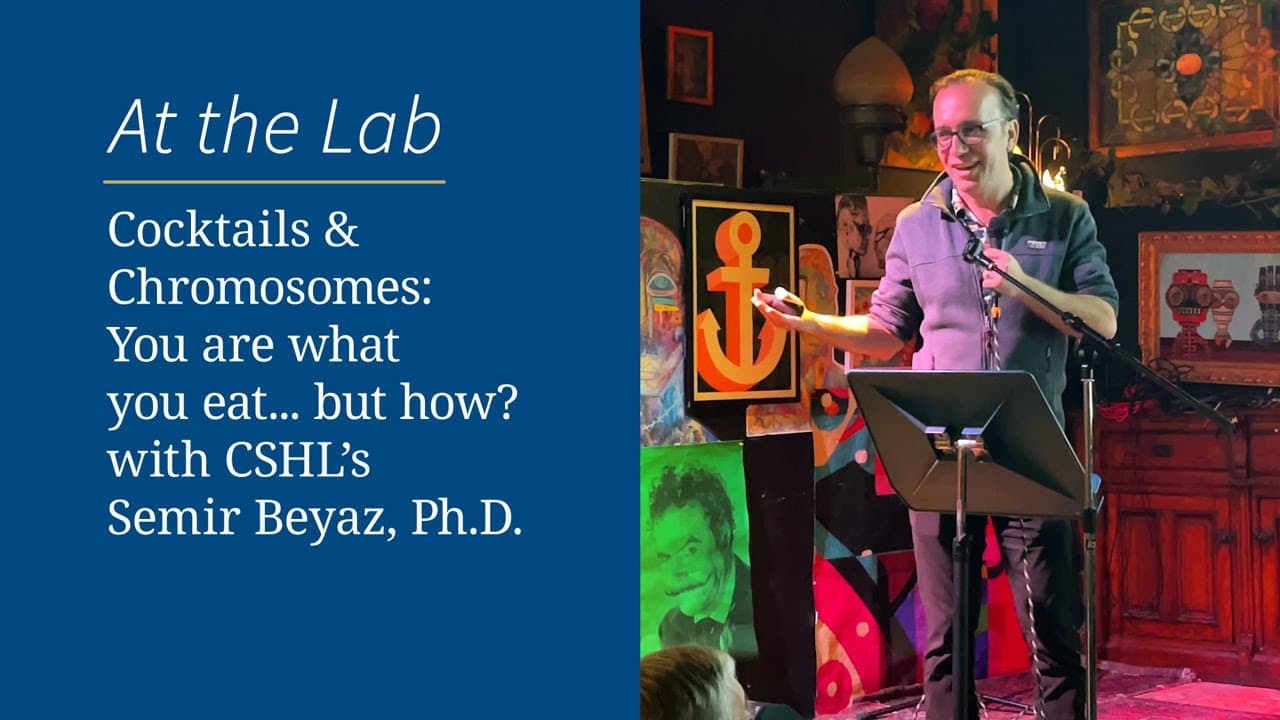
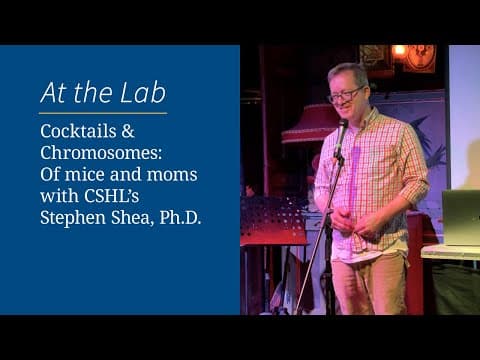
Cocktails & Chromosomes: You are what you eat… but how? with CSHL’s Semir Beyaz, Ph.D.
TL;DR
Exploring how diet affects health at a molecular level.
Transcript
[music] [applause] We’re here tonight to talk about nutrition. And as Ozzie beautifully put it, this is a fundamental aspect of our lives, like nobody can survive without eating anything. And everyone since, you know, they were a little kid, they had to think about what they should eat. And so I grew up in the southeastern Mediterranean, in Turkey.... Read More
Key Insights
- Food is integral to cultural identity and personal identity, influencing who we are at a molecular level.
- Precision nutrition aims to determine how specific foods affect individual health, but the science is still developing.
- Human evolution and dietary habits have significantly influenced modern nutrition, with agriculture playing a pivotal role.
- Malnutrition, including overnutrition and undernutrition, is linked to various diseases like obesity, heart disease, and diabetes.
- Nutrients influence cellular behavior and can potentially affect disease outcomes, highlighting the need for mechanism-based nutrition.
- Understanding the interaction between diet, genetics, and gut microbes is crucial for developing personalized dietary recommendations.
- The complexity of food as medicine lies in its interaction with individual genetics and environmental factors.
- Ongoing research aims to turn food into medicine by understanding the mechanisms of how diet influences health and disease.
Install to Summarize YouTube Videos and Get Transcripts
Explore YouTube Video Summarizer or Get YouTube Transcript Extractor
Questions & Answers
Q: What is the main focus of precision nutrition?
Precision nutrition focuses on understanding how specific foods and nutrients affect individual health at a molecular and cellular level. It aims to uncover the mechanisms by which diet influences health outcomes, taking into account genetic, environmental, and lifestyle factors. This understanding could lead to personalized dietary recommendations tailored to individual needs.
Q: How has human evolution impacted modern nutrition?
Human evolution has played a significant role in shaping modern nutrition. The transition from hunter-gatherer societies to agricultural communities introduced a variety of dietary changes. The development of agriculture allowed for the cultivation of grains and the production of bread, which became staple foods. These changes have influenced our nutritional habits and the types of foods available today.
Q: What are some health issues linked to malnutrition?
Malnutrition, which includes both overnutrition and undernutrition, is linked to several health issues. Overnutrition is associated with obesity, heart disease, diabetes, and certain cancers, while undernutrition can lead to wasting, stunting, and increased susceptibility to infections. Addressing malnutrition is crucial for preventing these diseases and promoting overall health.
Q: Why is it challenging to provide specific dietary recommendations?
Providing specific dietary recommendations is challenging due to the complexity of human biology and the variability among individuals. Factors such as genetics, age, body mass index, and gut microbiome all influence how a person responds to different foods. Additionally, the intricate interactions between nutrients and cellular processes add another layer of complexity, making it difficult to offer one-size-fits-all advice.
Q: How can food potentially be turned into medicine?
Food can potentially be turned into medicine by understanding the mechanisms through which it influences health and disease. By identifying the specific effects of nutrients on cellular behavior and disease outcomes, scientists can develop targeted dietary interventions. These interventions could complement traditional medical treatments, offering a holistic approach to health management and disease prevention.
Q: What role do genetics and gut microbes play in nutrition?
Genetics and gut microbes play a significant role in nutrition by influencing how individuals metabolize and respond to different foods. Genetic variations can affect nutrient absorption, metabolism, and the risk of developing certain diseases. Similarly, the gut microbiome interacts with dietary components, impacting digestion, immune function, and overall health. Understanding these interactions is key to developing personalized nutrition strategies.
Q: What are the challenges of using food as medicine?
The challenges of using food as medicine lie in its complexity and the individual variability in response to dietary interventions. Unlike pharmaceuticals, which have well-defined mechanisms and dosages, food's effects are influenced by numerous factors, including genetics, lifestyle, and environmental conditions. This complexity requires extensive research to identify precise dietary interventions that can be used therapeutically.
Q: What is the future goal of research in precision nutrition?
The future goal of research in precision nutrition is to develop mechanism-based dietary interventions that can be tailored to individual needs. By understanding how specific nutrients affect health at a molecular level, scientists aim to create personalized nutrition plans that optimize health outcomes. This research could lead to the integration of food into medical treatment plans, offering a more comprehensive approach to healthcare.
Summary & Key Takeaways
-
Food is an essential part of human culture and identity, deeply influencing our molecular and cellular makeup. Precision nutrition seeks to understand these influences at a scientific level. However, the complexity of human biology and individual differences makes it challenging to provide specific dietary recommendations.
-
The evolution of human diets from ancient times to modern-day has shaped our nutritional habits. Malnutrition, both overnutrition and undernutrition, is linked to major health issues like obesity and diabetes. Understanding these links can help develop better dietary guidelines.
-
Research in precision nutrition focuses on how nutrients affect cellular behavior and disease outcomes. By studying these mechanisms, scientists aim to develop personalized nutrition strategies that can turn food into medicine, addressing health issues more effectively.
Read in Other Languages (beta)
Share This Summary 📚
Summarize YouTube Videos and Get Video Transcripts with 1-Click
Try YouTube Summary with ChatGPT & Claude or YouTube Transcript Generator
Explore More Summaries from Cold Spring Harbor Laboratory 📚


Summarize YouTube Videos and Get Video Transcripts with 1-Click
Try YouTube Summary with ChatGPT & Claude or YouTube Transcript Generator