What Is Blitzscaling and How Does It Impact Startups?
TL;DR
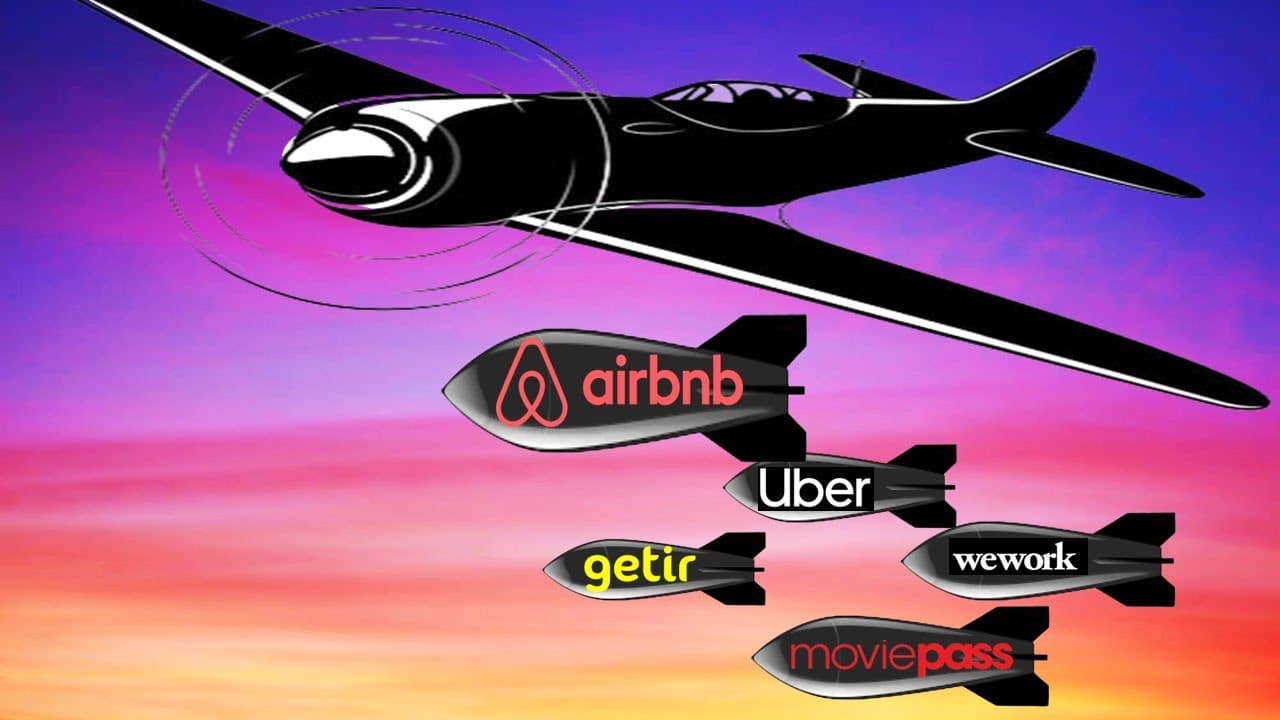
Blitzscaling is a growth strategy focused on rapid scaling, even at a loss, to dominate the market before achieving profitability. It's often applied to network-effects businesses, where value increases with user numbers. Venture capitalists, like SoftBank, significantly fund this approach, leading to faster valuations but raising concerns about long-term sustainability and the social costs of displacing traditional businesses.
Transcript
The race to a $1bn market cap for startup companies has been getting faster and faster over time. It took the average S&P 500 company 20 years to reach a billion-dollar valuation. It took Google eight years, Facebook six years and Uber just three years to surpass this level. It would appear that there are two basic approaches to growing a company. ... Read More
Key Insights
- 👲 The race to a $1bn market cap has accelerated, with companies like Google, Facebook, and Uber achieving this milestone in record time.
- 👨💼 Blitzscaling is a dominant business model in Silicon Valley, prioritizing rapid growth over immediate profitability.
- 🕴️ Network-effects businesses are well-suited for blitzscaling, as the value of their products or services increases with the number of users.
- 🖐️ Venture capital funds, such as SoftBank Vision Fund, play a crucial role in funding and supporting the blitzscaling approach.
- 👨💼 The blitzscaling model can have social costs, such as the displacement of traditional businesses and workers.
- 👨💼 The long-term profitability of blitzscaled companies remains uncertain, and the viability of the business model may be tested during economic downturns.
- 😮 The rise of blitzscaling has led to an increase in well-funded, yet unprofitable companies in various industries.
Install to Summarize YouTube Videos and Get Transcripts
Explore YouTube Video Summarizer or Get YouTube Transcript Extractor
Questions & Answers
Q: What is blitzscaling and how does it differ from traditional approaches to business growth?
Blitzscaling is a strategy that prioritizes rapid growth over immediate profitability. It aims to become the dominant player in an industry by scaling up quickly, even if it means operating at a loss. This approach differs from traditional models in which companies focus on profitability from the start.
Q: What are network-effects businesses, and why are they suited for blitzscaling?
Network-effects businesses are those in which the value of the product or service increases as more people use it. Examples include social media platforms and ride-sharing apps. Blitzscaling is well-suited to these businesses because user acquisition costs decrease as the network grows, and once a company becomes the dominant player, it can increase prices and become profitable.
Q: How does venture capital play a role in the blitzscaling approach?
Venture capital funds like SoftBank Vision Fund provide massive amounts of capital to startups, allowing them to rapidly scale and outcompete rivals. By funding one company in a sector, venture capitalists can give that company an immediate competitive advantage through aggressive marketing and customer acquisition strategies.
Q: What are the potential risks and drawbacks of the blitzscaling approach?
The blitzscaling approach can have negative consequences for competing businesses and workers in traditional industries. It can lead to the destruction of smaller businesses unable to compete with well-funded startups operating at a loss. Additionally, the model may result in unsustainable business practices, such as offering artificially cheap goods and services that may later become more expensive for consumers.
Key Insights:
- The race to a $1bn market cap has accelerated, with companies like Google, Facebook, and Uber achieving this milestone in record time.
- Blitzscaling is a dominant business model in Silicon Valley, prioritizing rapid growth over immediate profitability.
- Network-effects businesses are well-suited for blitzscaling, as the value of their products or services increases with the number of users.
- Venture capital funds, such as SoftBank Vision Fund, play a crucial role in funding and supporting the blitzscaling approach.
- The blitzscaling model can have social costs, such as the displacement of traditional businesses and workers.
- The long-term profitability of blitzscaled companies remains uncertain, and the viability of the business model may be tested during economic downturns.
- The rise of blitzscaling has led to an increase in well-funded, yet unprofitable companies in various industries.
- The potential for universal basic income may align with the logic of blitzscaling, as it would create a minimum income floor for everyone, fueling rapid growth.
Summary & Key Takeaways
-
Blitzscaling, a dominant business model in Silicon Valley, focuses on scaling a company as quickly as possible, even if it initially operates at a loss, with the aim of becoming the dominant player in the industry and eventually achieving profitability.
-
This approach is mainly applied to network-effects businesses, where the value of the product or service increases as the number of users increases.
-
Venture capital funds like SoftBank Vision Fund have embraced blitzscaling by providing massive amounts of capital to startups, giving them a competitive advantage and allowing them to outcompete rivals.
Read in Other Languages (beta)
Share This Summary 📚
Summarize YouTube Videos and Get Video Transcripts with 1-Click
Try YouTube Summary with ChatGPT & Claude or YouTube Transcript Generator
Explore More Summaries from Patrick Boyle 📚






Summarize YouTube Videos and Get Video Transcripts with 1-Click
Try YouTube Summary with ChatGPT & Claude or YouTube Transcript Generator