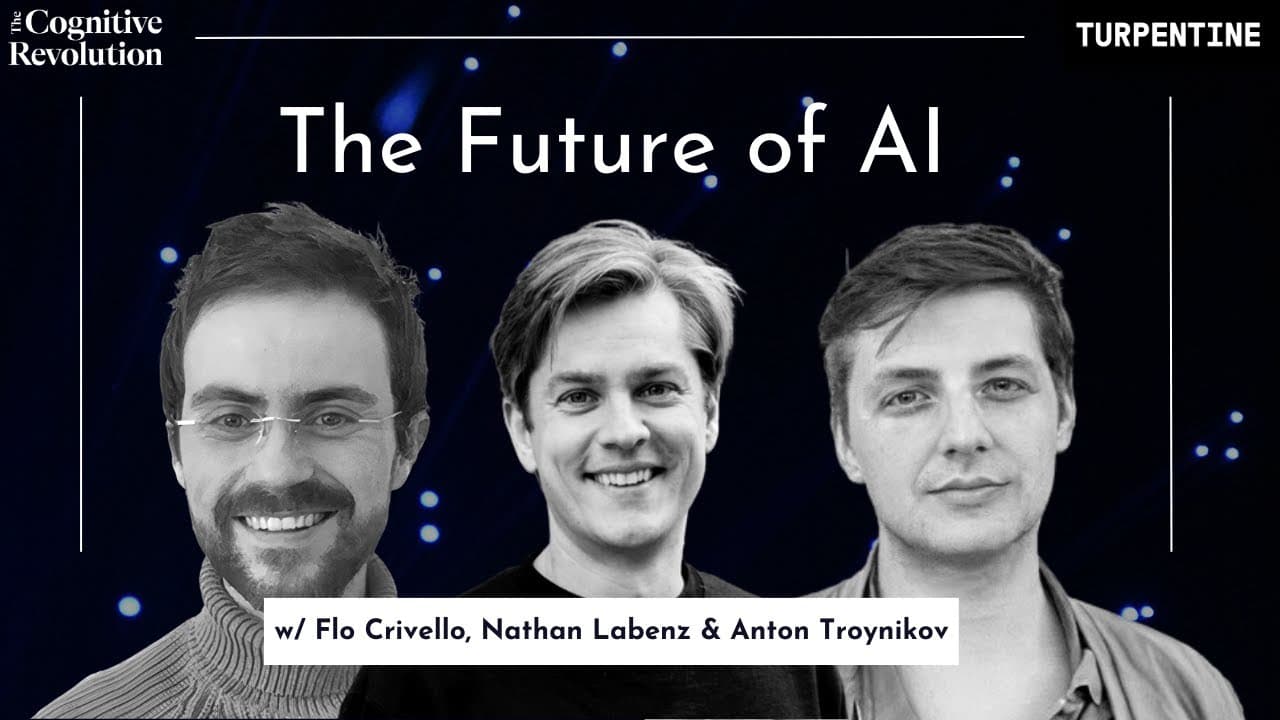
AI open letter debate, pausers + what scares us w/ Anton Troynikov, Flo Crivello+ Nathan Labenz
TL;DR
Debate on AI pause letter, exploring risks and benefits.
Transcript
I've been thinking about basically nothing but gpt4 safety for the last six months since doing the Intensive red teaming I came out of that feeling like it is safe to deploy but really only because it's limited in power they have created something that is awesome it is super useful its power though is still finite you know it's approaching human ex... Read More
Key Insights
- The open letter calls for a six-month pause on AI systems more powerful than GPT-4, emphasizing the need for safety and control.
- There is a debate on whether a pause would actually help or hinder progress, with concerns about setting a precedent for extended pauses.
- Nathan Labenz supports the pause, citing the unpredictability of AI behavior and the potential risks of scaling AI beyond current capabilities.
- Anton Troynikov is skeptical of the pause, arguing that it might be a strategic move by dominant companies to maintain their lead.
- Flo Crivello acknowledges the potential danger of AI but believes that pausing could do more harm than good by delaying beneficial advancements.
- There is a concern about the misuse of AI if it becomes widely available and powerful, potentially leading to societal disruptions.
- The discussion highlights the tension between technological advancement and the need for safety measures to prevent potential harms.
- The potential benefits of AI, such as improved quality of life and economic growth, are significant but must be balanced with safety considerations.
Install to Summarize YouTube Videos and Get Transcripts
Explore YouTube Video Summarizer or Get YouTube Transcript Extractor
Questions & Answers
Q: What is the main argument of the AI open letter?
The AI open letter calls for a six-month pause on the development of AI systems more powerful than GPT-4. The letter emphasizes the need to establish safety protocols and governance structures to ensure that AI advancements are controlled and beneficial to society. It argues that AI systems are becoming increasingly powerful and unpredictable, necessitating a pause to address potential risks.
Q: Why does Nathan Labenz support the pause on AI development?
Nathan Labenz supports the pause because he believes that AI systems like GPT-4 are approaching a threshold where their behavior becomes unpredictable and potentially dangerous. He argues that the pause would allow time to better understand and control these systems, ensuring that future developments are safe and beneficial. Labenz emphasizes the importance of caution as AI approaches human-level intelligence.
Q: What are Anton Troynikov's concerns about the AI pause?
Anton Troynikov is skeptical of the AI pause, suggesting that it might be a strategic move by dominant companies to maintain their lead over competitors. He argues that the timing of the pause is convenient for these companies and questions whether a six-month pause would genuinely address safety concerns. Troynikov emphasizes the need to balance safety with continued technological advancement.
Q: How does Flo Crivello view the potential dangers of AI?
Flo Crivello acknowledges the potential dangers of AI, particularly the risk of misuse if powerful AI systems become widely available. He believes that while there is a risk of existential threat, the pause might do more harm than good by delaying beneficial advancements. Crivello argues that technology historically leads to positive outcomes and that the focus should be on managing risks while continuing progress.
Q: What are the potential benefits of AI discussed in the debate?
The debate highlights several potential benefits of AI, including improved quality of life, economic growth, and the ability to tackle complex global challenges. AI systems like GPT-4 have the potential to revolutionize industries, enhance productivity, and provide solutions to problems that are currently beyond human capabilities. The participants agree that these benefits must be balanced with safety considerations.
Q: What is the concern about the misuse of AI?
The concern about the misuse of AI centers around the possibility of powerful AI systems being used for harmful purposes if they become widely available. There is a risk that individuals or groups with malicious intent could exploit AI's capabilities to cause societal disruptions or even pose existential threats. The debate emphasizes the need for safety measures and governance to prevent such misuse.
Q: How does the debate address the unpredictability of AI behavior?
The debate addresses the unpredictability of AI behavior by highlighting the challenges in predicting how AI systems will perform as they become more powerful. Nathan Labenz points out that while the overall performance of AI systems can be measured, specific behaviors and capabilities may emerge unexpectedly. This unpredictability raises concerns about safety and the need for caution as AI approaches human-level intelligence.
Q: What is the role of government regulation in the AI pause discussion?
Government regulation is a potential factor in the AI pause discussion, with some participants expressing concern about the implications of regulatory intervention. While Nathan Labenz suggests that a pause could be achieved voluntarily by key decision-makers, there is a broader debate about whether government regulation is necessary to enforce safety standards. The discussion highlights the tension between regulatory oversight and the need for continued technological progress.
Summary & Key Takeaways
-
The debate centers around an open letter calling for a six-month pause on AI systems more powerful than GPT-4, with the aim of establishing safety standards. Nathan Labenz supports the pause, citing unpredictability and potential risks, while Anton Troynikov and Flo Crivello express skepticism about its effectiveness.
-
Troynikov argues that the pause might be a strategic move by dominant companies to maintain their lead, while Crivello believes that pausing could hinder technological progress and delay beneficial advancements. Both emphasize the need to balance technological growth with safety measures.
-
The discussion explores the potential dangers and benefits of AI, highlighting the need for caution as AI approaches human-level intelligence. The participants agree on the importance of addressing safety concerns but differ on the best approach to achieve this.
Read in Other Languages (beta)
Share This Summary 📚
Summarize YouTube Videos and Get Video Transcripts with 1-Click
Try YouTube Summary with ChatGPT & Claude or YouTube Transcript Generator
Explore More Summaries from Cognitive Revolution "How AI Changes Everything" 📚



Summarize YouTube Videos and Get Video Transcripts with 1-Click
Try YouTube Summary with ChatGPT & Claude or YouTube Transcript Generator