Are Humans Inherently Good or Evil?
TL;DR
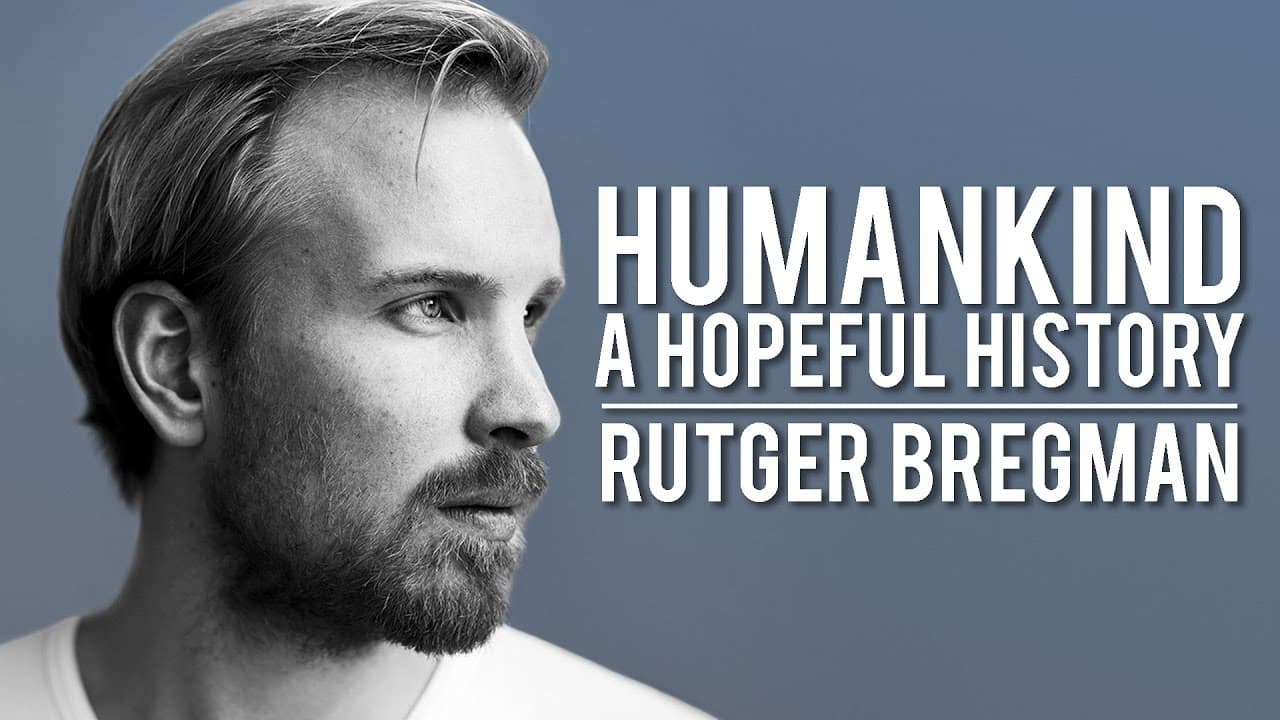
Humans possess an innate capacity for kindness and cooperation, challenging the traditional belief that we are inherently selfish. Empowered by trust, society can evolve towards a more egalitarian structure, as demonstrated by real-life examples like shipwrecked children who thrived together. Understanding our better nature can help dismantle the power dynamics that perpetuate cynicism.
Transcript
throughout history a cynical view of human nature has often been used by those in power to legitimize their power right because if we cannot trust each other that we need managers and CEOs and kings and monarchs and generals right then we need to be kept in control but if we can actually trust each other if most people are pretty decent that means ... Read More
Key Insights
- 🪡 Trusting each other is crucial for a more egalitarian society, challenging the need for hierarchical structures.
- 🫵 Humans have a natural tendency to cooperate and be friendly, disproving the cynical view of human nature.
- ✊ Power can corrupt individuals and disconnect them from empathy and society.
- 🖐️ Psychological and physical distance play significant roles in violence and dehumanization.
- 😤 Examples of self-directed teams in healthcare and participatory democracies exhibit the power of trust and intrinsic motivation.
- ❓ The belief in the inherent goodness of human nature has revolutionary potential in challenging current societal structures.
- 🫵 Human resilience and kindness are often overlooked in favor of negative news, reinforcing the belief in a cynical view of human nature.
- 🛀 The pandemic and historical events have shown that humans are capable of remaining calm, cooperative, and resilient in times of crisis.
Install to Summarize YouTube Videos and Get Transcripts
Explore YouTube Video Summarizer or Get YouTube Transcript Extractor
Questions & Answers
Q: Why has a cynical view of human nature been used by those in power?
The belief that humans are inherently selfish and untrustworthy justifies the need for control and hierarchical systems, allowing those in power to maintain their authority.
Q: How can the belief in the inherent goodness of human nature lead to a more egalitarian society?
If humans are seen as inherently decent, the need for hierarchical systems and oppressive structures diminishes. A more egalitarian society with different forms of organizations, education systems, and prisons can be achieved.
Q: How do individuals in positions of power exhibit less empathy and connection with others?
Power can corrupt individuals and disconnect them from society, leading to a lack of empathy. Brain scans have shown that those in power have less activity in regions associated with empathy.
Q: How does the theory of self-domestication support the idea of human kindness?
Humans display traits similar to domesticated animals, such as thinner bones, smaller brains, and childish features. Cooperation and friendliness, rather than aggression, have been crucial to human survival and success.
Q: Can the belief in human kindness be applied to large organizations and institutions?
Yes, examples such as self-directed healthcare teams have shown that trusting individuals to do their jobs autonomously can improve the quality of services. By focusing on intrinsic motivation and avoiding excessive hierarchy, socially meaningful jobs can be created.
Q: How does increasing psychological and physical distance impact violence and dehumanization?
Humans find it difficult to be violent towards others, especially in close quarters. Increasing distance, both physical and psychological, enables violence, as seen in warfare and dehumanization during genocide or ethnic cleansing.
Q: How has history shown that humans are capable of resilience and kindness during crises?
Examples during World War II and the current pandemic, where people remained calm and demonstrated resilience, challenge the assumption that individuals would panic and engage in destructive behavior. The majority of people show kindness and work towards the collective good.
Q: How does the belief in trust and cooperation challenge the current societal structures?
The current structures, such as the obsession with standardized testing in education or the competitive nature of the financial sector, are based on the assumption that humans are inherently selfish. Trusting people and fostering intrinsic motivation can lead to more fulfilling, socially meaningful jobs and a more egalitarian society.
Summary & Key Takeaways
-
Throughout history, a cynical view of human nature has been used by those in power to justify their control. However, recent scientific evidence suggests that humans are naturally inclined to cooperate and be friendly.
-
The book explores the silent revolution in science that challenges the cynical view of human nature, highlighting the importance of trust and cooperation.
-
The author presents real-life examples, such as the story of kids shipwrecked on an island, to showcase the potential for kindness, resilience, and friendship in humans.
Read in Other Languages (beta)
Share This Summary 📚
Summarize YouTube Videos and Get Video Transcripts with 1-Click
Try YouTube Summary with ChatGPT & Claude or YouTube Transcript Generator
Explore More Summaries from Chris Williamson 📚




Summarize YouTube Videos and Get Video Transcripts with 1-Click
Try YouTube Summary with ChatGPT & Claude or YouTube Transcript Generator