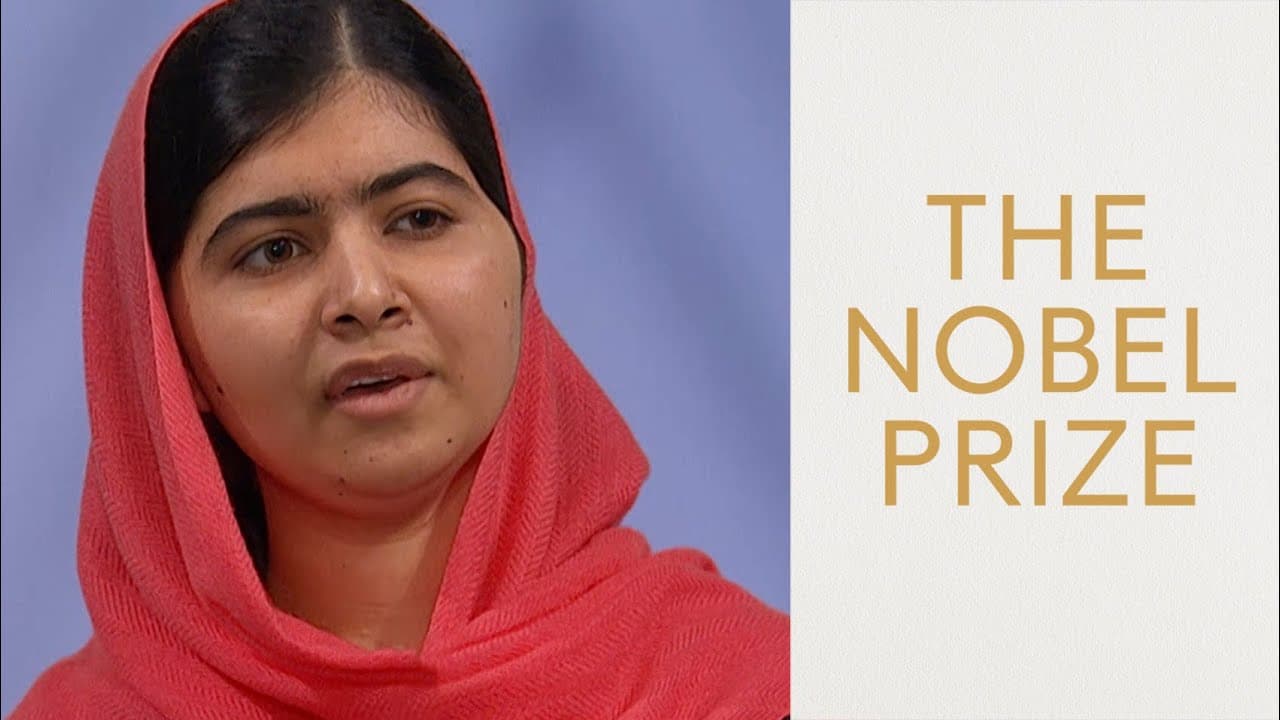
Malala Yousafzai: Nobel Peace Prize Lecture 2014
Transcript
Read and summarize the transcript of this video on Glasp Reader (beta).
Install to Summarize YouTube Videos and Get Transcripts
Explore YouTube Video Summarizer or Get YouTube Transcript Extractor
Summary
In her Nobel Peace Prize acceptance speech, Malala Yousafzai expresses her gratitude for the award and acknowledges the support she has received from people around the world. She credits her parents, teachers, and the influence of Islam for shaping her commitment to education and advocating for children's rights. Despite being shot by the Taliban and facing numerous challenges, she emphasizes that her story is not unique and represents the struggles of many girls globally. Malala asserts that education is a fundamental right and calls on world leaders to prioritize providing quality education for all children. She also announces her dedication of the Nobel Peace Prize money to the Malala Fund, which aims to empower girls through education.
Questions & Answers
Q: Who inspired Malala to be patient and speak the truth?
Malala thanks her mother for inspiring her to be patient and to always speak the truth, which she believes is the true message of Islam.
Q: In what way does Malala feel proud to be the recipient of the Nobel Peace Prize?
Malala expresses her pride in being the first person from Pakistan and the youngest person ever to receive the Nobel Peace Prize. She also humorously mentions that she is proud to be the first recipient who still fights with her younger brothers.
Q: Why does Malala consider herself to be one among many rather than a lone voice?
Malala emphasizes that she is not a lone voice, but rather represents the many girls who are deprived of education. She mentions the names of some of the girls she has met from Pakistan, Nigeria, and Syria, who have faced similar challenges in their pursuit of education.
Q: Why did Malala decide to speak up instead of remaining silent?
Malala believes that remaining silent and waiting to be killed was not an option. She and her friends decided to raise their voices against the injustices committed by the Taliban and to remind them of the teachings of Islam, which condemn violence and emphasize the importance of education.
Q: How did Malala's world change when she was 10 years old?
Malala's peaceful hometown of Swat in Pakistan turned into a place of terrorism when she was 10 years old. Over 400 schools were destroyed, women were flogged, and people were killed. The dream-like atmosphere turned into a nightmare, and education became a crime.
Q: Why does Malala believe that girls should have the right to education?
Malala believes that the more important question is why girls shouldn't have the right to education. She argues that denying girls this right is unjust and limits their opportunities and potential, perpetuating poverty and inequality.
Q: What issues does Malala highlight as ongoing problems in many countries?
Malala points out that many countries still suffer from war, poverty, and injustice. She mentions conflicts, refugee crises, and the lack of education due to social taboos, child marriage, and child labor as some of the issues affecting children's rights globally.
Q: What personal story led Malala to dedicate her Nobel Peace Prize money to the Malala Fund?
Malala shares the story of her school friend, who dreamed of becoming a doctor but was forced into marriage at the age of 12 and became a mother at 14. This personal example reflects the challenges girls face in pursuing their dreams due to gender discrimination and societal barriers.
Q: Where does Malala plan to allocate the funding from the Malala Fund?
Malala intends to use the funding to build schools in her home region of Swat in Pakistan, where there is currently no secondary school for girls. She is committed to providing quality education and opportunities for girls to fulfill their dreams.
Q: What does Malala ask of world leaders in her speech?
Malala calls on world leaders to prioritize education and make it their top priority. She urges them to guarantee free quality primary and secondary education for every child, not just basic literacy. She voices her hope that the sustainable development goals set by the United Nations will reflect this commitment.
Takeaways
In her powerful speech, Malala Yousafzai emphasizes the importance of education as a basic right for all children, particularly girls who face additional barriers. She calls on world leaders to prioritize education and take action to ensure that every child has access to quality education. Malala's story of resilience and determination serves as an inspiration and a reminder that collective efforts are necessary to bring about lasting change.
Read in Other Languages (beta)
Share This Summary 📚
Summarize YouTube Videos and Get Video Transcripts with 1-Click
Try YouTube Summary with ChatGPT & Claude or YouTube Transcript Generator
Explore More Summaries from Nobel Prize 📚

Summarize YouTube Videos and Get Video Transcripts with 1-Click
Try YouTube Summary with ChatGPT & Claude or YouTube Transcript Generator