Products
Features
YouTube Video Summarizer
Summarize YouTube videos
Web & PDF Highlighter
Highlight web pages & PDFs
Chat with PDF
Ask any PDF questions with AI
Ask AI Clone
Chat with your highlights & memories
Audio Transcriber
Transcribe audio files to text
Glasp Reader
Read and highlight articles
Kindle Highlight Export
Export your Kindle highlights
Idea Hatch
Hatch ideas from your highlights
Integrations
Obsidian Plugin
Notion Integration
Pocket Integration
Instapaper Integration
Medium Integration
Readwise Integration
Snipd Integration
Hypothesis Integration
Apps & Extensions
Chrome Extension
Safari Extension
Edge Add-ons
Firefox Add-ons
iOS App
Android App
Discover
Discover
Ideas
Discover new ideas and insights
Articles
Curated articles and insights
Books
Book recommendations by great minds
Posts
Essays and notes from readers
Quotes
Inspiring quotes collection
Videos
Curated videos and summaries
Explore Glasp
Glasp Newsletter
Weekly insights and updates
Glasp Talk
Interview series with great minds
Glasp Blog
Latest news and articles
Glasp Use Cases
Learn how others use Glasp
Build & Support
Glasp API
Access Glasp's API for developers
MCP Connector
Connect Glasp to Claude & ChatGPT
Community
Glasp Reddit Community
Students
Student discount and benefits
FAQs
Frequently Asked Questions
AboutPricing
DashboardLog inSign up

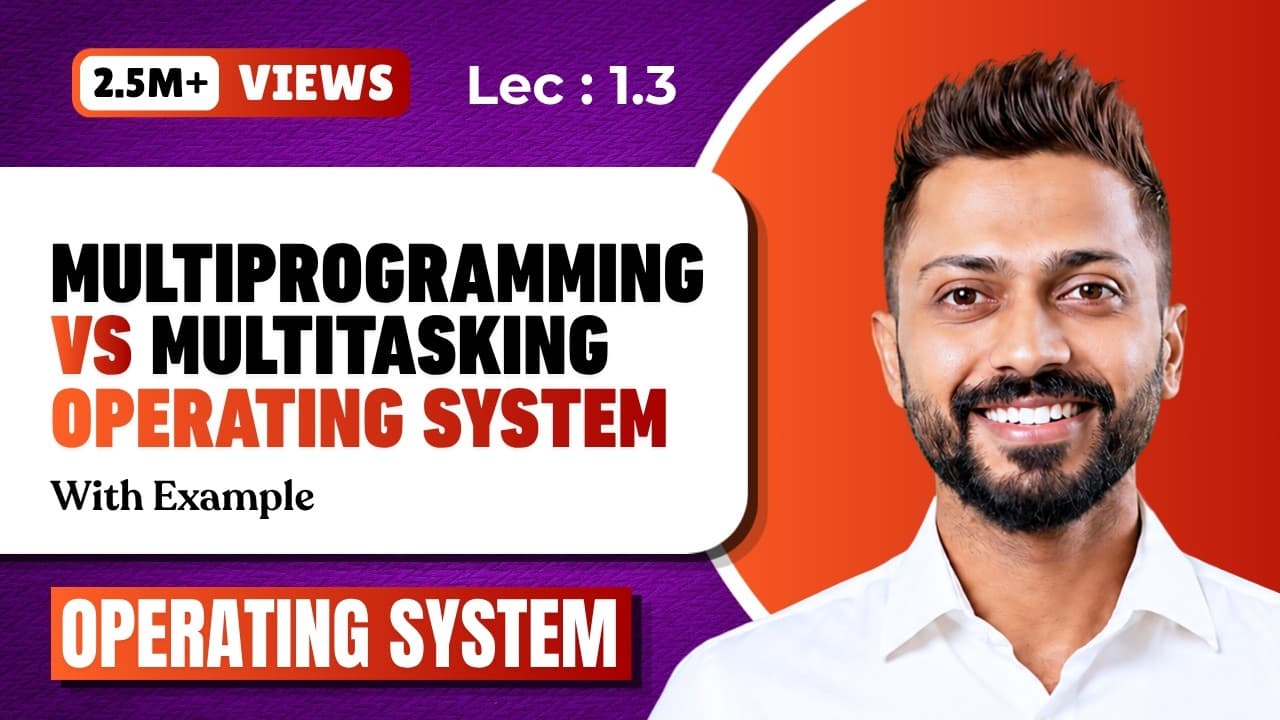
What Is the Difference Between Multiprogramming and Multitasking?
1.5M views
•
July 3, 2018
by
Gate Smashers
YouTube video player
What Is the Difference Between Multiprogramming and Multitasking?

TL;DR

Multiprogramming runs one process to completion before moving to the next, optimizing CPU usage but potentially delaying responses. In contrast, multitasking switches between processes frequently, enhancing responsiveness and reducing idle time—a method used in most modern operating systems.

Transcript

Hello friends, Welcome to Gate Smashers In types of operating system These two types are very important That's multi-tasking, multi-program or time-sharing operating system Here, students get confused many times that what is actually multi-programmed and what is multitasking, also, what's the difference between both of them So first I'm telling abo... Read More

Key Insights

  • ⌛ Multi-programmed operating systems optimize CPU time by allowing multiple processes to reside in memory but execute one at a time.
  • 🥺 Non-preemptive scheduling in multi-programming ensures that processes run to completion, increasing CPU utilization but possibly leading to delays in response times.
  • ✖️ Multi-tasking systems enhance responsiveness by using preemptive tactics, enabling the CPU to rapidly switch between processes.
  • 👤 In a multi-tasking setup, processes are allotted a limited time period for execution, creating a more dynamic and interactive user experience.
  • 😒 Real-time operating systems commonly use multi-tasking for their efficiency in handling multiple simultaneous operations.
  • 🧑‍🦯 Round-robin is a common algorithm used in multi-tasking systems to evenly distribute CPU time among processes.
  • 👤 Understanding these operating system types helps users and developers make informed decisions regarding system design and resource allocation.

Install to Summarize YouTube Videos and Get Transcripts

Explore YouTube Video Summarizer or Get YouTube Transcript Extractor

Summary & Key Takeaways

  • The video explains two key types of operating systems: multi-programming and multi-tasking, focusing on their definitions and functionalities.

  • Multi-programmed systems utilize a non-preemptive strategy, where a process runs to completion before the next one starts, optimizing CPU utilization.

  • In contrast, multi-tasking systems employ a preemptive method, enabling quicker responses as the CPU switches between processes frequently, enhancing responsiveness.


Read in Other Languages (beta)

English

Share This Summary 📚

Summarize YouTube Videos and Get Video Transcripts with 1-Click

Download browser extensions on:

Try YouTube Summary with ChatGPT & Claude or YouTube Transcript Generator

Explore More Summaries from Gate Smashers 📚
What Are Collision and Broadcast Domains in Networks? thumbnail
What Are Collision and Broadcast Domains in Networks?
Gate Smashers
What Is the OSI Model and Why Is It Needed? thumbnail
What Is the OSI Model and Why Is It Needed?
Gate Smashers
L-1.5: Process States in Operating System| Schedulers(Long term,Short term,Medium term) thumbnail
L-1.5: Process States in Operating System| Schedulers(Long term,Short term,Medium term)
Gate Smashers
Lec-2: Introduction to DBMS (Database Management System) With Real life examples | What is DBMS thumbnail
Lec-2: Introduction to DBMS (Database Management System) With Real life examples | What is DBMS
Gate Smashers
Lec-81: Symmetric Key Cryptography in Network Security with examples thumbnail
Lec-81: Symmetric Key Cryptography in Network Security with examples
Gate Smashers
Lec-59: Introduction to Structured Query Language | All Points regarding its Features and Syllabus thumbnail
Lec-59: Introduction to Structured Query Language | All Points regarding its Features and Syllabus
Gate Smashers

Summarize YouTube Videos and Get Video Transcripts with 1-Click

Download browser extensions on:

Try YouTube Summary with ChatGPT & Claude or YouTube Transcript Generator

Apps & Extensions

  • Chrome Extension
  • Safari Extension
  • Edge Add-ons
  • Firefox Add-ons
  • iOS App
  • Android App

Key Features

  • YouTube Video Summarizer
  • Web & PDF Summarizer
  • Web & PDF Highlighter
  • Chat with PDF
  • Ask AI Clone
  • Audio Transcriber
  • Glasp Reader
  • Kindle Highlight Export
  • Idea Hatch

Integrations

  • Obsidian Plugin
  • Notion Integration
  • Pocket Integration
  • Instapaper Integration
  • Medium Integration
  • Readwise Integration
  • Snipd Integration
  • Hypothesis Integration

More Features

  • APIs
  • MCP Connector
  • Blog & Post
  • Embed Links
  • Image Highlight
  • Personality Test
  • Quote Shots

Company

  • About us
  • Blog
  • Community
  • FAQs
  • Job Board
  • Newsletter
  • Pricing
Terms

•

Privacy

•

Guidelines

© 2026 Glasp Inc. All rights reserved.