How to Solve Google Indexing and SEO Issues

TL;DR
John Mueller from Google answers questions about common webmaster issues such as indexing problems, duplicate content, and structured data implementation. He provides insights into how Google handles URL changes, crawling errors, and the impact of technical glitches on search rankings. Key advice includes using structured data plugins, ensuring correct canonical tags, and focusing on overall site quality for better search performance.
Transcript
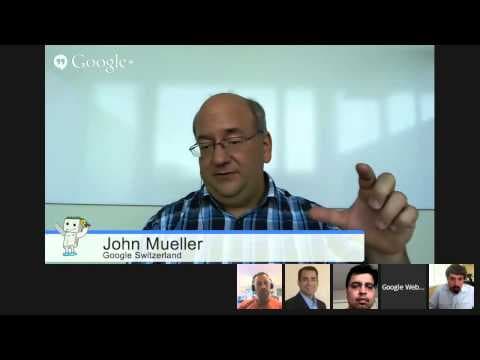
JOHN MUELLER: All right, welcome, everyone, to today's Webmaster Central Office Hours Hangout. My name is John Mueller. I am a webmaster trends analyst at Google here in Switzerland. And part of what we do are these Office Hour Hangouts, where people can join in and ask their questions around their website and web search. A bunch of stuff was submi... Read More
Key Insights
- John Mueller is a webmaster trends analyst at Google, providing insights into web search and indexing.
- Google's systems try to recognize URL setups with similar content and focus on canonical URLs.
- Soft 404 pages are treated as page not found, but HTML pages may be crawled more often.
- For manual actions on outbound links, resolving the issue doesn't directly affect site ranking.
- Changes in URL structure should be followed by proper redirects and sitemap updates.
- Google does not penalize sites for temporary 503 errors, but prolonged errors may lead to de-indexing.
- Structured data should be implemented correctly; plugins can simplify this process.
- Rich results may not show if Google's algorithms reassess the site's quality.
Install to Summarize YouTube Videos and Get Transcripts
Explore YouTube Video Summarizer or Get YouTube Transcript Extractor
Questions & Answers
Q: How does Google handle URL changes and redirects?
Google can handle URL changes and redirects efficiently if the new URLs are set up correctly with proper 301 redirects. It's important to update sitemaps with the new URLs and ensure canonical tags are correctly pointing to the new URLs. Temporary issues like reverting to old URLs may cause indexing delays, but Google will eventually re-crawl and index the correct URLs.
Q: Why might a site lose rich snippets or structured data visibility?
Loss of rich snippets can occur if Google's algorithms reassess the site's quality and decide not to show them. This is not necessarily due to technical issues with structured data but could be related to overall site quality. It's important to ensure structured data is implemented correctly and to focus on improving site quality to regain visibility.
Q: What should webmasters do if they receive a manual action for outbound links?
Webmasters should identify and remove unnatural outbound links, ensuring all links comply with Google's guidelines. Once the issue is resolved, a reconsideration request should be submitted. Manual actions do not directly affect site ranking, but resolving them is crucial for maintaining a clean site status and avoiding potential long-term impacts.
Q: How does Google handle temporary 503 server errors?
Temporary 503 errors are seen as a signal that the server is temporarily unavailable. Google will not index content served with a 503 status and will assume the issue is temporary. If the 503 status persists for several days, Google may start de-indexing the pages, assuming the server is permanently down. Short-term 503 errors do not affect site ranking.
Q: Is it better to use a structured data plugin or implement manually?
Using a structured data plugin is recommended for most webmasters as it simplifies the process and allows them to focus on content rather than technical implementation. As long as the structured data is valid and correctly implemented, it doesn't matter whether it's added manually or via a plugin.
Q: Can a page without an H1 title still rank for keywords in H2 tags?
Yes, a page can still rank for keywords found in H2 tags even if it lacks an H1 title. Headings help Google understand the page's content, but they are not the only ranking factor. The overall content is also considered, and different heading tags can provide context for different sections of a page.
Q: How can webmasters ensure Google re-crawls updated pages quickly?
Webmasters should update the last modified date in their sitemap when pages are updated, such as adding missing meta titles and descriptions. This signals to Google that the pages have changed and need to be re-crawled. For important pages, submitting them individually through Search Console can expedite the process.
Q: What could cause Google to select the wrong canonical URL for different language pages?
Google might select the wrong canonical URL if there are issues with hreflang implementation or if the site serves different content based on user language settings. Ensuring hreflang tags are correctly set and avoiding automatic content switching based on accept-language headers can help prevent such issues.
Summary & Key Takeaways
-
John Mueller discusses various webmaster issues, emphasizing the importance of correct URL handling and structured data implementation. He advises using plugins for structured data and ensuring canonical tags are correctly set to avoid indexing issues. Temporary server errors like 503 are not penalized, but persistent issues can affect indexing.
-
Manual actions on outbound links do not directly impact site ranking, but resolving them is crucial for maintaining a clean site status. Mueller suggests focusing on overall site quality to improve search performance, as Google's algorithms may reassess and affect the visibility of rich results.
-
For sites with multiple languages, correct implementation of hreflang tags and avoiding automatic content switching based on user language is recommended. Mueller highlights the importance of focusing on content quality and using structured data plugins to simplify technical implementations.
Read in Other Languages (beta)
Share This Summary 📚
Summarize YouTube Videos and Get Video Transcripts with 1-Click
Try YouTube Summary with ChatGPT & Claude or YouTube Transcript Generator
Explore More Summaries from Google Search Central 📚
Summarize YouTube Videos and Get Video Transcripts with 1-Click
Try YouTube Summary with ChatGPT & Claude or YouTube Transcript Generator