Who Was Ötzi the Iceman and How Was He Discovered?
TL;DR
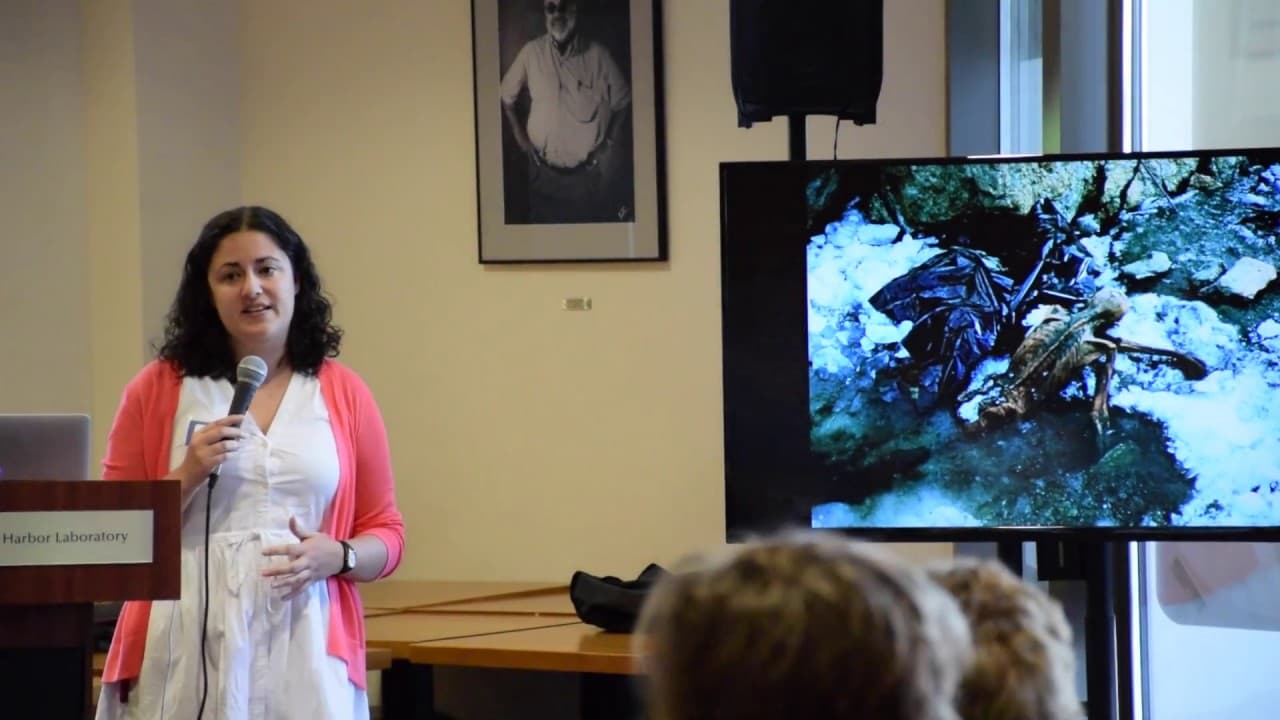
Ötzi the Iceman was discovered in 1991 in the Italian Alps, preserved naturally by ice for over 5,000 years. He was a 45-year-old man with significant health issues, including arthritis and Lyme disease, and was ultimately killed by an arrow. His discovery has provided valuable insights into Copper Age life, health, and technology.
Transcript
- Hi, everyone. - [Woman In Audience] Hi. - Oh, wow, responsive, awesome. Okay, so on September 19, 1991, a dead body was found sticking out of the ice on a mountain in the Italian Alps. A pair of hikers stumbled upon him when they had detoured off of a path. Now, at first, they thought it was nothing. They thought maybe it was some garbage, maybe ... Read More
Key Insights
- Ötzi the Iceman was discovered in 1991 by hikers in the Italian Alps.
- He is a natural mummy, preserved by ice for over 5,000 years.
- Ötzi was around 45 years old at the time of his death, which was old for his era.
- He suffered from multiple health issues, including arthritis, hardened arteries, and Lyme disease.
- Ötzi was killed by an arrow that nicked his subclavian artery, causing him to bleed to death.
- His possessions, including a rare copper ax, suggest he had high status.
- Ötzi has 61 tattoos, some of the earliest known in history.
- His genetic analysis revealed lactose intolerance and Mediterranean ancestry.
Install to Summarize YouTube Videos and Get Transcripts
Explore YouTube Video Summarizer or Get YouTube Transcript Extractor
Questions & Answers
Q: How was Ötzi the Iceman discovered?
Ötzi the Iceman was discovered on September 19, 1991, by hikers in the Italian Alps. Initially mistaken for a modern corpse, his body was found partially protruding from the ice. Archaeologists later identified him as a natural mummy over 5,000 years old, preserved by the ice that covered him shortly after his death.
Q: What health issues did Ötzi the Iceman have?
Ötzi the Iceman suffered from multiple health problems. He had arthritis in his joints, hardened arteries, and was lactose intolerant. He also had the oldest documented case of Lyme disease and was suffering from a whipworm infection. These conditions indicate he was not in good health at the time of his death.
Q: What can Ötzi's belongings tell us about his status?
Ötzi's belongings, including a rare copper ax, suggest he had high status and specialized knowledge. The presence of arsenic residue in his hair and lungs implies he was involved in copper smelting, a valued skill in his time. His well-preserved equipment indicates he was prepared for survival in harsh conditions.
Q: How did Ötzi the Iceman die?
Ötzi the Iceman died from an arrow wound. The arrowhead was found embedded in his shoulder, having nicked the subclavian artery, which would have caused him to bleed to death within minutes. Despite his various health issues, the arrow wound is considered the primary cause of his death.
Q: What insights have scientists gained from studying Ötzi?
Scientists have gained insights into Copper Age life, health, and technology from Ötzi. His tattoos are among the earliest known, suggesting cultural practices. Genetic analysis has revealed information about his ancestry and health predispositions. His discovery has also informed about the onset of the Copper Age in Europe.
Q: Where is Ötzi the Iceman now?
Ötzi the Iceman's body is housed in a museum in Bolzano, Italy. He is kept in a refrigerated environment that mimics the glacial conditions in which he was found, to prevent decomposition. Visitors can view him through a window, and educational replicas are displayed in other locations for research and learning.
Q: What do Ötzi's tattoos signify?
Ötzi's tattoos, totaling 61, are among the earliest recorded and are believed to have been therapeutic rather than decorative. They are located on parts of his body corresponding to areas affected by arthritis, suggesting they may have been part of a treatment for pain relief, possibly akin to acupuncture.
Q: What does Ötzi's genetic analysis reveal about his ancestry?
Ötzi's genetic analysis suggests mixed ancestry. One parent had a haplotype common in Sardinia and Corsica, while the other was from the alpine region of Northern Italy or Southern Austria. This genetic background indicates a Mediterranean influence, providing insights into population movements and interactions during the Copper Age.
Summary & Key Takeaways
-
Ötzi the Iceman was found in the Italian Alps in 1991, preserved for over 5,000 years by ice. He was a middle-aged man with various health issues, including arthritis and Lyme disease, and was killed by an arrow. His discovery has provided significant insights into Copper Age life, including health, technology, and social status.
-
The discovery of Ötzi's copper ax pushed back the known start date of the Copper Age in Europe. His belongings and tattoos indicate he was likely a person of status and specialized knowledge. Despite his health issues, he was found alone and well-equipped in the mountains, raising questions about his final journey.
-
Ötzi's body is remarkably intact, allowing scientists to study his biology, behavior, and environment. Genetic analysis shows he had brown hair and eyes, type O blood, and a predisposition to certain diseases. His body is now housed in a museum in Italy, with replicas used for educational purposes.
Read in Other Languages (beta)
Share This Summary 📚
Summarize YouTube Videos and Get Video Transcripts with 1-Click
Try YouTube Summary with ChatGPT & Claude or YouTube Transcript Generator
Explore More Summaries from Cold Spring Harbor Laboratory 📚






Summarize YouTube Videos and Get Video Transcripts with 1-Click
Try YouTube Summary with ChatGPT & Claude or YouTube Transcript Generator