Metabolism, Anabolism, & Catabolism - Anabolic vs Catabolic Reactions
TL;DR
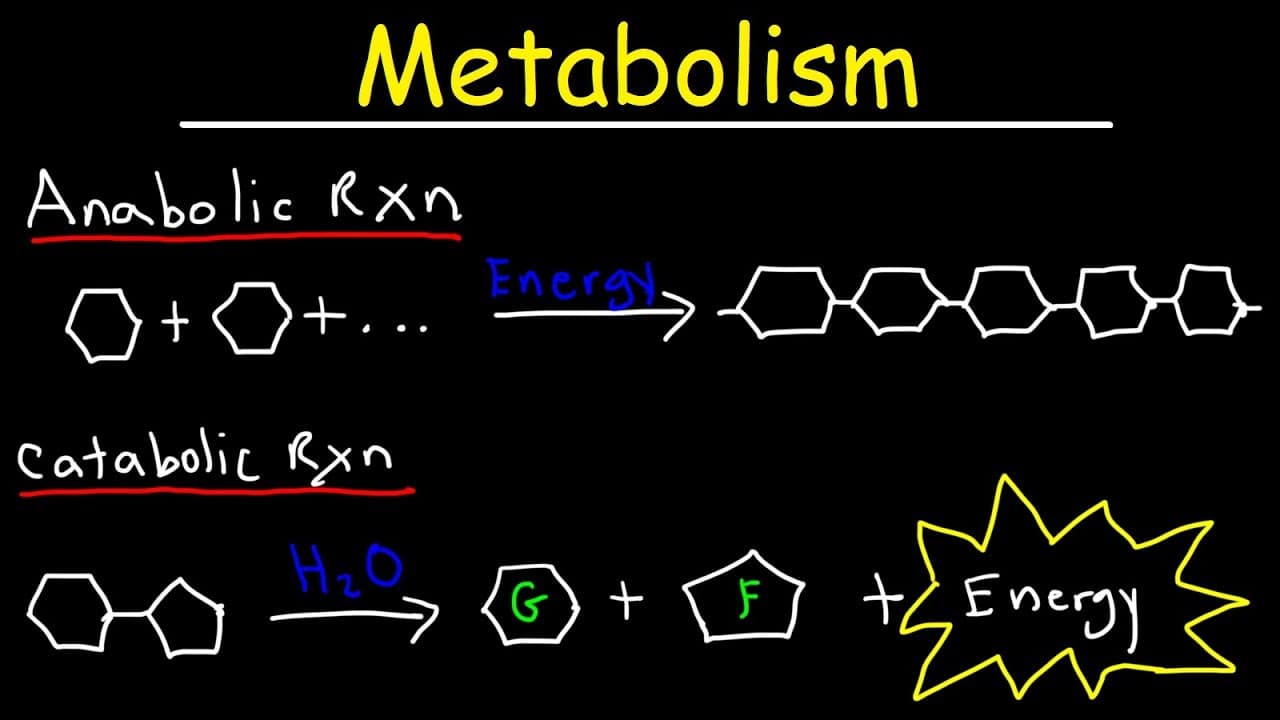
Metabolism is the total of all chemical reactions in an organism. Anabolism builds molecules, while catabolism breaks them down.
Transcript
in this video we're going to talk about metabolism anabolism and catabolism so what is metabolism metabolism is the total of all chemical reactions carried out by an organism metabolism is the sum of these two things an ab ilysm and catabolism now you might be wondering well what are these two things what is an ab ilysm and catabolism anabolism ref... Read More
Key Insights
- ❓ Metabolism encompasses all the chemical reactions happening in an organism.
- 🏛️ Anabolism involves building larger molecules and requires energy.
- 🍳 Catabolism breaks down large molecules and can release energy.
- ❓ Anabolic reactions often involve synthesis and dehydration synthesis reactions.
- ❓ Catabolic reactions often involve hydrolysis reactions.
- 🍳 Cellular respiration is a catabolic process that breaks down glucose and releases energy.
- 🙂 Photosynthesis is an anabolic process that converts carbon dioxide and water into glucose using light energy.
Install to Summarize YouTube Videos and Get Transcripts
Explore YouTube Video Summarizer or Get YouTube Transcript Extractor
Questions & Answers
Q: What is metabolism?
Metabolism refers to all the chemical reactions taking place in an organism, including anabolism and catabolism.
Q: How does anabolism differ from catabolism?
Anabolism involves building up molecules by combining small ones, while catabolism breaks down large molecules into smaller ones.
Q: What is an example of an anabolic reaction?
Combining glucose molecules to form a polysaccharide (a large molecule) is an example of an anabolic reaction.
Q: What happens in a catabolic reaction?
In a catabolic reaction, a large molecule is broken down into smaller molecules, like breaking sucrose into glucose and fructose.
Q: Do anabolic processes require energy?
Yes, anabolic processes typically require energy, such as ATP, to build large molecules from smaller ones.
Q: What type of reaction is involved in catabolism?
Catabolism often involves hydrolysis reactions, where water is used to break down large molecules into smaller components.
Q: Is cellular respiration anabolic or catabolic?
Cellular respiration is a catabolic process because it breaks down glucose and releases energy.
Q: What about photosynthesis?
Photosynthesis is an anabolic process as it uses light energy to build glucose molecules from carbon dioxide and water.
Summary & Key Takeaways
-
Metabolism is the sum of anabolism and catabolism, which are processes that build up and break down molecules, respectively.
-
Anabolic reactions involve combining small molecules to form larger ones and require energy.
-
Catabolic reactions involve breaking down large molecules into smaller ones and often release energy.
Read in Other Languages (beta)
Share This Summary 📚
Summarize YouTube Videos and Get Video Transcripts with 1-Click
Try YouTube Summary with ChatGPT & Claude or YouTube Transcript Generator
Explore More Summaries from The Organic Chemistry Tutor 📚

Summarize YouTube Videos and Get Video Transcripts with 1-Click
Try YouTube Summary with ChatGPT & Claude or YouTube Transcript Generator