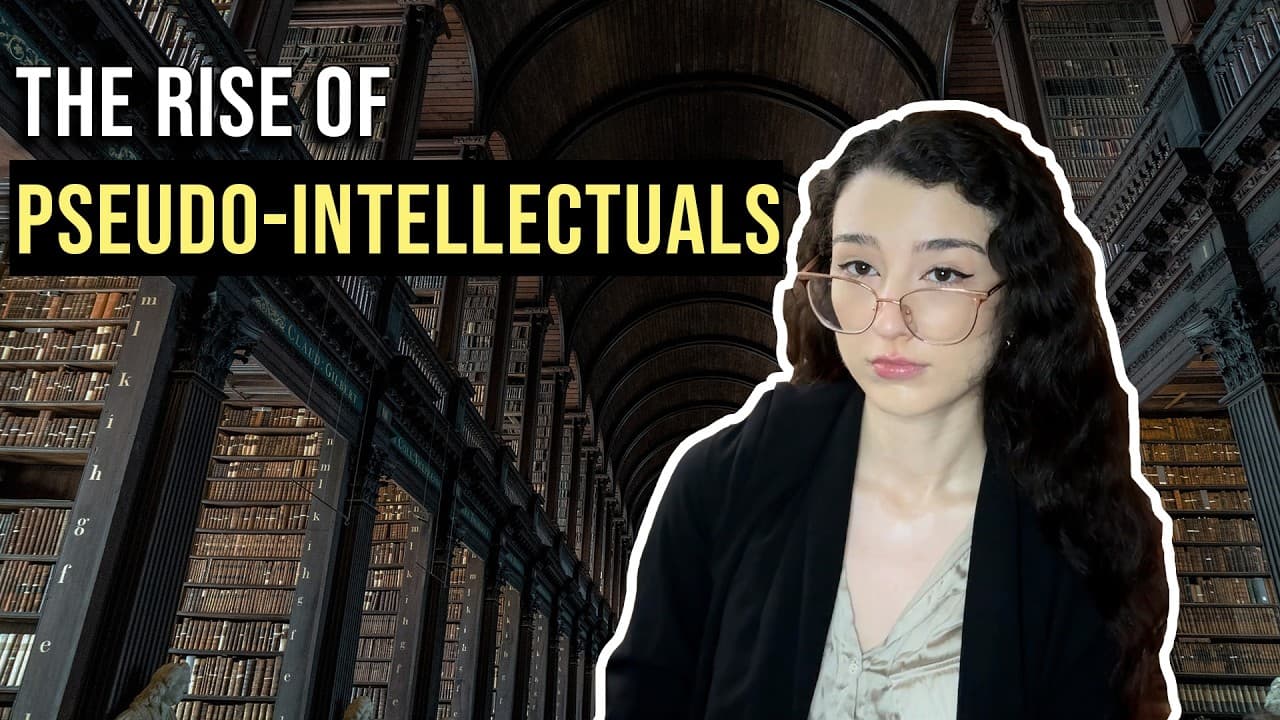
We need to talk about pseudo-intellectuals
TL;DR
The video discusses recognizing pseudo-intellectuals and their impact on society.
Transcript
recently I kept seeing this person on my feed on Tik Tok who gave me serious doubts as to this person's credibility this person was positioning herself as an authority on psychology and there were a number of red flags that I got I took a little bit of a deeper look and it turns out this person has been accused of misrepresenting her qualif... Read More
Key Insights
- Pseudo-intellectuals often misrepresent their qualifications to appear more authoritative than they are, utilizing the appeal to authority fallacy.
- True intellectuals are not infallible; they can make mistakes, and their authority should not be blindly trusted.
- Society's idealization of authority can lead to devaluing genuine experts due to a few pseudo-intellectuals.
- Pseudo-intellectuals often evade revealing their true qualifications, making it difficult to verify their expertise.
- They tend to engage in behaviors that mimic intellectual authority, such as hiring people to pose questions in staged settings.
- Shady intellectuals may have legitimate qualifications but abuse their authority for personal gain or to mislead others.
- The rise of intellectual podcasts has increased the visibility of pseudo-intellectuals, risking public mistrust in genuine experts.
- Critical thinking and evaluating the content of arguments are crucial in discerning true expertise from pseudo-intellectualism.
Install to Summarize YouTube Videos and Get Transcripts
Explore YouTube Video Summarizer or Get YouTube Transcript Extractor
Questions & Answers
Q: What is the main issue with pseudo-intellectuals?
Pseudo-intellectuals misrepresent their qualifications, creating a false sense of authority. They often rely on the appeal to authority fallacy, where their supposed credentials are used as the basis of their arguments rather than substantive evidence. This behavior can mislead the public and devalue genuine expertise.
Q: How does society's perception of authority contribute to the problem?
Society often idealizes authority, valuing it as a logical argument in itself. This can lead to a situation where people place undue trust in those with perceived authority, even if they lack true expertise. Consequently, pseudo-intellectuals can thrive by exploiting this societal tendency, further complicating the public's ability to discern true experts.
Q: What are some characteristics of pseudo-intellectuals?
Pseudo-intellectuals often evade questions about their qualifications, making it difficult to verify their expertise. They may stage false scenarios to appear authoritative, engage in unprofessional or unethical behavior, and make unscientific claims. They also tend to speak in absolutes rather than nuanced arguments, betraying their lack of depth in the subject matter.
Q: How can one identify shady intellectuals?
Shady intellectuals may have legitimate qualifications but misuse their authority for personal gain or to mislead others. They often push the boundaries of their expertise, making claims outside their field. They may also have conflicts of interest, such as promoting products tied to their research, and often pander to specific ideologies, distorting their findings to appeal to certain audiences.
Q: Why is critical thinking important in evaluating intellectuals?
Critical thinking is essential because it allows individuals to assess the validity of arguments based on evidence rather than perceived authority. By evaluating the content of what is said, rather than who is saying it, one can discern true expertise from pseudo-intellectualism, reducing the risk of being misled by those who falsely claim authority.
Q: What impact do pseudo-intellectuals have on public trust in experts?
The rise of pseudo-intellectuals can lead to a general mistrust of genuine experts. As more people encounter pseudo-intellectuals who mislead or deceive, they may begin to question the credibility of all experts, potentially devaluing those who are truly qualified and knowledgeable in their fields.
Q: How do pseudo-intellectuals use social media to their advantage?
Pseudo-intellectuals often use social media to create an appearance of authority. They may stage interactions, such as hiring people to pose questions in videos, to appear as experts. This staged content can mislead viewers into believing they have more authority than they actually do, leveraging the platform's reach to amplify their false credentials.
Q: What is the role of podcasts in the rise of pseudo-intellectuals?
Podcasts have contributed to the rise of pseudo-intellectuals by providing a platform where individuals can present themselves as experts, regardless of their actual qualifications. While some podcasts feature genuine experts, others may include individuals who misrepresent their expertise, leading to the spread of misinformation and a potential erosion of public trust in intellectual discourse.
Summary & Key Takeaways
-
The video explores the rise of pseudo-intellectualism, where individuals misrepresent their expertise to gain authority in fields they are not qualified in. This trend is fueled by the appeal to authority fallacy, where people rely on supposed credentials rather than substantive arguments.
-
Dr. Anna Udin emphasizes the importance of discerning true intellectuals from pseudo-intellectuals by critically assessing the content of their arguments rather than their perceived authority. She warns that the increasing presence of pseudo-intellectuals could lead to a general mistrust of experts.
-
Characteristics of pseudo-intellectuals include evading questions about their qualifications, staging false scenarios to appear authoritative, and making unscientific claims. Shady intellectuals, on the other hand, may have legitimate credentials but misuse them for personal gain or to mislead others.
Read in Other Languages (beta)
Share This Summary 📚
Summarize YouTube Videos and Get Video Transcripts with 1-Click
Try YouTube Summary with ChatGPT & Claude or YouTube Transcript Generator
Explore More Summaries from Psychology with Dr. Ana 📚
Summarize YouTube Videos and Get Video Transcripts with 1-Click
Try YouTube Summary with ChatGPT & Claude or YouTube Transcript Generator