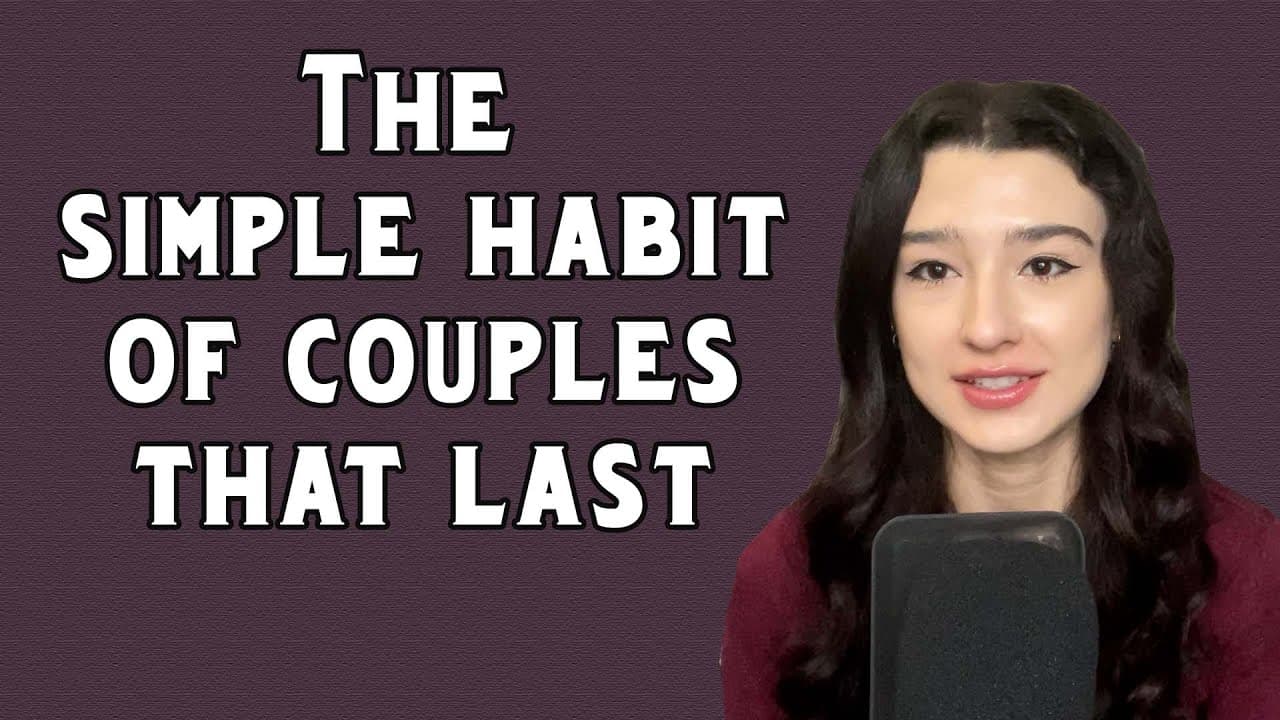
Couples that last do this 2.6x more than couples who don't
TL;DR
Couples who stay together tend to turn towards each other 2.6 times more than couples who do not, which leads to better relationship satisfaction.
Transcript
hi everyone welcome or welcome back to my channel if you're new here I'm Anna a Clinical Psychology doctoral intern and today we're going to be talking about something that couples who stay together over time tend to do 2.6 times more than couples who don't a few weeks ago I asked you all in a separate video to comment what your thoughts were on yo... Read More
Key Insights
- 🧑🤝🧑 Couples who stay together tend to turn towards each other 2.6 times more than couples who do not, leading to higher relationship satisfaction.
- 😚 Turning towards can include physical actions, such as sitting close or facing each other, but it goes beyond that to emotional and verbal responses.
- ↩️ Turning towards shows care, attention, and a willingness to connect, while turning away can lead to rejection and hurt in relationships.
- 🤑 Turning towards is important in all types of relationships, not just romantic ones, as it fosters connection and strengthens bonds.
- 💯 Nobody is perfect 100% of the time, but aiming for 100% turning towards and landing at 86% can still have a positive impact on relationships.
- 💨 If someone constantly turns away from your bids for connection, it may be necessary to communicate your feelings or reevaluate the relationship.
- 🤕 Engaging in turning towards can prevent resentment and hurt from building up in relationships.
Install to Summarize YouTube Videos and Get Transcripts
Explore YouTube Video Summarizer or Get YouTube Transcript Extractor
Questions & Answers
Q: What does turning towards in a relationship mean?
Turning towards in a relationship means acknowledging and responding to bids for connection from your partner. It can be physical, emotional, or verbal responses that show care, attention, and a willingness to engage.
Q: How does turning towards impact relationship satisfaction?
Turning towards in relationships builds up positive moments and fosters connection. It shows that you value and prioritize your partner, which leads to higher relationship satisfaction and stronger bonds.
Q: Can turning towards be important in non-romantic relationships as well?
Yes, turning towards is important in all types of relationships. It shows that you care about the other person, listen to them, and value their attempts at connection, which can strengthen relationships in various settings.
Q: What should you do if someone constantly turns away from your bids for connection?
If someone consistently turns away from your bids for connection, it may be necessary to address the issue with them or consider distancing yourself from the relationship. Constant turning away can lead to hurt and resentment, which can negatively impact the relationship.
Key Insights:
- Couples who stay together tend to turn towards each other 2.6 times more than couples who do not, leading to higher relationship satisfaction.
- Turning towards can include physical actions, such as sitting close or facing each other, but it goes beyond that to emotional and verbal responses.
- Turning towards shows care, attention, and a willingness to connect, while turning away can lead to rejection and hurt in relationships.
- Turning towards is important in all types of relationships, not just romantic ones, as it fosters connection and strengthens bonds.
- Nobody is perfect 100% of the time, but aiming for 100% turning towards and landing at 86% can still have a positive impact on relationships.
- If someone constantly turns away from your bids for connection, it may be necessary to communicate your feelings or reevaluate the relationship.
- Engaging in turning towards can prevent resentment and hurt from building up in relationships.
- Small moments of turning towards or turning away can accumulate over time and significantly impact relationship satisfaction.
Summary & Key Takeaways
-
Couples who stay together over time have a habit of turning towards each other, which means acknowledging bids for connection and responding in some way.
-
Turning towards can be physical, such as sitting close or facing each other, but it extends to emotional and verbal responses as well.
-
Turning towards shows care, attention, and a willingness to connect, while turning away can lead to resentment and hurt in relationships.
Read in Other Languages (beta)
Share This Summary 📚
Summarize YouTube Videos and Get Video Transcripts with 1-Click
Try YouTube Summary with ChatGPT & Claude or YouTube Transcript Generator
Explore More Summaries from Psychology with Dr. Ana 📚

Summarize YouTube Videos and Get Video Transcripts with 1-Click
Try YouTube Summary with ChatGPT & Claude or YouTube Transcript Generator