How to study effectively, based on cognitive psychology (THERAPIST TIPS)
TL;DR
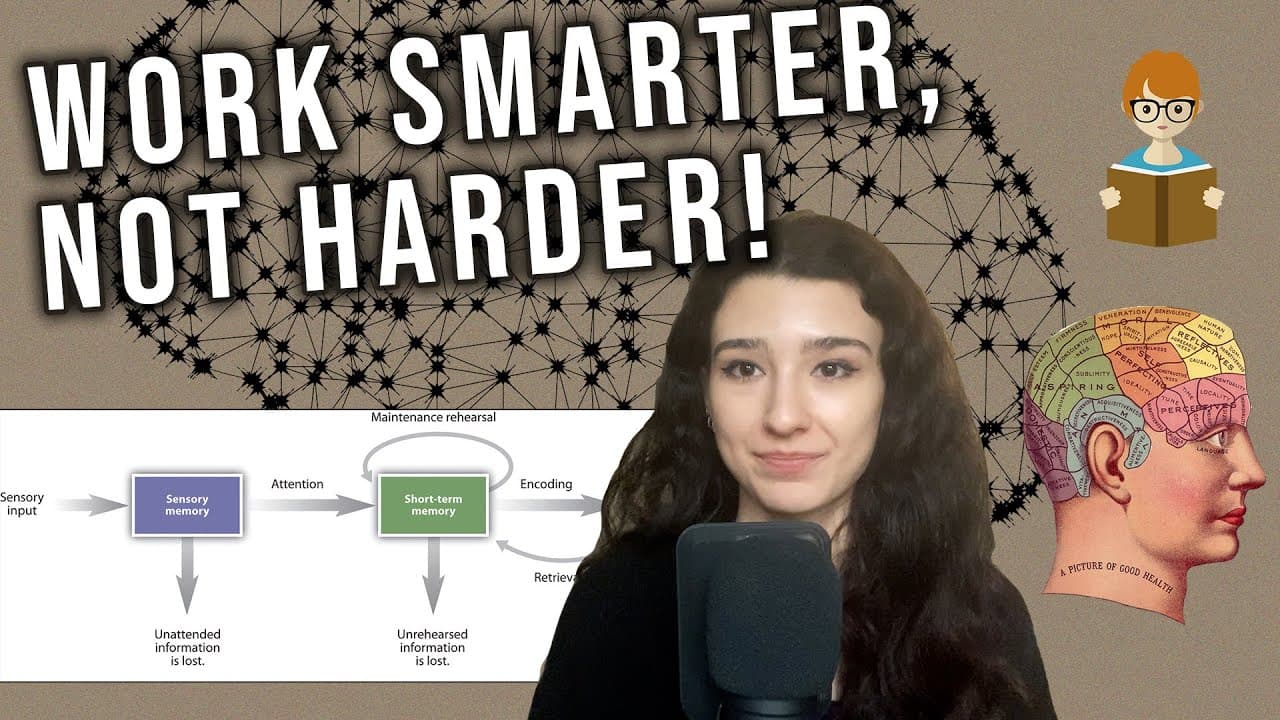
This video provides tips and techniques for studying and learning based on cognitive psychology, including attention, encoding, rehearsal, and associative learning.
Transcript
hi guys welcome from myself and from canoli who I guess will be hanging out in the background so for the past few weeks I have been grinding really hard for the E P the psychologist lure exam and while doing so one of the major modules that we have to study is to do with memory and learning so I thought why not kill two birds with one stone and tea... Read More
Key Insights
- 🧠 The first step to effective studying is paying attention and attending to the information being studied. Selective attention is crucial for focusing on important information and tuning out distractions.
- 🔒 Encoding information is the next step, where the information is processed and understood. It is important to make sense of the information and associate it with existing knowledge.
- 💡 Rehearsal techniques, such as repeated rehearsal or elaborative rehearsal, help in encoding information and transferring it to long-term memory. Relating new concepts to older ones and using imagery or reworking the information aids in memorization.
- 📝 Taking notes and condensing them into concise study guides can help in organizing and categorizing information effectively, aiding in better memorization.
- 📸 Using visual spatial understanding and mental mapping, such as the method of loci, can enhance memorization by associating information with specific places in your mind.
- 🗣️ Teaching the information to someone else is an effective method for memorization, as it requires understanding and categorizing the information for effective communication.
- ✍️ For difficult-to-remember information, using mnemonic devices or flashcards can aid in rote memorization. Writing the information in different ways and forming associations can deepen memory retention.
- 💡 Overall, understanding and connecting new information to existing knowledge, using different rehearsal techniques, and finding personalized ways to engage with the material are key to studying smarter, not harder.
Install to Summarize YouTube Videos and Get Transcripts
Explore YouTube Video Summarizer or Get YouTube Transcript Extractor
Questions & Answers
Q: How does attention impact the encoding of information?
Attention is the first step in the processing of information, and without it, information is unlikely to be consolidated into long-term memory. By paying attention to information, we are able to perceive and make sense of it, which is crucial for encoding it effectively.
Q: What is the role of rehearsal in the encoding process?
Rehearsal is an important technique for encoding information into long-term memory. By repeating and reviewing the information, we are more likely to remember it. However, simply repeating the information is not enough; elaborative rehearsal, where we relate the information to existing knowledge or create associations, is more effective.
Q: How can the method of loci be used for effective encoding?
The method of loci involves associating information with specific locations or places in our mind. By creating a mental map and placing information in different locations, we can use spatial visualization to recall the information more easily.
Q: Why is teaching the material to someone else an effective study technique?
Teaching the material to someone else requires a deeper understanding of the concepts. It forces us to organize and explain the information in a way that others can understand, which helps consolidate the information in our memory. Additionally, the emotional arousal that comes with presenting to someone else can enhance memory retention.
Summary & Key Takeaways
-
The video explores how we process and store information, starting with the importance of attention in the learning process.
-
It discusses the steps of encoding, storing, and retrieving information, and how they relate to long-term memory.
-
The video then provides study techniques, including note-taking, condensing information into study guides, using the method of loci, relating examples to personal experiences, and teaching the material to others.
Read in Other Languages (beta)
Share This Summary 📚
Summarize YouTube Videos and Get Video Transcripts with 1-Click
Try YouTube Summary with ChatGPT & Claude or YouTube Transcript Generator
Explore More Summaries from Psychology with Dr. Ana 📚






Summarize YouTube Videos and Get Video Transcripts with 1-Click
Try YouTube Summary with ChatGPT & Claude or YouTube Transcript Generator