Henn on depression study 02.24.11
TL;DR
Dr. Henn discusses depression's complex brain mechanisms and potential treatment targets.
Transcript
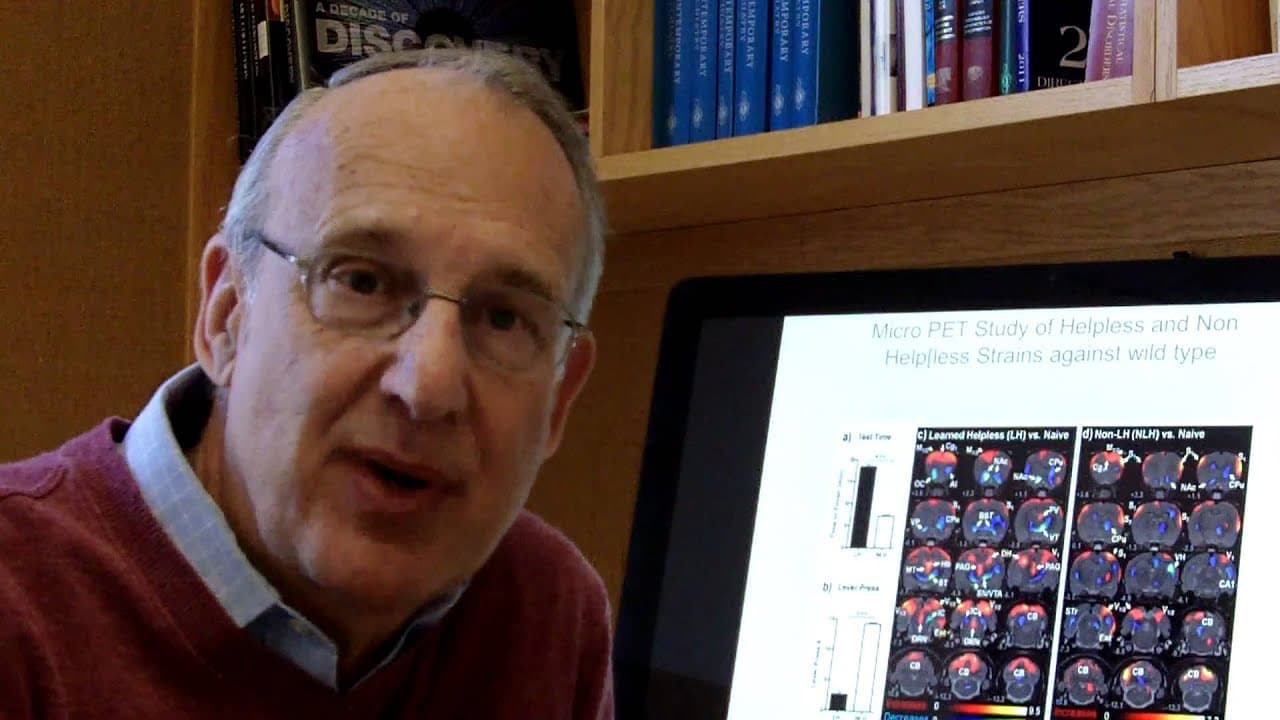
we're speaking this morning with the Dr. Fritze Henn who was a former director of biological sciences at Brookhaven National Laboratory and is currently a professor at Cold Spring Harbor Laboratory and Dr. Henn is one of the primary authors on a new study about depression and Dr. Henn I wanted to begin this discussion by just stating something that... Read More
Key Insights
- The mechanisms of depression remain largely misunderstood, with treatment success rates varying significantly among patients.
- Depression is projected to cause the greatest morbidity of any disease by 2040, highlighting the urgent need for better understanding and treatment.
- Research focuses on identifying anatomical structures in the brain that mediate depressive phenomena, particularly the lateral habenula.
- The lateral habenula, a small brain structure, plays a critical role in modulating neurotransmitters like serotonin, noradrenaline, and dopamine.
- Deep brain stimulation (DBS) is explored as a potential treatment for depression by targeting specific brain circuits without invasive surgery.
- Studies in animal models suggest that dopamine is a key driver in learned helplessness, potentially offering insights into human depression.
- The medial prefrontal cortex is identified as a higher brain region involved in cognitive processing, possibly contributing to depression.
- Current research suggests that astrocytes, rather than neurons, may be involved in depression pathology due to insufficient glutamate uptake.
Install to Summarize YouTube Videos and Get Transcripts
Explore YouTube Video Summarizer or Get YouTube Transcript Extractor
Questions & Answers
Q: What is the current understanding of depression's mechanisms?
The mechanisms of depression are still not fully understood. Dr. Henn notes that treatment success rates vary significantly, with only about a third of patients responding well to drugs. The study aims to uncover the anatomical structures and brain circuits involved in mediating depressive phenomena.
Q: Why is depression projected to cause significant morbidity by 2040?
Depression is expected to cause the greatest morbidity of any disease by 2040 due to its rising prevalence and the limited effectiveness of current treatments. As other diseases see improvements in treatment, depression remains a major challenge, underscoring the need for better understanding and interventions.
Q: What role does the lateral habenula play in depression?
The lateral habenula is a small brain structure that modulates neurotransmitters such as serotonin, noradrenaline, and dopamine. It is significantly activated in depression models, suggesting its involvement in turning off the brain's reward system, which may contribute to depressive symptoms.
Q: How does deep brain stimulation work for depression?
Deep brain stimulation (DBS) involves placing electrodes in specific brain regions to alter circuits and correct anomalies. By adjusting stimulation frequency and strength, DBS aims to normalize brain functions without invasive surgery. It is being explored as a treatment for patients unresponsive to conventional therapies.
Q: What findings were made regarding dopamine in depression?
Studies in animal models indicate that dopamine is a key driver in learned helplessness, a model for depression. This finding suggests that dopamine dysregulation may play a significant role in human depression, providing a potential target for new treatment strategies.
Q: What is the significance of the medial prefrontal cortex in depression?
The medial prefrontal cortex is a higher brain region involved in cognitive processing. It may contribute to depression by providing excessive glutamate input to the lateral habenula, disrupting neurotransmitter modulation and leading to depressive symptoms. This area is a focus for potential therapeutic interventions.
Q: How might astrocytes be involved in depression pathology?
Current research suggests that astrocytes, rather than neurons, may be involved in depression pathology. Astrocytes are helper cells in the brain that may fail to uptake glutamate rapidly enough, leading to excessive glutamate activity, which is implicated in depression. This represents a novel area for further investigation.
Q: What are the potential implications of the study's findings for depression treatment?
The study suggests that targeting the lateral habenula with deep brain stimulation could be a more efficient treatment for depression, especially for patients unresponsive to other therapies. The findings open new avenues for understanding depression's circuitry and developing targeted interventions to improve treatment outcomes.
Summary & Key Takeaways
-
Dr. Fritze Henn discusses the challenges in understanding the mechanisms of depression, noting the limited success rates of current treatments. The study focuses on the lateral habenula's role in modulating neurotransmitters and its potential as a target for deep brain stimulation.
-
The research highlights the lateral habenula's significant activation in stress-sensitive animal models, suggesting its involvement in depression. Deep brain stimulation targeting this area has shown promise in reversing depression-like symptoms in animal studies.
-
Further investigation into the medial prefrontal cortex and astrocytes' roles in depression is underway, with preliminary findings indicating excessive glutamate activity. This research opens new avenues for understanding and treating depression by targeting specific brain circuits.
Read in Other Languages (beta)
Share This Summary 📚
Summarize YouTube Videos and Get Video Transcripts with 1-Click
Try YouTube Summary with ChatGPT & Claude or YouTube Transcript Generator
Explore More Summaries from Cold Spring Harbor Laboratory 📚




Summarize YouTube Videos and Get Video Transcripts with 1-Click
Try YouTube Summary with ChatGPT & Claude or YouTube Transcript Generator