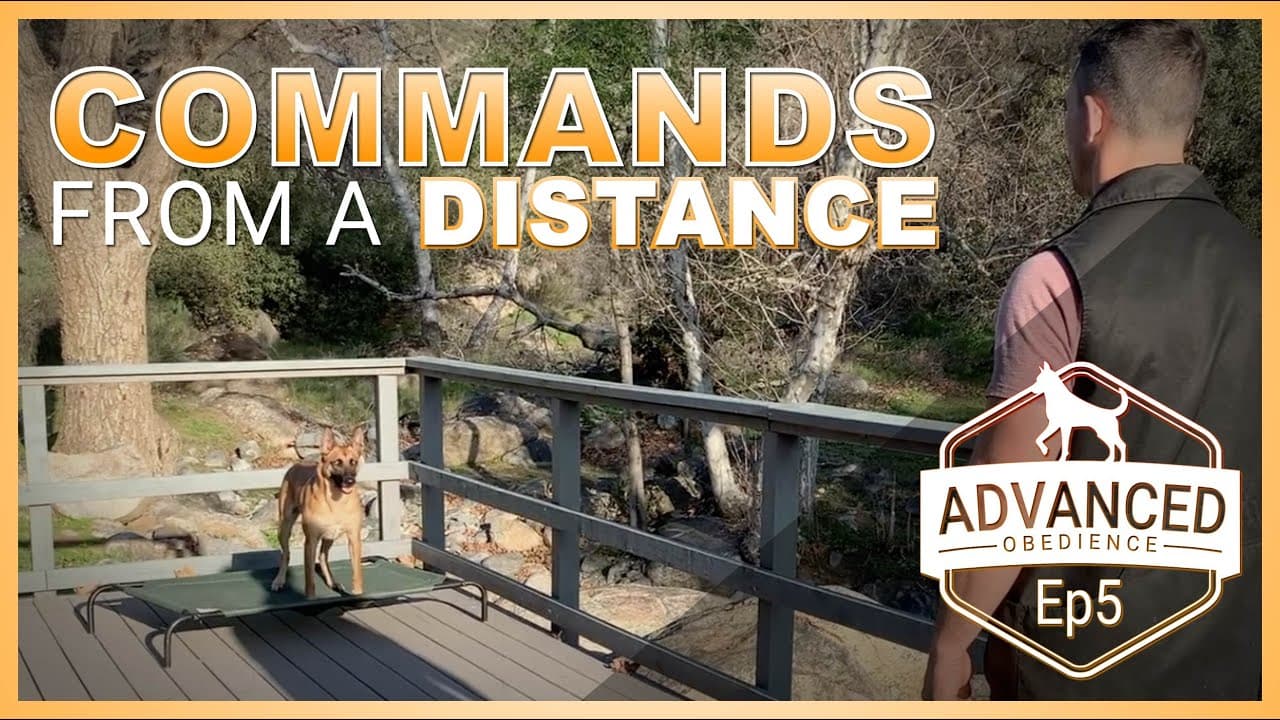
How to Teach Your Dog Commands from a distance.
TL;DR
Learn how to teach your dog commands from a distance.
Transcript
teaching commands from a distance is something everybody wants to be able to teach their dog and it's something that you need your dog to be able to perform if you're doing any form of competitive obedience especially a sports such as French ring that has a change of position exercise where you're far away from your dog and all you can do is give t... Read More
Key Insights
- Distance command training is crucial for competitive obedience, especially in sports requiring position changes like the French ring.
- Reward-based training involves using treats to guide the dog into positions, gradually increasing the distance over time.
- Pressure-based training uses a leash to guide the dog into positions, rewarding them once they comply.
- Incorporating a helper can enhance training by providing physical cues while you give verbal commands from a distance.
- Starting training close to the dog and gradually increasing the distance helps them understand commands from afar.
- Switching roles between the trainer and helper can improve the dog's response to both verbal and physical cues.
- Consistent practice helps dogs perform commands from any distance without needing a helper or physical cues.
- The training process can be adapted to include different colored cues to help dogs learn commands effectively.
Install to Summarize YouTube Videos and Get Transcripts
Explore YouTube Video Summarizer or Get YouTube Transcript Extractor
Questions & Answers
Q: Why is distance command training important?
Distance command training is important for competitive obedience, particularly in sports like the French ring, where dogs must perform position changes from afar. It ensures that dogs follow commands regardless of the trainer's proximity, enhancing their obedience and versatility in various situations.
Q: What are the main methods of distance command training?
The main methods of distance command training include reward-based training, pressure-based training, and using a helper. Reward-based training involves using treats to guide the dog into positions. Pressure-based training uses a leash to guide the dog, while a helper can provide physical cues from a distance.
Q: How does reward-based training work?
Reward-based training involves using treats to guide the dog into the desired position. The trainer starts close to the dog, giving verbal commands and rewarding compliance. Gradually, the distance is increased, allowing the dog to learn and perform commands from afar, relying on verbal cues alone.
Q: What role does a helper play in distance command training?
A helper in distance command training provides physical cues to the dog while the trainer gives verbal commands from a distance. This collaboration helps the dog associate verbal commands with physical actions, enhancing their understanding and execution of commands from afar.
Q: What is the purpose of using different colored cues?
Using different colored cues in training helps dogs differentiate between commands, enhancing their learning process. It provides a visual aid alongside verbal commands, ensuring that dogs understand and execute the correct actions, especially when learning from a distance or in new environments.
Q: How can switching roles improve training?
Switching roles between the trainer and helper can improve training by exposing the dog to different cues and perspectives. It reinforces their understanding of commands from multiple sources, ensuring they respond correctly to both verbal and physical cues, regardless of the trainer's presence.
Q: What is the ultimate goal of distance command training?
The ultimate goal of distance command training is for dogs to perform commands from any distance without needing additional assistance. This enhances their obedience and adaptability, allowing them to respond accurately to commands in various situations, whether in competitive sports or everyday scenarios.
Q: How should the training process begin?
The training process should begin with the trainer close to the dog, giving verbal commands and using physical cues to guide them into positions. Gradually, the distance is increased, allowing the dog to learn and perform commands from afar, ensuring they understand and respond accurately to verbal cues alone.
Summary & Key Takeaways
-
Teaching dogs to follow commands from a distance is essential for competitive obedience. This video demonstrates various techniques, including reward-based and pressure-based training, to achieve this goal. Using a helper can also enhance the training process by providing physical cues while the trainer gives verbal commands.
-
The video emphasizes starting the training process close to the dog and gradually increasing the distance. This helps the dog understand and perform commands from afar. The training can be adapted with different colored cues to assist in the learning process, ensuring effective command execution.
-
Consistent practice and switching roles between the trainer and helper can significantly improve a dog's response to both verbal and physical cues. Ultimately, the goal is for the dog to perform commands from any distance without needing additional assistance, enhancing their obedience and versatility.
Read in Other Languages (beta)
Share This Summary 📚
Summarize YouTube Videos and Get Video Transcripts with 1-Click
Try YouTube Summary with ChatGPT & Claude or YouTube Transcript Generator
Explore More Summaries from Nate Schoemer 📚



Summarize YouTube Videos and Get Video Transcripts with 1-Click
Try YouTube Summary with ChatGPT & Claude or YouTube Transcript Generator