What Happens When You Add Resistors in Parallel Circuits?
TL;DR
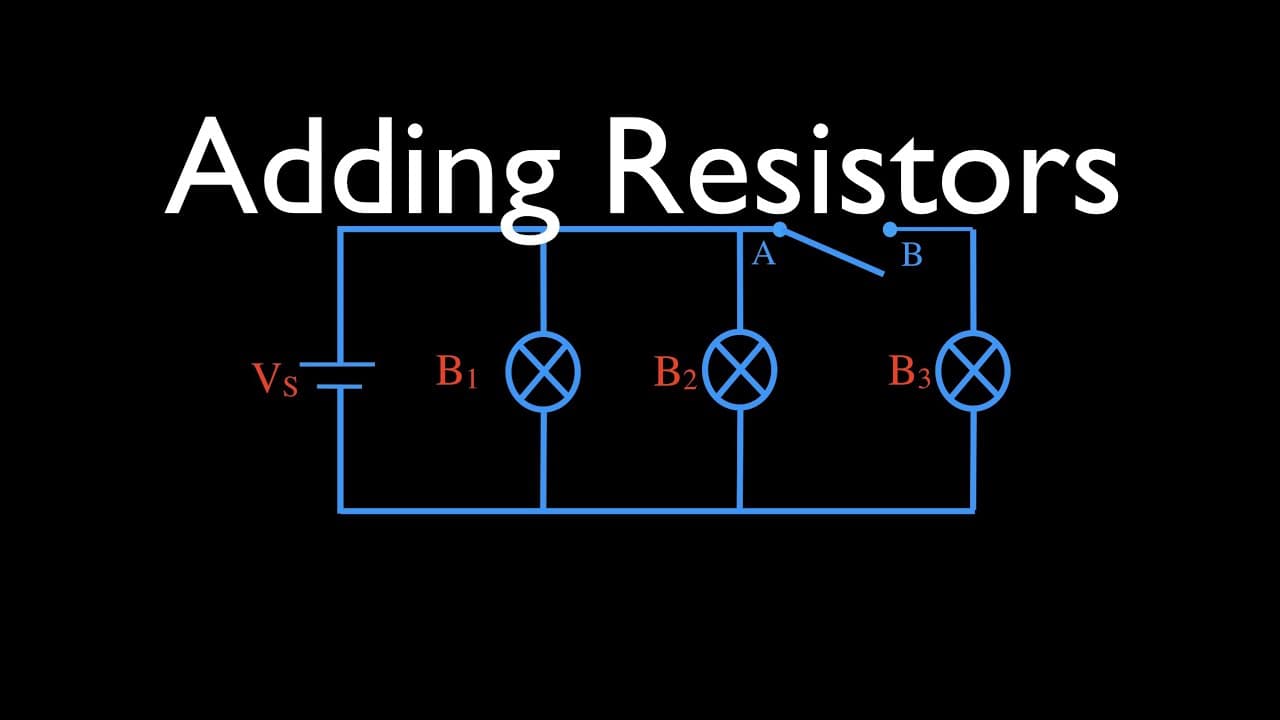
Adding resistors in parallel increases the total current and decreases the total equivalent resistance in the circuit. The voltage drop across each bulb remains constant, and the current through the bulbs does not change, resulting in unchanged brightness for all bulbs.
Transcript
okay that's right you guessed it in today's video we are gonna be talking about adding resistors in parallel and this is the circuit that we're going to use we want to know and this is what we're talking about in the video we want to know when we close this switch when the switch is closed will the following things increase decrease or stay the sam... Read More
Key Insights
- 🪜 Total current increases when resistors are added in parallel due to the additional current path.
- 🥺 The total equivalent resistance decreases in parallel circuits as more current leads to lower overall resistance.
- ⚡ Voltage drop across bulbs remains constant in parallel circuits as each bulb is directly connected to a voltage source.
- 💦 Current through individual bulbs stays the same in parallel circuits, as the voltage drop and resistance are fixed.
Install to Summarize YouTube Videos and Get Transcripts
Explore YouTube Video Summarizer or Get YouTube Transcript Extractor
Questions & Answers
Q: What happens to the total current in a circuit when resistors are added in parallel?
Adding resistors in parallel increases the total current flowing through the circuit due to the addition of another branch for current.
Q: How does adding resistors in parallel affect the total equivalent resistance of the circuit?
The total equivalent resistance of a circuit decreases when resistors are added in parallel because the current increases, leading to lower overall resistance.
Q: Why does the voltage drop across bulbs remain the same when resistors are added in parallel?
The voltage drop across bulbs stays constant in parallel circuits because each bulb is directly connected to a voltage source, ensuring a consistent voltage across them.
Q: Why does the brightness of bulbs stay the same when resistors are added in parallel?
The brightness of bulbs remains unchanged as the current through and voltage across each bulb stay constant, resulting in a consistent power output and brightness.
Summary & Key Takeaways
-
Adding resistors in parallel increases total current and decreases total resistance in a circuit.
-
The voltage drop across bulbs remains the same, as the current through bulbs also stays constant.
-
The brightness of the bulbs does not change as the current and voltage through them remain constant.
Read in Other Languages (beta)
Share This Summary 📚
Summarize YouTube Videos and Get Video Transcripts with 1-Click
Try YouTube Summary with ChatGPT & Claude or YouTube Transcript Generator
Explore More Summaries from Step by Step Science 📚






Summarize YouTube Videos and Get Video Transcripts with 1-Click
Try YouTube Summary with ChatGPT & Claude or YouTube Transcript Generator