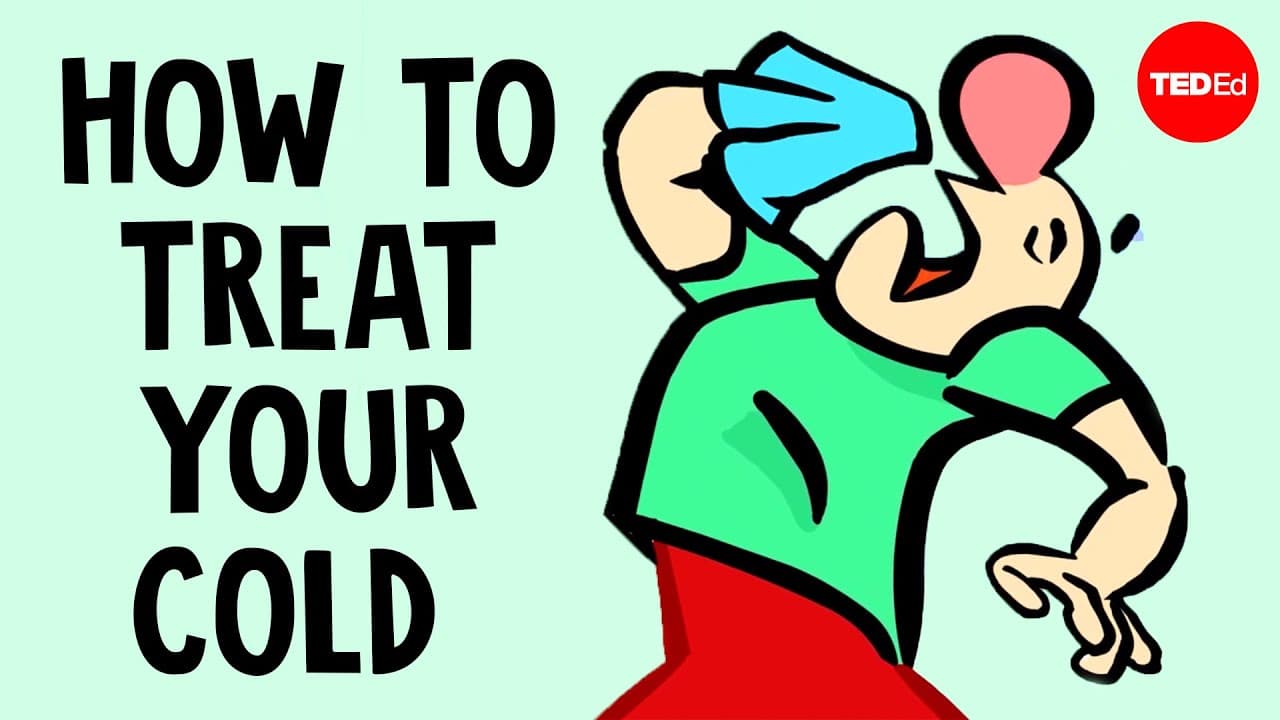
What’s the best way to treat the common cold?
TL;DR
A historical overview of cold remedies and how modern treatments work.
Transcript
Throughout history, one persistent ailment has inspired a variety of treatments. In ancient Egypt, doctors used incantations and breast milk remedies. In 18th century Europe, bloodletting was a popular choice. And when President Calvin Coolidge was afflicted in 1924, his ill-advised solution was inhaling poisonous chlorine gas. These are just a few... Read More
Key Insights
- 🥶 The historical context of cold remedies showcases humanity's evolving understanding of illnesses and treatments.
- 🥶 Modern cold symptoms arise from the body's immune response rather than the viruses themselves.
- 🥶 Four main categories of cold remedies target specific symptoms: nasal congestion, coughing, mucus production, and allergy-like symptoms.
- 🧑🚒 Treatment ingredients like decongestants and cough suppressants do not fight viruses but alleviate discomfort.
- 🫵 Coughing, while often viewed negatively, is sometimes beneficial for clearing mucus from airways.
- 🔄 Unregulated over-the-counter medications pose risks if used incorrectly, especially with cough suppressants.
- 🐝 Holistic remedies like honey may provide relief, while the effectiveness of others remains debated.
Install to Summarize YouTube Videos and Get Transcripts
Explore YouTube Video Summarizer or Get YouTube Transcript Extractor
Questions & Answers
Q: What historical methods were used to treat colds before modern medicine?
In ancient Egypt, doctors relied on incantations and remedies like breast milk, while in 18th century Europe, bloodletting was believed to cure colds. These methods illustrate the varied and often misguided attempts throughout history to alleviate the common cold, showing that our understanding has significantly evolved.
Q: How do the body’s defenses cause cold symptoms?
When a virus is detected, white blood cells respond by releasing cytokines which recruit more immune cells. This response causes blood vessels to widen, leading to inflammation that results in symptoms like a blocked nose. Additionally, the increased production of mucus helps trap pathogens but can irritate airways and cause coughing.
Q: What is the primary function of nasal decongestants?
Nasal decongestants, like pseudoephedrine, work by promoting the release of norepinephrine, which reduces blood flow to nasal vessels. This action alleviates congestion, allowing for easier breathing. These medications do not cure the cold but effectively assist in managing one of its most uncomfortable symptoms.
Q: Why is dextromethorphan used as a cough suppressant?
Dextromethorphan is a common cough suppressant that interacts with specific brain regions regulating coughing. Although its precise mechanics are not entirely understood, it effectively reduces the urge to cough. Caution is advised in dosage as high amounts can lead to undesirable side effects, including hallucinations.
Q: What role do expectorants play in treating colds?
Expectorants, such as guaifenesin, are designed to help loosen and liquefy mucus in the respiratory tract. By increasing fluid secretions, they make mucus less sticky, aiding in clearing it from the airways. This can enhance breathing and provide comfort without entirely suppressing the cough reflex.
Q: How do antihistamines function in cold treatment?
Antihistamines block the effects of histamine, a chemical involved in allergic reactions, and can assist in drying up a runny nose. Although they do not directly alleviate cold symptoms, medications like Benadryl contain ingredients that also inhibit mucus flow, helping to reduce discomfort related to congestion.
Q: Are there any holistic remedies for colds that are effective?
Honey has shown promise in improving cough and may even shorten the duration of a cold by a day or two, making it a popular holistic remedy. However, research on other common remedies, like zinc and high doses of vitamin C, has yielded inconclusive results regarding their efficacy in treating colds.
Q: Why is it important to understand cold treatment ingredients?
Knowing how different ingredients work helps individuals select the most appropriate remedies for their symptoms. As many active ingredients were introduced long ago, understanding their functions enables users to make informed choices while remaining aware of their limitations in addressing viral infections.
Summary & Key Takeaways
-
The content discusses the historical evolution of cold treatments, ranging from ancient Egyptian practices to 18th century bloodletting and modern medicine's various over-the-counter options.
-
It explains how colds are caused by viruses, but symptoms arise from the body's immune response, primarily inflammation and mucus production.
-
Various types of cold medications are categorized by their functions, including nasal decongestants, cough suppressants, expectorants, and antihistamines, each targeting specific symptoms.
Read in Other Languages (beta)
Share This Summary 📚
Summarize YouTube Videos and Get Video Transcripts with 1-Click
Try YouTube Summary with ChatGPT & Claude or YouTube Transcript Generator
Explore More Summaries from TED-Ed 📚



Summarize YouTube Videos and Get Video Transcripts with 1-Click
Try YouTube Summary with ChatGPT & Claude or YouTube Transcript Generator