How to Test and Launch a Startup Idea Quickly
TL;DR
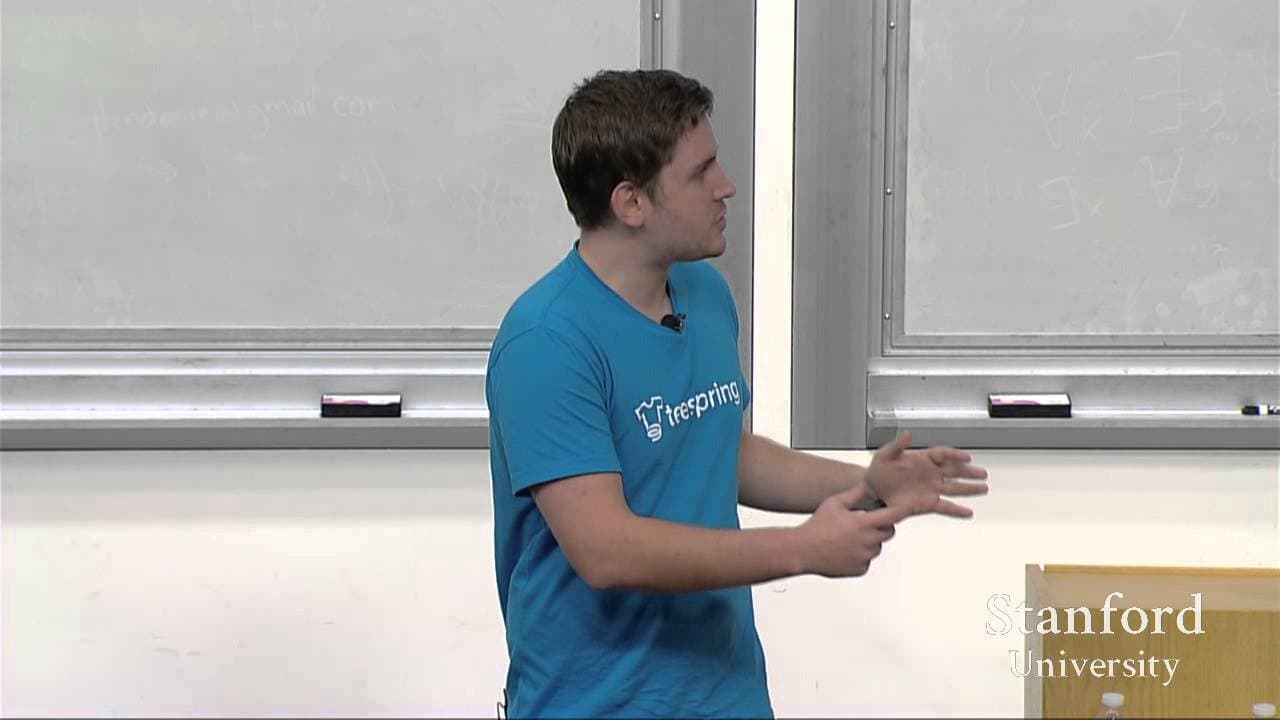
Test a startup idea with the simplest experiment that reveals whether customers genuinely want it, then launch as quickly as possible. DoorDash began with PDF restaurant menus, a phone number, personal cars, and manual operations. Doing unscalable work helped the founders validate demand, understand delivery firsthand, collect detailed customer feedback, and discover what later automation needed to accomplish.
Transcript
yeah thanks for having me Sam um I'm Stanley I'm the founder of door Dash and it's it's really amazing to be here because it wasn't actually that long ago where I sat in in your seats um I was class of 2014 um graduated in CS as well as my co-founder Andy and um for those of you who don't know what do... Read More
Key Insights
- Startup ideas are best treated as experiments because early assumptions must be tested against actual customer behavior. DoorDash first investigated whether local businesses had a delivery problem, then created a minimal service to determine whether consumers would place real orders.
- Customer interviews are useful for identifying recurring operational pain. After one store owner showed pages of delivery requests she could not fulfill, the founders spoke with roughly 150–200 other small business owners and repeatedly heard that delivery infrastructure was a major problem.
- A minimal launch can validate demand without a complete product. The founders assembled a basic landing page with restaurant PDF menus and a personal phone number in about an afternoon, allowing them to observe real purchase behavior before building sophisticated technology.
- Customer tolerance for inconvenience is evidence of meaningful demand. People continued ordering despite needing to browse PDF menus and place orders by phone through an unpolished website, which indicated that the delivery service addressed a sufficiently important need.
- Manual work is a competitive advantage during a startup's earliest stage. DoorDash's founders personally delivered food, handled customer support, distributed flyers, dispatched drivers, and contacted new customers because these activities helped the service operate and generated immediate learning.
- Existing tools can substitute for custom infrastructure during initial validation. DoorDash used Square for customer charges, Google Docs for order tracking, and Apple's Find My Friends for driver locations instead of spending months constructing a backend or automated dispatch system.
- Direct operational experience reveals what automation must eventually do. By driving deliveries and manually dispatching workers, the founders learned how the process functioned and gained practical information that helped shape the requirements for a future driver assignment algorithm.
- Product-market fit should precede investments in scalable systems. Automated dispatch, demand-supply matching, and other advanced technology became relevant only after the founders had launched, observed growing orders, and established that customers wanted the service.
Install to Summarize YouTube Videos and Get Transcripts
Explore YouTube Video Summarizer or Get YouTube Transcript Extractor
Questions & Answers
Q: How can founders test a startup idea quickly?
Founders can frame the idea as a hypothesis and build the smallest experiment that measures genuine customer behavior. DoorDash's founders wanted to know whether consumers demanded local restaurant delivery, so they created a simple landing page with PDF menus and a personal phone number. Receiving real calls and completing real deliveries gave them stronger evidence than spending months building infrastructure before testing demand.
Q: How did the founders identify DoorDash's initial problem?
The initial insight came from speaking with a small business owner who showed the founders a thick booklet containing pages of delivery orders. She had rejected many orders because she had no drivers and sometimes had to make deliveries herself. The founders then spoke with roughly 150–200 additional small business owners, who consistently described missing delivery infrastructure as a serious operational problem.
Q: What did the first DoorDash landing page include?
The first service, called PaloAltoDelivery.com, was an extremely simple landing page assembled in about an afternoon. The founders found restaurant menus in PDF form online, placed them on the page, and added a personal cell phone number at the bottom. There was no backend, driver network, dispatch algorithm, or polished ordering interface. Its purpose was simply to determine whether customers would call.
Q: Why did early customer phone calls validate the delivery idea?
The phone calls represented real attempts to purchase delivery, not merely positive comments about a hypothetical product. Orders increased from the first call to two calls the next day, then five, seven, and ten. Customers were willing to navigate PDF menus and order by phone through an unpolished site, showing that the underlying need was strong enough to overcome substantial inconvenience.
Q: What does doing things that do not scale mean for a startup?
Doing things that do not scale means manually performing essential work before automated systems or a large organization exist. DoorDash's founders drove deliveries after class, handled support calls, distributed flyers, dispatched drivers, and emailed new customers individually. These activities could not support unlimited growth, but they enabled the company to start serving customers immediately while learning how its market and operations actually worked.
Q: Which tools did DoorDash use before building custom systems?
DoorDash combined readily available tools to operate its early service. Square processed customer charges, Google Docs recorded and tracked orders, and Apple's Find My Friends showed the locations of drivers. The founders also used their own phones for ordering and support. This improvised setup allowed them to test demand and complete deliveries without first constructing a backend or sophisticated dispatch platform.
Q: How did manual operations help DoorDash design automation?
Manual operations gave the founders firsthand knowledge of each part of delivery. Driving helped them understand pickups, drop-offs, restaurants, and customer experiences. Manually assigning drivers revealed the decisions that a driver assignment algorithm would eventually need to make. Handling support and sending personalized follow-up emails also exposed customer problems and preferences in real time, creating practical requirements for later systems.
Q: When should a startup begin building scalable technology?
A startup should focus first on launching, testing its assumptions, and finding evidence that people want the service. DoorDash did not initially need automated dispatch, custom algorithms, or a complete backend. Those systems became important after orders grew and the company expanded across cities. The founders' sequence was to validate demand through manual work, understand the business, and then automate the proven process.
Summary & Key Takeaways
-
DoorDash emerged from interviews with small business owners about their operational problems. After one store owner described turning down delivery orders because she lacked drivers, the founders discussed delivery with roughly 150–200 additional businesses. Consistent agreement showed that missing delivery infrastructure was a widespread and painful problem worth investigating.
-
The founders tested consumer demand by creating PaloAltoDelivery.com in about an afternoon. The basic landing page displayed restaurant PDF menus and a personal phone number for orders. Calls arrived immediately and increased over subsequent days. Customers tolerated the awkward process, providing strong evidence that they genuinely wanted the service.
-
Early operations were deliberately manual. The founders delivered orders, answered support calls, distributed flyers, charged customers through Square, recorded orders in Google Docs, and tracked drivers with Find My Friends. This work supplied direct operational knowledge and customer feedback that later informed automated dispatch, driver assignment, and supply-demand systems.
Read in Other Languages (beta)
Share This Summary 📚
Summarize YouTube Videos and Get Video Transcripts with 1-Click
Try YouTube Summary with ChatGPT & Claude or YouTube Transcript Generator
Explore More Summaries from YC Root Access 📚
Summarize YouTube Videos and Get Video Transcripts with 1-Click
Try YouTube Summary with ChatGPT & Claude or YouTube Transcript Generator