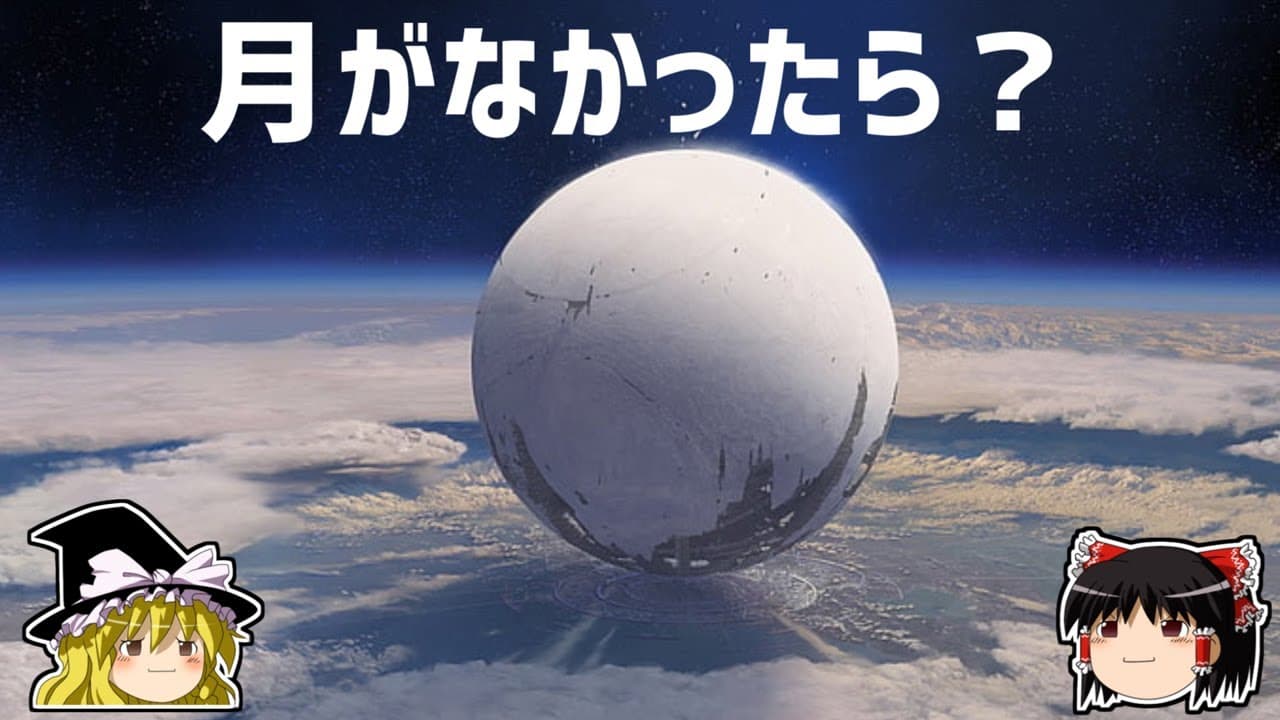
【ゆっくり解説】月がなかったら地球はどうなるのか?
TL;DR
Exploring Earth's changes without the moon's presence.
Transcript
The moon is beautiful today. Yeah. I like the moon because it gives me a peaceful feeling when I look at it. Well, there's even such a thing as moon gazing. Marisa was looking at the moon, and she was really glad there was a beautiful moon, and What did you ever think? Of course it's nice to see a beautiful moon! But in my case, it was more about t... Read More
Key Insights
- The moon plays a crucial role in Earth's current state, affecting tides, rotation, and the stability of the planet's axis.
- Without the moon, Earth's tides would be significantly reduced, impacting marine ecosystems and coastal environments.
- The absence of the moon would result in a faster Earth rotation, shortening the day to about eight hours and causing severe weather conditions.
- The moon stabilizes Earth's axial tilt, preventing extreme seasonal changes that could make life difficult or impossible.
- Without moonlight, many nocturnal creatures would struggle, as they rely on it for navigation and survival.
- The moon's gravitational pull slows Earth's rotation over time, contributing to the lengthening of days from six to 24 hours.
- Life on a moonless Earth would evolve differently, with species developing adaptations to survive in constant storms and reduced daylight.
- The moon's influence extends beyond tides and light, playing a vital role in Earth's geological and ecological balance.
Install to Summarize YouTube Videos and Get Transcripts
Explore YouTube Video Summarizer or Get YouTube Transcript Extractor
Questions & Answers
Q: What role does the moon's gravitational pull play on Earth?
The moon's gravitational pull is essential for creating tides on Earth. It pulls the water in the oceans, causing high and low tides. This gravitational influence also helps slow down Earth's rotation over time, lengthening the day from about six hours to 24 hours. Without the moon, tides would be reduced, and the Earth's rotation would be much faster.
Q: How would Earth's rotation change without the moon?
Without the moon, Earth's rotation would be significantly faster, resulting in a day that lasts only about eight hours. This increased rotation speed would lead to constant storms and extreme weather conditions, with wind speeds reaching up to 300 kilometers per hour. Such conditions would drastically alter the planet's climate and ecosystems.
Q: Why is the moon important for Earth's axial stability?
The moon helps stabilize Earth's axial tilt, which is currently at 23.4 degrees. This stability prevents extreme seasonal changes that could occur if the axis were to fluctuate widely, as seen on Mars. Without the moon, Earth's axis could tilt dramatically, leading to harsh climates with prolonged periods of extreme heat or cold, making life difficult or impossible.
Q: What impact would the absence of moonlight have on Earth's ecosystems?
Moonlight plays a vital role for many nocturnal creatures, such as moths and flies, which use it for navigation. Without moonlight, these creatures would struggle to survive, as they rely on it to fly straight in the dark. The absence of moonlight would force these species to adapt to new conditions or potentially face extinction.
Q: How does the moon influence Earth's weather patterns?
The moon indirectly influences Earth's weather patterns by affecting the planet's rotation speed. A faster rotation, as would occur without the moon, would result in constant storms and severe weather conditions. The moon's presence helps moderate these effects, contributing to the relatively stable climate we experience today.
Q: What would life on Earth be like without the moon?
Life on a moonless Earth would face significant challenges due to constant storms and reduced daylight. Species would need to evolve adaptations to survive in harsh conditions, such as developing protective body features and altered behaviors to cope with the faster rotation and shorter days. The absence of the moon would lead to a drastically different ecosystem.
Q: How does the moon affect the length of Earth's day?
The moon's gravitational pull creates tidal friction, which slows down Earth's rotation over time. This gradual deceleration has lengthened the day from about six hours to the current 24 hours. Without the moon, this process would not occur, and Earth's rotation would remain much faster, resulting in shorter days and more extreme weather patterns.
Q: Why is the moon considered crucial for Earth's habitability?
The moon is crucial for Earth's habitability because it stabilizes the planet's axial tilt, moderates rotation speed, and influences tides and weather patterns. These factors contribute to a stable climate and environment, allowing diverse ecosystems to thrive. Without the moon, Earth would experience extreme conditions that could make life difficult or impossible.
Summary & Key Takeaways
-
The video explores the hypothetical scenario of Earth without the moon, highlighting the moon's critical roles in tides, rotation, and axial stability. Without the moon, tides would diminish, rotation would speed up, and weather conditions would become severe, drastically altering life on Earth.
-
The moon's gravitational pull and moonlight affect Earth's ecosystems and geological stability. Without these influences, Earth's rotation would be faster, leading to shorter days, constant storms, and significant challenges for life to adapt and survive.
-
The absence of the moon would destabilize Earth's axial tilt, causing extreme seasonal changes. The moon's presence is essential for maintaining the planet's current rotation speed and ecological balance, making it a crucial component of Earth's habitability.
Read in Other Languages (beta)
Share This Summary 📚
Summarize YouTube Videos and Get Video Transcripts with 1-Click
Try YouTube Summary with ChatGPT & Claude or YouTube Transcript Generator
Explore More Summaries from るーいのゆっくり科学 📚

Summarize YouTube Videos and Get Video Transcripts with 1-Click
Try YouTube Summary with ChatGPT & Claude or YouTube Transcript Generator