Products
Features
YouTube Video Summarizer
Summarize YouTube videos
Web & PDF Highlighter
Highlight web pages & PDFs
Chat with PDF
Ask any PDF questions with AI
Ask AI Clone
Chat with your highlights & memories
Audio Transcriber
Transcribe audio files to text
Glasp Reader
Read and highlight articles
Kindle Highlight Export
Export your Kindle highlights
Idea Hatch
Hatch ideas from your highlights
Integrations
Obsidian Plugin
Notion Integration
Pocket Integration
Instapaper Integration
Medium Integration
Readwise Integration
Snipd Integration
Hypothesis Integration
Apps & Extensions
Chrome Extension
Safari Extension
Edge Add-ons
Firefox Add-ons
iOS App
Android App
Discover
Discover
Ideas
Discover new ideas and insights
Articles
Curated articles and insights
Books
Book recommendations by great minds
Posts
Essays and notes from readers
Quotes
Inspiring quotes collection
Videos
Curated videos and summaries
Explore Glasp
Glasp Newsletter
Weekly insights and updates
Glasp Talk
Interview series with great minds
Glasp Blog
Latest news and articles
Glasp Use Cases
Learn how others use Glasp
Build & Support
Glasp API
Access Glasp's API for developers
MCP Connector
Connect Glasp to Claude & ChatGPT
Community
Glasp Reddit Community
Students
Student discount and benefits
FAQs
Frequently Asked Questions
AboutPricing
DashboardLog inSign up

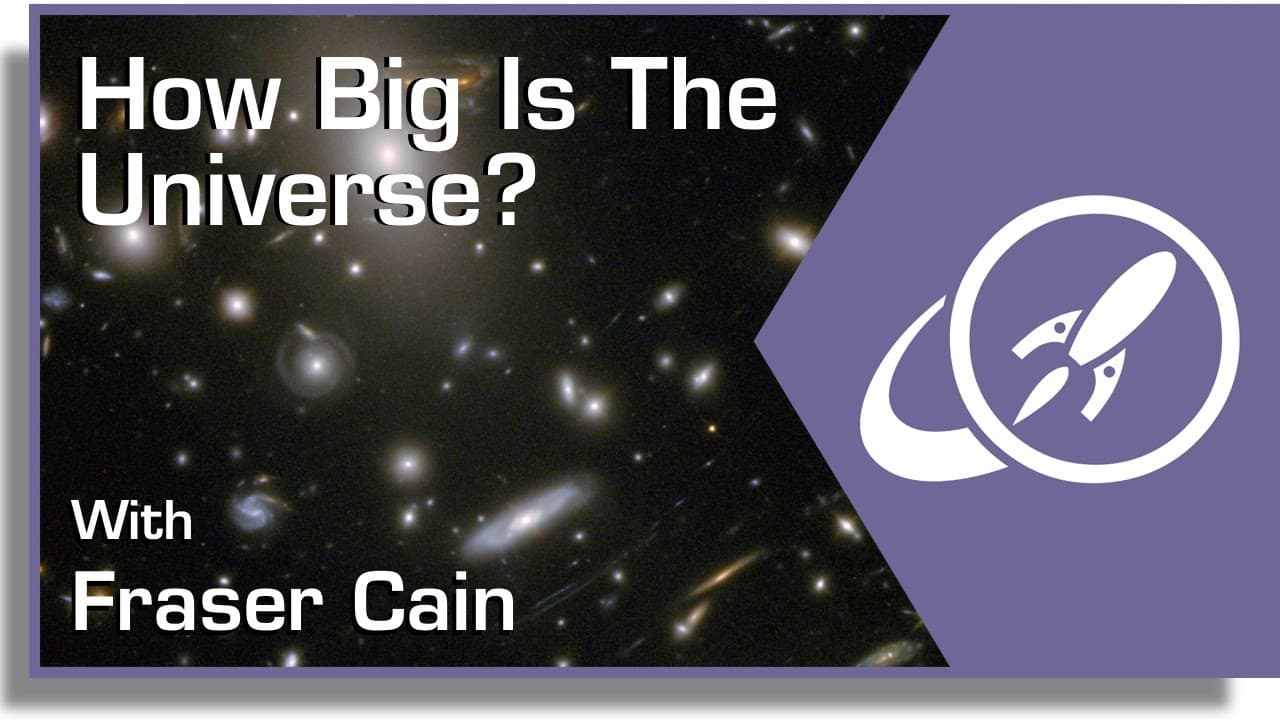
How Big Is The Universe?
56.6K views
•
August 11, 2014
by
Fraser Cain
YouTube video player
How Big Is The Universe?

TL;DR

Understanding the vastness of the universe and how distance is measured through redshift.

Transcript

the universe is big but how big is it what the heck kind of question is that our elephants big trucks dinosaurs cheese is cheese big how big is cheese how big is big the word big is tough to get clear are we talking about the size of the universe we can see or the universe is actual size right now this becomes even more complicated when we're tryin... Read More

Key Insights

  • ❓ Distance in the universe is challenging to quantify due to expansion and the concept of redshift.
  • 🛩️ The observable universe is a small fraction of the potential size of the universe.
  • ❓ The universe's size could extend indefinitely, with theories of a multiverse or eternal inflation.
  • 💁 Redshift values provide crucial information about the relative distance of galaxies.
  • ❓ The Cosmic Microwave Background offers insights into the observable universe's reach.
  • 👾 Understanding the vastness of space is crucial to grasping the size of the universe.
  • ❓ Astronomers focus on redshift values rather than absolute distances to measure cosmic distances.

Install to Summarize YouTube Videos and Get Transcripts

Explore YouTube Video Summarizer or Get YouTube Transcript Extractor

Questions & Answers

Q: How is distance measured in the universe?

Distance in the universe is often measured using redshift values, with higher redshift indicating greater distance due to the expansion of the universe.

Q: What is the significance of the Cosmic Microwave Background?

The Cosmic Microwave Background, with a redshift of about Z=1,000, provides a measurable distance of about 46 billion light-years, revealing the observable universe's vast size.

Q: Is the universe finite or infinite?

The universe's size is still debated, with theories suggesting it could be infinite or part of a multiverse, with our observable universe being a small portion within it.

Q: How does redshift help determine the size of the universe?

Redshift values aid in calculating the distance to galaxies, showcasing the expanding nature of the universe and the vast distances involved.

Summary & Key Takeaways

  • The size of the universe is complex due to expansion and the concept of redshift.

  • Distance to galaxies is measured by redshift values, indicating their relative distance.

  • The observable universe is a tiny fraction of the potential vastness, potentially part of a multiverse.


Read in Other Languages (beta)

English

Share This Summary 📚

Summarize YouTube Videos and Get Video Transcripts with 1-Click

Download browser extensions on:

Try YouTube Summary with ChatGPT & Claude or YouTube Transcript Generator

Explore More Summaries from Fraser Cain 📚
Why Did Mars Lose Its Atmosphere? And How Can We Get It Back? thumbnail
Why Did Mars Lose Its Atmosphere? And How Can We Get It Back?
Fraser Cain
Why Isn't the Asteroid Belt a Planet? thumbnail
Why Isn't the Asteroid Belt a Planet?
Fraser Cain
Are We Living in a Simulation? Understanding the Simulation Hypothesis thumbnail
Are We Living in a Simulation? Understanding the Simulation Hypothesis
Fraser Cain
Exploring Space Lava Tubes: How To Prepare For It thumbnail
Exploring Space Lava Tubes: How To Prepare For It
Fraser Cain / Universe Today Podcast
What's On The Far Side Of The Moon? thumbnail
What's On The Far Side Of The Moon?
Fraser Cain

Summarize YouTube Videos and Get Video Transcripts with 1-Click

Download browser extensions on:

Try YouTube Summary with ChatGPT & Claude or YouTube Transcript Generator

Apps & Extensions

  • Chrome Extension
  • Safari Extension
  • Edge Add-ons
  • Firefox Add-ons
  • iOS App
  • Android App

Key Features

  • YouTube Video Summarizer
  • Web & PDF Summarizer
  • Web & PDF Highlighter
  • Chat with PDF
  • Ask AI Clone
  • Audio Transcriber
  • Glasp Reader
  • Kindle Highlight Export
  • Idea Hatch

Integrations

  • Obsidian Plugin
  • Notion Integration
  • Pocket Integration
  • Instapaper Integration
  • Medium Integration
  • Readwise Integration
  • Snipd Integration
  • Hypothesis Integration

More Features

  • APIs
  • MCP Connector
  • Blog & Post
  • Embed Links
  • Image Highlight
  • Personality Test
  • Quote Shots

Company

  • About us
  • Blog
  • Community
  • FAQs
  • Job Board
  • Newsletter
  • Pricing
Terms

•

Privacy

•

Guidelines

© 2026 Glasp Inc. All rights reserved.