How Did EDSAC's Initial Boot Process Work?
TL;DR
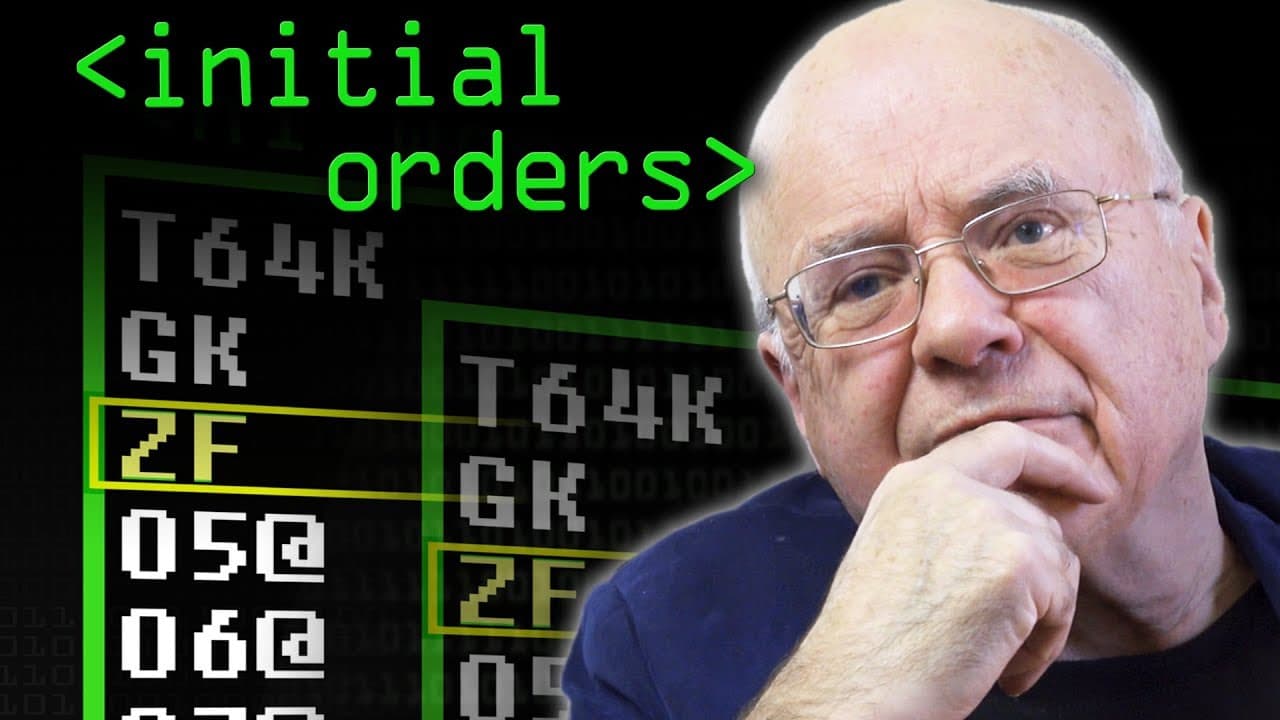
The initial boot process of the EDSAC involved loading programs known as initial orders one and two through unit selectors. Initial Orders One required manual memory address adjustments, while initial Orders Two introduced relative addressing, significantly improving programming efficiency and adaptability.
Transcript
we're basically using the edsack as a classic example of a very early von neumann computer into the great credit of cambridge i mean they did get it working by i think it was april may 1949 something like that and it went on to great glory afterwards and calculations on there from many cambridge scientists i mean it's no exaggeration to say nobel p... Read More
Key Insights
- 🖐️ The EDSAC computer played a significant role in scientific research and the winning of Nobel Prizes.
- 🥾 The initial boot process of the EDSAC involved loading initial orders one and two using unit selectors.
- 🧑🦽 Initial Orders 1 required manual address changes, while Initial Orders 2 introduced relative addressing for easier program modification.
- 😒 David Wheeler's initial orders two revolutionized the use of EDSAC by reducing the need for manual address changes.
- 👻 Relative addressing allowed for more adaptive and efficient programming on the EDSAC computer.
- 😆 The EDSAC computer used memory relocation and relative addressing to execute programs like the "hi" program.
- 🤲 The initial boot process of the EDSAC was a crucial step in getting the computer to function correctly.
Install to Summarize YouTube Videos and Get Transcripts
Explore YouTube Video Summarizer or Get YouTube Transcript Extractor
Questions & Answers
Q: How were the initial boot programs, initial orders one and two, loaded into the EDSAC computer?
The unit selectors were used to set up the bit patterns of the boot programs, allowing them to be loaded into the computer's memory. The start button was pressed to initiate the loading process.
Q: What was the purpose of the initial orders one and two?
The initial orders one served as a basic loader and ensured that other programs did not overwrite the pre-loaded initial orders. Initial orders two allowed for modification and relocation of programs without the need to change all the addresses manually.
Q: How did David Wheeler's initial orders two revolutionize the use of EDSAC?
Initial orders two introduced the concept of relative addressing, reducing the need for manual address changes when modifying or expanding programs. It made programming on the EDSAC more adaptive and efficient.
Q: How did the EDSAC computer execute the "hi" program using the initial orders?
The "hi" program was loaded into memory using the initial orders, which included instructions to output the characters "h" and "i" to the teleprinter. Memory relocation and relative addressing were used to ensure the correct output.
Summary & Key Takeaways
-
The EDSAC computer, a von Neumann computer, played a significant role in scientific calculations and the winning of Nobel Prizes.
-
The initial boot programs, initial orders one and two, were loaded into the computer using unit selectors and were written by David Wheeler, a phD student of Morris Wilkes.
-
Initial Orders 1 required manual alteration of memory addresses, while Initial Orders 2 allowed for easier program modification and relocation.
Read in Other Languages (beta)
Share This Summary 📚
Summarize YouTube Videos and Get Video Transcripts with 1-Click
Try YouTube Summary with ChatGPT & Claude or YouTube Transcript Generator
Explore More Summaries from Computerphile 📚




Summarize YouTube Videos and Get Video Transcripts with 1-Click
Try YouTube Summary with ChatGPT & Claude or YouTube Transcript Generator