What Is the Habitability of the Early Universe?
TL;DR
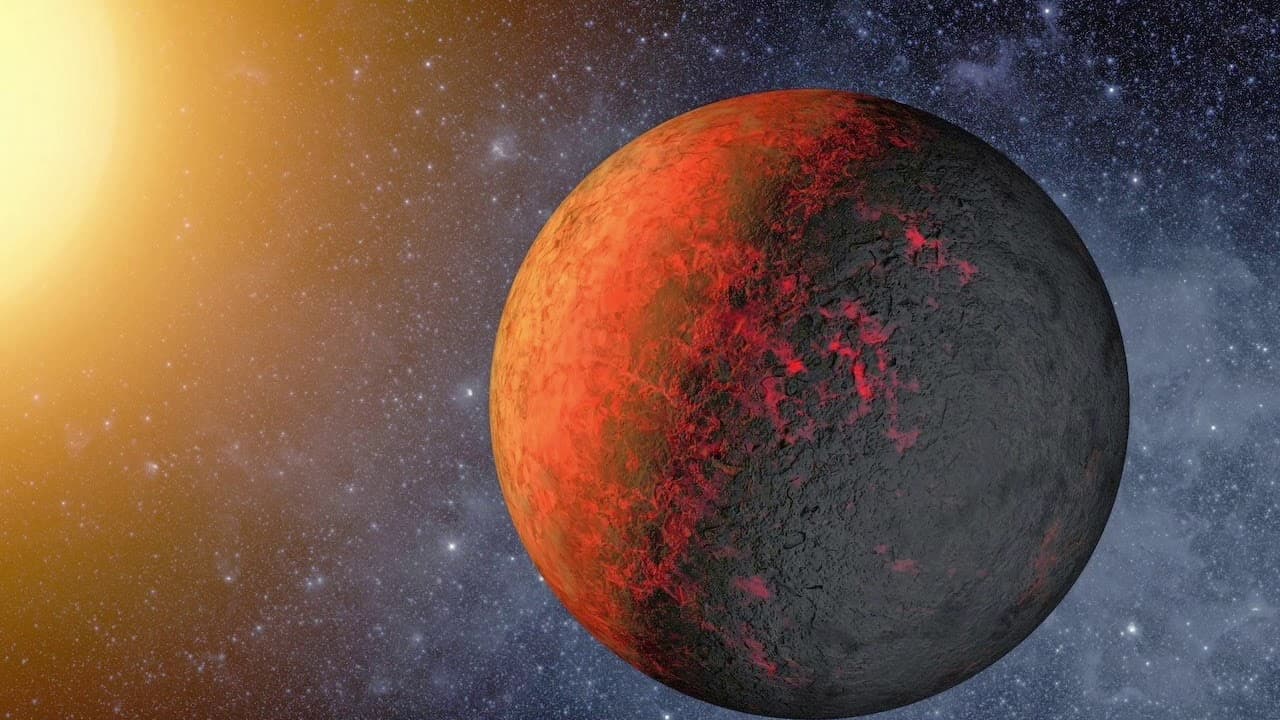
The early universe may have hosted habitable conditions just millions of years after the big bang, despite the absence of stars. This concept, termed a ‘habitable epoch,’ suggests planets could sustain liquid water due to the universe's initial warmth. If life formed during this period, it could mean planets exist that are nearly three times older than Earth.
Transcript
Within astrobiology discussions, the term habitable zone often comes up. There are several types of these general zones, but also special cases such as ice shell moons where life may be possible completely outside of a standard stellar habitable zone. With stars, this zone, also called the goldilocks zone, is a section of space around a star where ... Read More
Key Insights
- 🤩 Habitable zones are regions around stars where planets may have suitable conditions for liquid water and potential life.
- 🤩 Different types of stars have different distances for their habitable zones.
- 🛟 There is also a concept of a galactic habitable zone, which refers to favorable conditions for life and civilizations in a galaxy.
- 😃 New thinking suggests the possibility of a habitable epoch in the early universe, opening up the idea of life existing shortly after the big bang.
- 🤩 The oldest stars in the universe formed about 200 million years after the big bang, but evidence suggests the presence of heavy elements from even earlier stars.
- 💁 Very large stars, potentially formed through interactions with dark matter, could have produced heavier elements and pushed back the possibility of planet formation in the early universe.
- 🥶 If life existed during the habitable epoch, those planets could be nearly three times older than Earth.
Install to Summarize YouTube Videos and Get Transcripts
Explore YouTube Video Summarizer or Get YouTube Transcript Extractor
Questions & Answers
Q: What is a habitable zone and why is it important?
A habitable zone is a region around a star where planets could have temperatures suitable for liquid water. It is important because liquid water is a key ingredient for life as we know it, and finding habitable zones increases the chances of finding extraterrestrial life.
Q: How does the habitable zone vary depending on the type of star?
The habitable zone varies depending on the star's brightness and temperature. Red dwarf stars, which are dimmer and cooler, have habitable zones very close to them, while larger stars have habitable zones located further outward.
Q: Are there habitable zones beyond individual stars?
Yes, there is a concept of a galactic habitable zone, which refers to regions in a galaxy where life and civilizations are more likely to arise. The closer to the center of the galaxy, the harsher the environment becomes due to densely packed stars.
Q: Could life have existed shortly after the big bang?
It is possible that life could have existed just a few million years after the big bang during a period called the habitable epoch. This is based on the idea that the universe was warm enough to support liquid water on planet surfaces, regardless of their proximity to stars.
Summary & Key Takeaways
-
Habitable zones, also known as goldilocks zones, are areas around stars where planets could potentially have the right conditions for liquid water and, possibly, life.
-
Different types of stars have different habitable zone distances, with red dwarf stars having a habitable zone very close to them.
-
There is a concept of a galactic habitable zone, where conditions for life and civilizations are more likely, and areas closer to the center of the galaxy are less favorable.
-
A new idea proposes a habitable epoch in the early universe where life could have potentially existed just a few million years after the big bang.
Read in Other Languages (beta)
Share This Summary 📚
Summarize YouTube Videos and Get Video Transcripts with 1-Click
Try YouTube Summary with ChatGPT & Claude or YouTube Transcript Generator
Explore More Summaries from John Michael Godier 📚

Summarize YouTube Videos and Get Video Transcripts with 1-Click
Try YouTube Summary with ChatGPT & Claude or YouTube Transcript Generator