How to Create a Hurricane Effect Using Soap Bubbles
TL;DR
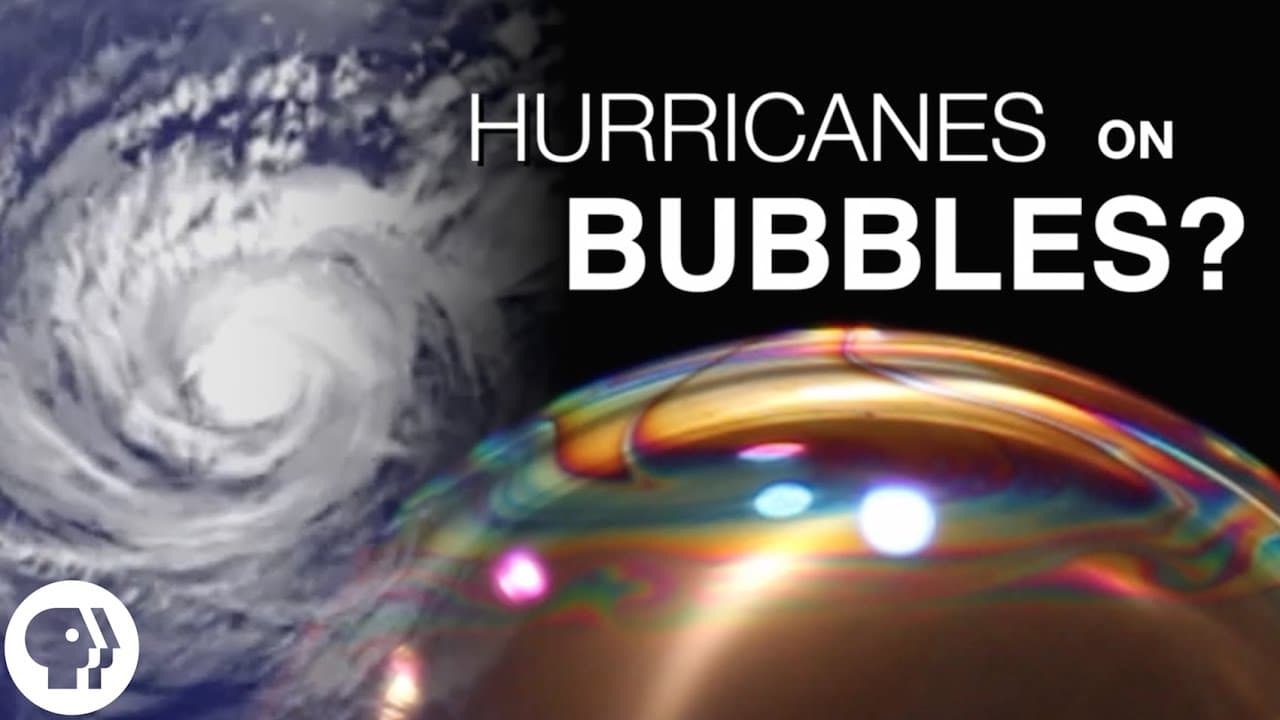
To create a hurricane effect using soap bubbles, heat the soap film from the bottom to induce convection, which forms vortices resembling hurricanes. This experiment reveals insights into atmospheric phenomena as the life cycle of bubble vortices parallels that of real cyclones, providing a unique method for studying their behavior and dissipation.
Transcript
[MUSIC PLAYING] Hurricanes on bubbles sound pretty crazy, right? Well, in 2013, scientists from the University of Bordeaux in France mimicked the physics of a hurricane on a half-sphere bubble. Check this out. As they heated up the soap film from the bottom, convection along the bubble shell caused vortices to form in the film. These vortices mimic... Read More
Key Insights
- 👁️🗨️ Scientists from the University of Bordeaux mimicked hurricane behavior in a soap bubble, providing a unique opportunity for studying atmospheric phenomena.
- 🌀 Bubble vortices closely parallel the life cycle of cyclones, potentially aiding in understanding cyclone dissipation.
- 👁️🗨️ Bubbles are used for various types of research, such as studying knotted vortices and developing mathematical models for bubble systems.
- 👁️🗨️ The behavior of bubbles is affected by factors like gravity, adhesion, and evaporation.
Install to Summarize YouTube Videos and Get Transcripts
Explore YouTube Video Summarizer or Get YouTube Transcript Extractor
Questions & Answers
Q: How did the scientists mimic the behavior of hurricanes in a soap bubble?
The scientists heated up the soap film from the bottom, causing convection and vortices to form in the film, similar to the behavior of hurricanes.
Q: Why are bubbles useful models for studying the atmosphere?
Bubbles are thin and flat, just like the atmosphere compared to the planet it encloses, making them ideal for studying atmospheric behavior.
Q: What can the study of bubble vortices tell us about cyclones in our atmosphere?
By comparing the life cycle of bubble vortices to cyclones, scientists can gain insight into when a cyclone will stop accelerating and eventually die out.
Q: Why did the dancing bubble in the video last for five minutes?
The heat and motion in the bubble redistributed the molecules, preventing the formation of a thin film at the top that would cause the bubble to pop.
Summary & Key Takeaways
-
In 2013, scientists from the University of Bordeaux created a half-sphere bubble that mimicked the physics of hurricanes and cyclones.
-
Bubbles are thin and flat, making them useful models for studying atmospheric behavior.
-
The life cycle of bubble vortices closely resembles that of cyclones, offering insight into their behavior and eventual dissipation.
Read in Other Languages (beta)
Share This Summary 📚
Summarize YouTube Videos and Get Video Transcripts with 1-Click
Try YouTube Summary with ChatGPT & Claude or YouTube Transcript Generator
Explore More Summaries from Physics Girl 📚

Summarize YouTube Videos and Get Video Transcripts with 1-Click
Try YouTube Summary with ChatGPT & Claude or YouTube Transcript Generator