Motion Graphs (3 of 8) Position vs. Time Graph Part 3, Constant Velocity and Acceleration
TL;DR
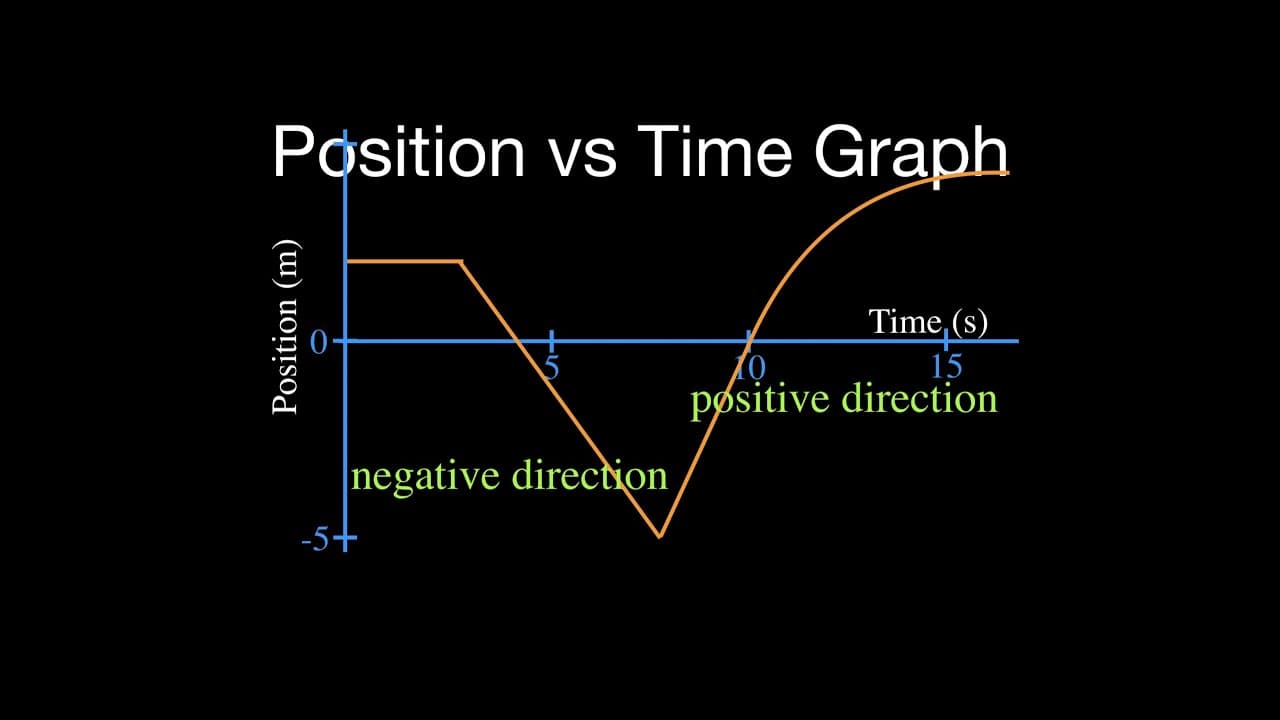
Position vs. time graphs show constant velocities, speeding ups, and slowing downs, where slope equals velocity.
Transcript
okay this video is officially part three of the position versus time graph series and this video we're going to put together the constant velocities and the speeding ups and the slowing downs and see if we can put all together into one graph and you can see we basically have the same uh idea for the graphs except now we have positive positions and ... Read More
Key Insights
- 🙃 Position vs. time graphs show constant velocities with straight lines and speeding ups/slowing downs with curved lines.
- 🐎 Slope equals velocity on the graph, assisting in determining the speed of the object.
- 🐢 Acceleration is indicated by changing slopes, signifying speeding up or slowing down.
- 🤘 Understanding the sign of the slope helps in determining the direction of motion on the graph.
- 📈 Constant slopes on the graph represent constant velocities without acceleration.
- 📈 The relationship between slope, velocity, and direction is crucial in interpreting the graph accurately.
- ❎ Positive slopes indicate motion in the positive direction, while negative slopes indicate motion in the negative direction.
Install to Summarize YouTube Videos and Get Transcripts
Explore YouTube Video Summarizer or Get YouTube Transcript Extractor
Questions & Answers
Q: How does slope correlate with velocity on a position vs. time graph?
The slope of a line on the graph represents the velocity of the object. A positive slope indicates positive velocity, negative slope indicates negative velocity, and zero slope indicates no velocity.
Q: What does a constant slope on a position vs. time graph signify?
A constant slope on the graph signifies a constant velocity. If the slope remains the same, the object is neither speeding up nor slowing down, maintaining a consistent speed.
Q: How can one determine acceleration from a position vs. time graph?
Acceleration is determined by observing curved lines on the graph, indicating changing slopes. If the slope changes, it signifies acceleration, either speeding up or slowing down.
Q: Why is the sign of the velocity important in understanding the direction of motion on a position vs. time graph?
The sign of the velocity, determined by the slope, indicates the direction of motion. A positive slope signifies motion in the positive direction, while a negative slope implies motion in the negative direction.
Summary & Key Takeaways
-
Position vs. time graphs illustrate constant velocities, speeding ups, and slowing downs.
-
Slope on the graph represents velocity, with positive and negative positions.
-
Understanding slopes helps determine acceleration, direction, and speed changes.
Read in Other Languages (beta)
Share This Summary 📚
Summarize YouTube Videos and Get Video Transcripts with 1-Click
Try YouTube Summary with ChatGPT & Claude or YouTube Transcript Generator
Explore More Summaries from Step by Step Science 📚


Summarize YouTube Videos and Get Video Transcripts with 1-Click
Try YouTube Summary with ChatGPT & Claude or YouTube Transcript Generator