What Is the Future of Our Sun?
TL;DR
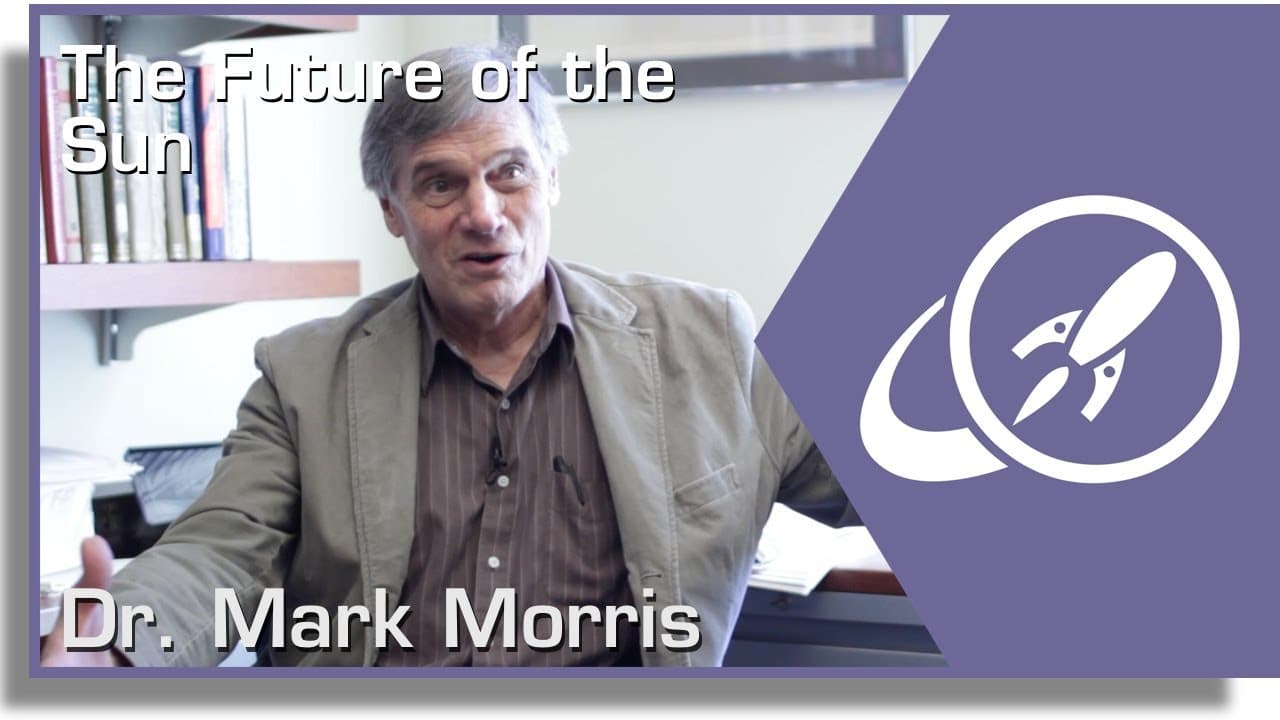
Professor Mark Morris discusses the formation of planetary nebulae from dying stars and the role of binary companions.
Transcript
"Hi, I'm Professor Mark Morris. I'm teaching at UCLA where I also carry out my research. I work on the center of the galaxy and what's going on there - in this fabulous arena there, and on dying stars - stars that have reached the end of their lifetime and are putting on a display for us as they do so." "Well, there's every expectation that in abou... Read More
Key Insights
- 👨🦳 Stars like our sun will expand to become red giants and eventually evolve into white dwarfs, shedding outer layers to form planetary nebulae.
- 🤩 The dust grains expelled by red giant stars carry gas with them, leading to the creation of planetary nebulae.
- 📐 Mystery surrounds the transformation of planetary nebulae into bipolar shapes, with potential explanations involving angular momentum from binary companions.
- 🤩 Binary companions near dying stars may play a role in the formation and orientation of planetary nebulae.
- 🤩 Professor Mark Morris explores the mysteries of planetary nebulae by studying the formation processes of dying stars.
- 🤩 The presence of binary companions near dying stars could influence the shape and orientation of planetary nebulae.
- 🤩 Understanding the processes behind planetary nebula formation provides insights into the evolution of stars and the creation of stunning astronomical displays.
Install to Summarize YouTube Videos and Get Transcripts
Explore YouTube Video Summarizer or Get YouTube Transcript Extractor
Questions & Answers
Q: How do stars like our sun transform into red giants and produce planetary nebulae?
Stars like our sun will swell up to become red giants, shedding outer layers as dust grains, before evolving into white dwarfs, creating stunning planetary nebulae displays.
Q: What causes some planetary nebulae to be bipolar rather than spherical?
The reason behind some planetary nebulae forming bipolar shapes may lie in the presence of binary companions near the dying star, influencing the ejection of matter in specific directions.
Q: How does the process of shedding outer layers and forming planetary nebulae contribute to the evolution of dying stars?
As dying stars expel their atmospheres and transform into white dwarfs, the fluorescent process of the exposed core lights up the out-flowing envelope, leading to the creation of planetary nebulae.
Q: What role does angular momentum play in the formation of planetary nebulae?
While rotation of the star is not sufficient to explain the preferred axis of planetary nebulae, rapidly spinning cores or binary companions may impose angular momentum orientations on the system.
Summary & Key Takeaways
-
Professor Morris studies the center of galaxies and dying stars, focusing on the spectacular display of dying stars as they reach the end of their lives.
-
Stars like our sun will become red giants, eventually shedding their outer layers as dust grains and evolving into white dwarfs, creating planetary nebulae.
-
The formation of planetary nebulae, whether spherical or bipolar, poses a mystery that scientists are investigating.
Read in Other Languages (beta)
Share This Summary 📚
Summarize YouTube Videos and Get Video Transcripts with 1-Click
Try YouTube Summary with ChatGPT & Claude or YouTube Transcript Generator
Explore More Summaries from Fraser Cain 📚




Summarize YouTube Videos and Get Video Transcripts with 1-Click
Try YouTube Summary with ChatGPT & Claude or YouTube Transcript Generator