How Do Quarterly Market Shifts Affect Trading Strategies?
TL;DR
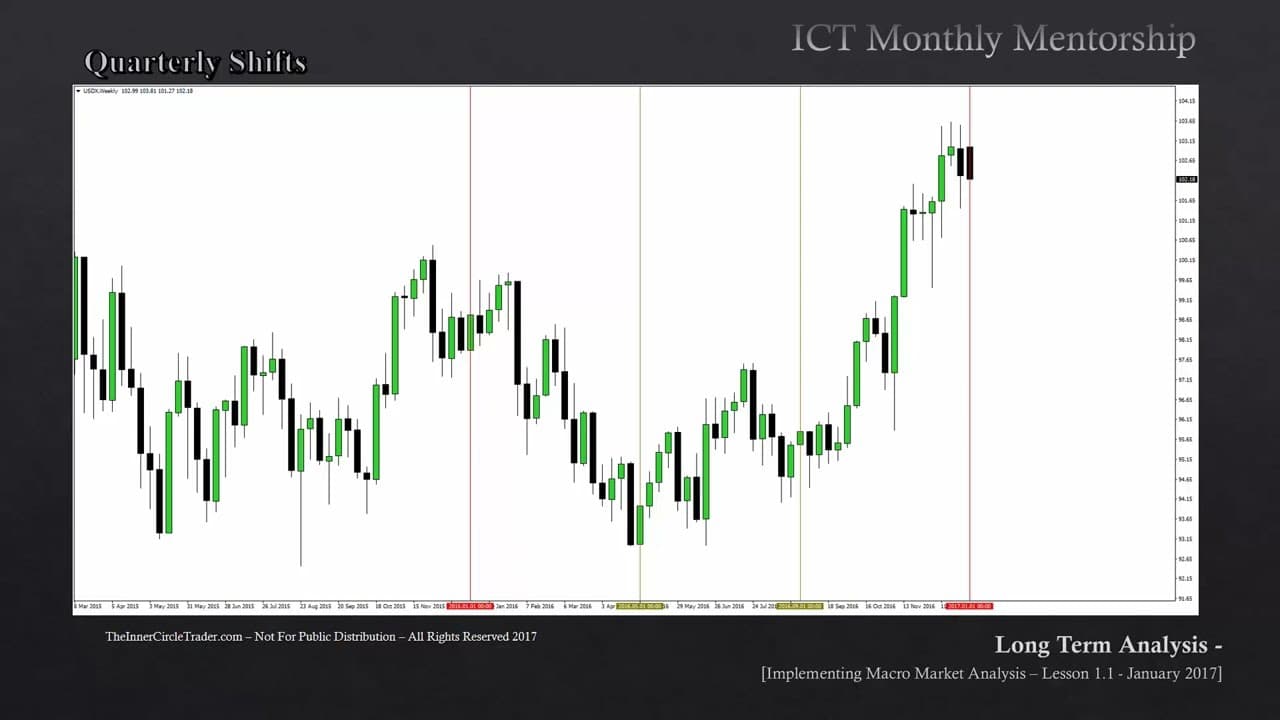
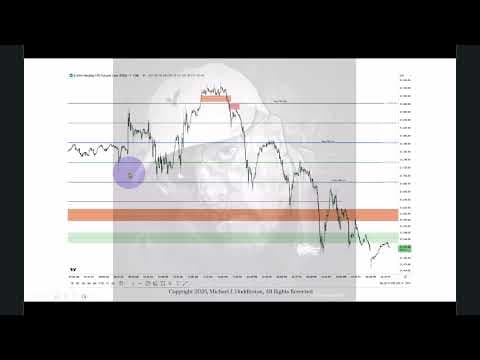
Quarterly market shifts occur every three to four months and significantly influence trading strategies and trends. Understanding these shifts helps traders navigate price movements, as they are driven by an underlying price engine algorithm at the Central Bank level. By analyzing institutional order flow and liquidity reference points, traders can identify high probability trading conditions.
Transcript
okay folks welcome to the January 2017 ICT mentorship long-term analysis Lesson 1.1 we're teaching implementing macro analysis and this teaching is quarterly shifts and epta data ranges the quarterly Market shift okay if there is an algorithm if our belief is that there is a automated price delivery engine that takes care of providing efficiency in... Read More
Key Insights
- 🎮 Markets are not random, but rather controlled and manipulated by algorithms.
- 🖐️ Liquidity and market sentiment play a significant role in price movement.
- 📈 Quarterly market shifts impact trading strategies and trends.
- 😥 Understanding institutional order flow and liquidity reference points is essential for successful trading.
- 🍳 Market structure breaks and shifts indicate potential trading opportunities.
- 🍉 Longer-term trends can be identified by studying quarterly market shifts.
- 💰 The dollar Index and euro dollar typically have an inverse correlation in trading.
Install to Summarize YouTube Videos and Get Transcripts
Explore YouTube Video Summarizer or Get YouTube Transcript Extractor
Questions & Answers
Q: How often do market shifts occur?
Market shifts occur every three to four months, creating new trading opportunities and trends.
Q: How does the price engine algorithm influence trading?
The price engine algorithm, controlled by the Central Bank, sets prices and allows the market to move within predetermined ranges, impacting trading efficiency.
Q: What is the importance of understanding intermediate price swings?
Understanding and anticipating intermediate price swings allows traders to take advantage of market movements and benefit from long-term position trading.
Q: How can traders predict buy and sell programs?
By analyzing the manipulation of underlying assets and comparing it to the benchmark, traders can anticipate buy and sell programs and make informed trading decisions.
Key Insights:
- Markets are not random, but rather controlled and manipulated by algorithms.
- Liquidity and market sentiment play a significant role in price movement.
- Quarterly market shifts impact trading strategies and trends.
- Understanding institutional order flow and liquidity reference points is essential for successful trading.
- Market structure breaks and shifts indicate potential trading opportunities.
- Longer-term trends can be identified by studying quarterly market shifts.
- The dollar Index and euro dollar typically have an inverse correlation in trading.
- Quarterly market shifts can help traders forecast and prepare for potential market movements.
Summary & Key Takeaways
-
Market shifts occur every three to four months and can impact trading strategies and trends.
-
The efficiency of price delivery and trading in the market is influenced by a price engine algorithm at the Central Bank level.
-
Anticipating and understanding intermediate price swings is crucial to trading success on a macro level.
Read in Other Languages (beta)
Share This Summary 📚
Summarize YouTube Videos and Get Video Transcripts with 1-Click
Try YouTube Summary with ChatGPT & Claude or YouTube Transcript Generator
Explore More Summaries from The Inner Circle Trader 📚


Summarize YouTube Videos and Get Video Transcripts with 1-Click
Try YouTube Summary with ChatGPT & Claude or YouTube Transcript Generator