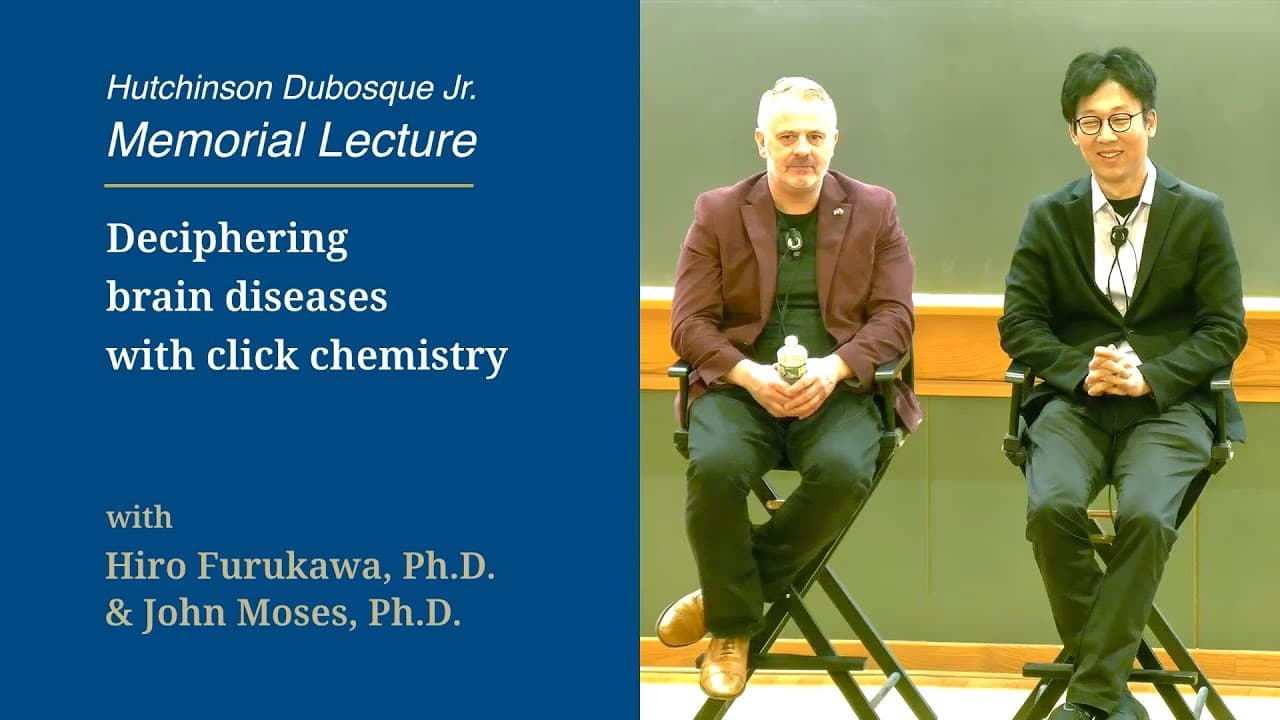
How to Use Click Chemistry for Brain Disease Research
TL;DR
Click chemistry is a powerful tool in neuroscience for designing drugs that target specific brain receptors, like NMDA, which are implicated in diseases such as Alzheimer's and depression. By visualizing receptor structures with cryo-EM, researchers can develop precise compounds to minimize side effects and enhance therapeutic efficacy.
Transcript
Thank you. Can you hear me? Right. Thanks for the generous introduction, Bruce. And, thank you all for being here. I've been here for almost 20 years, and I'm. I've been very proud to be a part of this community, Long Island community. So thank you all for inspiring me. So the research I'm going to tell you about today, we're calling it chemical an... Read More
Key Insights
- Click chemistry is a concept for making molecules easily and robustly, developed by John Moses's mentor.
- NMDA receptors are crucial for learning and memory, but dysfunction can lead to neuropsychiatric disorders.
- Cryo-EM technology allows visualization of NMDA receptor molecules at nanometer resolution.
- Ketamine, a controversial drug, binds to NMDA receptors and is FDA-approved for depression treatment.
- Structural biology and click chemistry together provide a blueprint for drug development targeting NMDA receptors.
- Neurosteroids are natural compounds that may protect neurons from degeneration and inflammation.
- Autoimmunity against NMDA receptors can cause conditions like anti-NMDA receptor autoimmune encephalitis.
- Specific drug targeting is essential for resolving neuropsychiatric disorders using structural biology and click chemistry.
Install to Summarize YouTube Videos and Get Transcripts
Explore YouTube Video Summarizer or Get YouTube Transcript Extractor
Questions & Answers
Q: How does click chemistry aid in drug development for brain diseases?
Click chemistry aids in drug development by allowing researchers to create molecules easily and robustly. This method helps design drugs that specifically target brain receptors like NMDA, which are involved in neuropsychiatric disorders. By understanding receptor structures through cryo-EM, click chemistry enables the development of compounds that minimize side effects and improve therapeutic efficacy.
Q: What role do NMDA receptors play in neurological disorders?
NMDA receptors are crucial for synaptic transmission, learning, and memory formation. Dysfunctional NMDA receptor activity is linked to several neurological disorders, including Alzheimer's disease, Parkinson's, and depression. Overactive NMDA receptors can lead to neurodegenerative diseases, while underactive receptors are associated with conditions like schizophrenia and intellectual disabilities.
Q: How does cryo-EM technology contribute to neuroscience research?
Cryo-EM technology contributes to neuroscience research by allowing scientists to visualize the structure of brain receptors, such as NMDA, at a nanometer resolution. This detailed visualization helps researchers understand how drugs interact with these receptors and aids in designing targeted therapies that can minimize side effects and improve treatment outcomes for neurological disorders.
Q: What are the implications of ketamine's interaction with NMDA receptors?
Ketamine interacts with NMDA receptors by binding to them and blocking ion channels, which affects synaptic transmission. Although it is FDA-approved for depression treatment, its use is controversial due to its origins as a recreational drug with potential side effects. Understanding ketamine's binding poses helps researchers design safer, more effective antidepressants with fewer side effects.
Q: What is the significance of autoimmunity against NMDA receptors?
Autoimmunity against NMDA receptors can lead to severe neurological conditions, such as anti-NMDA receptor autoimmune encephalitis. This condition is characterized by symptoms like psychosis and seizures, often mistaken for schizophrenia. It occurs when the body mistakenly attacks NMDA receptors, highlighting the need for accurate diagnosis and targeted therapies to address the underlying autoimmune response.
Q: How can neurosteroids protect neurons in neurological disorders?
Neurosteroids are natural compounds synthesized by the body that may protect neurons from degeneration and inflammation. By targeting NMDA receptors specifically, neurosteroids could potentially reduce the impact of neurodegenerative diseases and inflammation-related damage. Researchers are exploring ways to enhance neurosteroid specificity using click chemistry to improve therapeutic outcomes for neurological disorders.
Q: What challenges exist in developing drugs for neuropsychiatric disorders?
Developing drugs for neuropsychiatric disorders is challenging due to the complexity of brain receptor interactions and the need to minimize side effects. Targeting specific receptors like NMDA requires precise drug design, which is facilitated by understanding receptor structures through cryo-EM. Combining structural biology with click chemistry provides a promising approach to overcoming these challenges and developing effective therapies.
Q: Why is specific drug targeting important in treating neuropsychiatric disorders?
Specific drug targeting is crucial in treating neuropsychiatric disorders to ensure that therapies precisely interact with intended brain receptors, minimizing side effects and maximizing therapeutic benefits. By using structural biology to map drug binding sites and click chemistry to design specific compounds, researchers can develop targeted treatments that address the underlying causes of disorders like depression and Alzheimer's disease.
Summary & Key Takeaways
-
Click chemistry facilitates the creation of molecules easily and robustly, aiding in the development of drugs targeting specific brain receptors such as NMDA. These receptors are important for learning and memory but are implicated in disorders like Alzheimer's and depression when dysfunctional.
-
Cryo-EM technology enables the visualization of NMDA receptor molecules at a nanometer scale, providing insights into how drugs like ketamine interact with these receptors. This understanding helps in designing drugs that minimize side effects and enhance therapeutic outcomes.
-
Autoimmunity against NMDA receptors can lead to severe conditions like anti-NMDA receptor autoimmune encephalitis, characterized by psychosis and seizures. Combining structural biology and click chemistry offers a promising approach to developing targeted therapies for neuropsychiatric disorders.
Read in Other Languages (beta)
Share This Summary 📚
Summarize YouTube Videos and Get Video Transcripts with 1-Click
Try YouTube Summary with ChatGPT & Claude or YouTube Transcript Generator
Explore More Summaries from Cold Spring Harbor Laboratory 📚




Summarize YouTube Videos and Get Video Transcripts with 1-Click
Try YouTube Summary with ChatGPT & Claude or YouTube Transcript Generator