Encoding strategies | Processing the Environment | MCAT | Khan Academy
TL;DR
Learn about encoding strategies that can help improve memory retention and learning by moving information from working memory to long-term memory.
Transcript
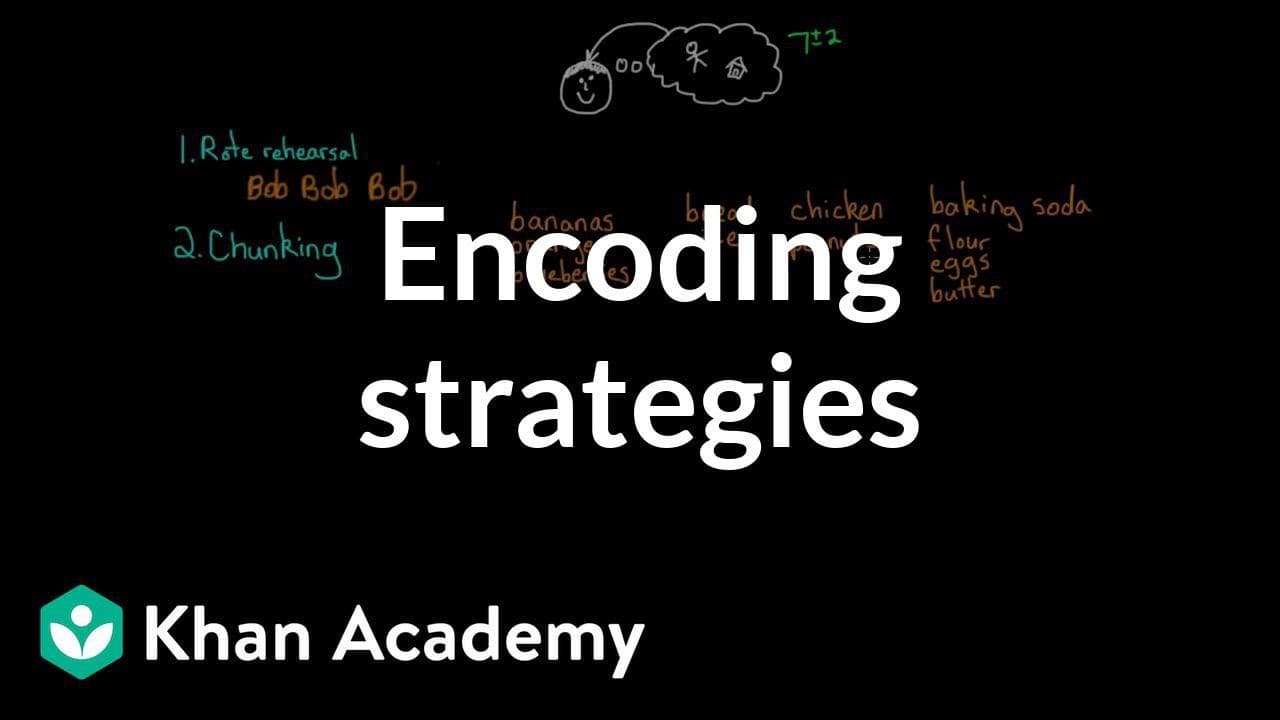
Take a moment and try to remember what you were doing last week. Chances are you can remember the general idea of the things you did, the people you saw. But unless you really put effort to encode that information into your long-term memory, you might not remember specifics. However, it's sometimes really important that we remember specific informa... Read More
Key Insights
- 💦 Encoding is crucial for transferring information from working memory to long-term memory.
- 🖤 Rote rehearsal is the least effective encoding technique, as it lacks effortful processing.
- 💁 Chunking helps organize and group information into meaningful units for better recall.
- 🦻 Mnemonic devices, such as imagery and acronyms, aid in remembering information effectively.
- 🥺 Self-referencing and preparing to teach involve deep processing, leading to improved retention.
- 👾 Spacing out study sessions over time enhances long-term memory retention compared to cramming.
- 💁 Effective encoding techniques require effort and active engagement with the information.
Install to Summarize YouTube Videos and Get Transcripts
Explore YouTube Video Summarizer or Get YouTube Transcript Extractor
Questions & Answers
Q: What is encoding?
Encoding is the process of transferring information from working memory to long-term memory through various techniques and strategies.
Q: Why is rote rehearsal not an effective encoding technique?
Rote rehearsal involves repetition without processing the information, making it less likely to transfer to long-term memory. It requires no effort or deep understanding.
Q: How does chunking aid in memory retention?
Chunking involves grouping information into meaningful categories, making it easier to remember. It allows for better organization and retrieval of information.
Q: How do mnemonic devices help in remembering information?
Mnemonic devices like imagery, the pegword system, method of loci, and acronyms create memorable associations with the information, facilitating better recall and retention.
Key Insights:
- Encoding is crucial for transferring information from working memory to long-term memory.
- Rote rehearsal is the least effective encoding technique, as it lacks effortful processing.
- Chunking helps organize and group information into meaningful units for better recall.
- Mnemonic devices, such as imagery and acronyms, aid in remembering information effectively.
- Self-referencing and preparing to teach involve deep processing, leading to improved retention.
- Spacing out study sessions over time enhances long-term memory retention compared to cramming.
- Effective encoding techniques require effort and active engagement with the information.
- Employing multiple encoding techniques increases the likelihood of remembering information accurately and efficiently.
Summary & Key Takeaways
-
Encoding is the process of transferring information from working memory to long-term memory.
-
Rote rehearsal, the repetition of information, is the least effective encoding technique.
-
Chunking involves grouping information into meaningful units, making it easier to remember.
-
Mnemonic devices like imagery, the pegword system, method of loci, and acronyms aid in remembering information.
-
Self-referencing and preparing to teach are deep processing techniques that improve information retention.
-
Spacing out study sessions over time is more effective than cramming.
Read in Other Languages (beta)
Share This Summary 📚
Summarize YouTube Videos and Get Video Transcripts with 1-Click
Try YouTube Summary with ChatGPT & Claude or YouTube Transcript Generator
Explore More Summaries from khanacademymedicine 📚




Summarize YouTube Videos and Get Video Transcripts with 1-Click
Try YouTube Summary with ChatGPT & Claude or YouTube Transcript Generator