Emotions: limbic system | Processing the Environment | MCAT | Khan Academy
TL;DR
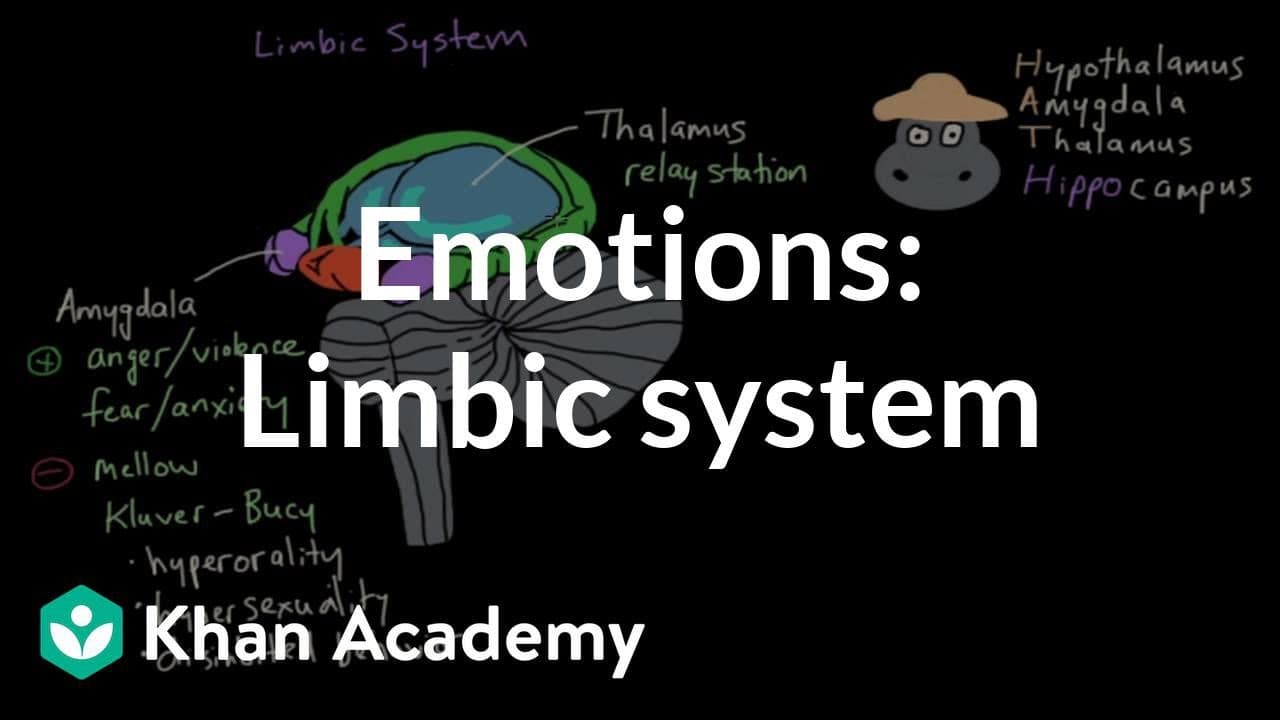
The limbic system consists of the thalamus, amygdala, hippocampus, and hypothalamus, which play crucial roles in regulating emotion.
Transcript
So let's talk about the limbic system. What is the limbic system? Well, it's a set of structures in the brain. And many of those structures play an important role in regulating emotion. Now, something that gets kind of confusing when you talk about the limbic system is that experts can't actually agree on what structures make up the entire limbic s... Read More
Key Insights
- 🧠 The limbic system is a set of structures in the brain that regulate emotions, but there is disagreement among experts on its exact composition. The four most important structures for emotions in the limbic system are the hypothalamus, amygdala, thalamus, and hippocampus, represented by the mnemonic HAT.
- 👃 The sense of smell bypasses the thalamus and has its own relay station in the brain, which explains why certain scents can evoke powerful memories and emotions.
- 🔵 The thalamus functions as a sensory relay station, directing the senses to the appropriate areas in the cortex and influencing emotions.
- 💜 The amygdala, also known as the aggression center, can evoke feelings of anger, violence, fear, and anxiety when stimulated. A destroyed amygdala can have a mellowing effect, while bilateral destruction can lead to symptoms associated with Kluver-Bucy syndrome.
- 🌿 The hypothalamus, a small structure below the thalamus, plays a key role in regulating various bodily functions, including the autonomic nervous system, which controls fight or flight and rest and digest responses.
- 🌳 The hippocampus is responsible for forming new memories and converting short-term memory into long-term memory. Damage to the hippocampus can result in difficulty forming new memories, but old memories remain intact.
- 💭 Memories, whether short-term or long-term, can evoke emotions, making the hippocampus important in emotional experiences.
- 🧠 The hypothalamus regulates the autonomic nervous system and triggers the release of hormones, including adrenaline, into the bloodstream. It also plays a role in regulating basic drives like hunger, thirst, sleep, and sex, all of which can impact emotions.
Install to Summarize YouTube Videos and Get Transcripts
Explore YouTube Video Summarizer or Get YouTube Transcript Extractor
Questions & Answers
Q: How do smells impact emotions?
Smells can evoke powerful memories and emotions because the sense of smell bypasses the thalamus, directly connecting to areas in the brain responsible for regulating emotions.
Q: What happens when the amygdala is stimulated?
When the amygdala is stimulated, it can evoke feelings of anger, violence, fear, and anxiety. Experiments have shown that stimulating the amygdala produces these emotional responses.
Q: What is Kluver-Bucy syndrome?
Kluver-Bucy syndrome occurs when both amygdalas are destroyed, resulting in symptoms such as hyperorality, hypersexuality, and disinhibited behavior. The syndrome is named after psychologists Dr. Kluver and Dr. Bucy, who observed these effects.
Q: What role does the hippocampus play in emotion?
The hippocampus is responsible for converting short-term memories into long-term memories. Memories, both short-term and long-term, can evoke emotions. Damage to the hippocampus can result in difficulty forming new memories.
Q: How does the hypothalamus regulate emotions?
The hypothalamus regulates emotions by controlling the autonomic nervous system, which includes the fight or flight and rest and digest responses. It triggers the release of hormones, such as adrenaline, into the bloodstream.
Summary & Key Takeaways
-
The limbic system is a set of structures in the brain responsible for regulating emotions.
-
The four important structures of the limbic system for emotion are the thalamus, amygdala, hippocampus, and hypothalamus.
-
The thalamus acts as a sensory relay station, directing senses to different areas of the brain; the amygdala is involved in aggression and fear; the hippocampus is responsible for forming new memories; and the hypothalamus regulates autonomic functions and the release of hormones.
Read in Other Languages (beta)
Share This Summary 📚
Summarize YouTube Videos and Get Video Transcripts with 1-Click
Try YouTube Summary with ChatGPT & Claude or YouTube Transcript Generator
Explore More Summaries from khanacademymedicine 📚




Summarize YouTube Videos and Get Video Transcripts with 1-Click
Try YouTube Summary with ChatGPT & Claude or YouTube Transcript Generator