What causes hurricanes?
TL;DR
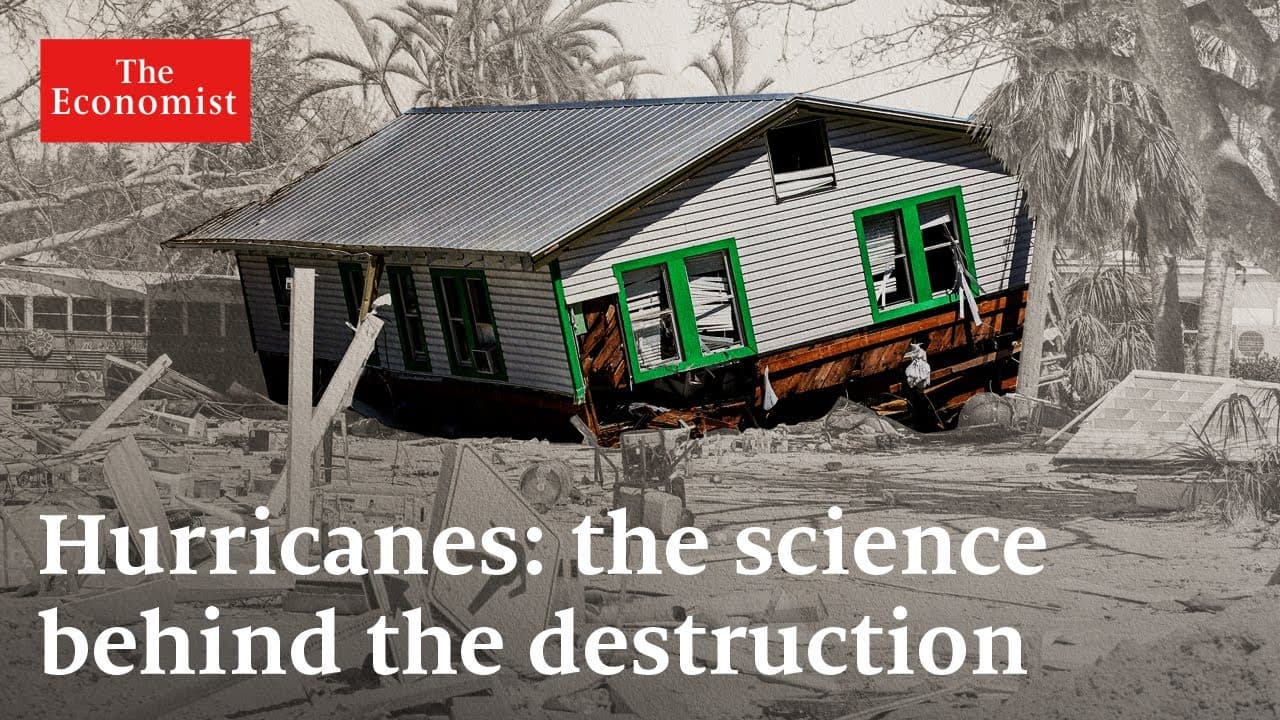
Hurricanes are self-sustaining, powerful storms that form over tropical waters, causing extreme rainfall, storm surges, and destruction when they make landfall.
Transcript
they're one of the most destructive natural phenomena on Earth vast rotating thunderstorms are self-sustaining heat engines the winds can reach speeds of over 200 miles per hour and when they make land the consequences can be devastating from extreme rainfall Storm surges it's amazingly powerful way of focusing the sun's energy into one little dest... Read More
Key Insights
- 🥺 Hurricanes are one of the most destructive natural phenomena, causing extreme rainfall and storm surges that lead to devastating consequences for coastal communities.
- 🫚 The origin of hurricane names is rooted in history and language, reflecting different indigenous cultures and colonial influences.
- 💨 The conditions required for a tropical wave to transform into a hurricane include warm sea surface temperatures, low wind shear, high humidity, and a certain distance from the equator.
- 🥵 Hurricanes derive their power from the sun's energy and the ocean's heat, which they convert into destructive winds and rainfall.
- 🌊 The impact of climate change on hurricanes is complex, but warming oceans and higher sea levels contribute to their intensity and destructive power.
- 😀 Hurricanes are a significant threat to coastal communities and adapting to their landfall is crucial in the face of a warming world. The intensity of hurricanes cannot be reduced in the short term through climate change mitigation efforts.
Install to Summarize YouTube Videos and Get Transcripts
Explore YouTube Video Summarizer or Get YouTube Transcript Extractor
Questions & Answers
Q: How do hurricanes form?
Hurricanes start as tropical waves that need specific conditions such as warm sea surface temperatures, low wind shear, and high humidity to transform into hurricanes.
Q: Why do hurricanes have different names?
Hurricanes have different names based on their geographical origin, with typhoons in the Northwest Pacific, cyclones in the Indian Ocean and South Pacific, and hurricanes in the North Atlantic and Northeast Pacific.
Q: What causes the destructive power of hurricanes?
The destructive power of hurricanes comes from their ability to convert ocean heat into energy, creating devastating winds and extreme rainfall.
Q: How does the Coriolis effect play a role in hurricane formation?
The Coriolis effect, which causes objects to curve due to Earth's rotation, determines the twisted form of hurricanes and their rotation. The stronger the wind speed, the more pronounced the effect.
Key Insights:
- Hurricanes are one of the most destructive natural phenomena, causing extreme rainfall and storm surges that lead to devastating consequences for coastal communities.
- The origin of hurricane names is rooted in history and language, reflecting different indigenous cultures and colonial influences.
- The conditions required for a tropical wave to transform into a hurricane include warm sea surface temperatures, low wind shear, high humidity, and a certain distance from the equator.
- Hurricanes derive their power from the sun's energy and the ocean's heat, which they convert into destructive winds and rainfall.
- The impact of climate change on hurricanes is complex, but warming oceans and higher sea levels contribute to their intensity and destructive power.
- Hurricanes are a significant threat to coastal communities and adapting to their landfall is crucial in the face of a warming world. The intensity of hurricanes cannot be reduced in the short term through climate change mitigation efforts.
Note: The content provided is a video description, and the length and format constraints make it challenging to generate an in-depth analysis.
Summary & Key Takeaways
-
Hurricanes are vast rotating thunderstorms that draw their power from the sun's energy, causing winds of over 200 miles per hour and devastating consequences when they hit land.
-
They form from tropical waves originating in different regions of the world, depending on their names (typhoons, cyclones, or hurricanes).
-
The conditions required for a tropical wave to transform into a hurricane include warm sea surface temperatures, low wind shear, high humidity, and a certain distance from the equator.
Read in Other Languages (beta)
Share This Summary 📚
Summarize YouTube Videos and Get Video Transcripts with 1-Click
Try YouTube Summary with ChatGPT & Claude or YouTube Transcript Generator
Explore More Summaries from The Economist 📚






Summarize YouTube Videos and Get Video Transcripts with 1-Click
Try YouTube Summary with ChatGPT & Claude or YouTube Transcript Generator