A Spacecraft Is Going To Build Its Own Solar Panels In Space: Archinaut One
TL;DR
Space-based manufacturing reduces costs, increases efficiency, and offers limitless possibilities for space infrastructure.
Transcript
As I’ve mentioned in several episodes now, humanity is in a bit of a transition period, a time when it makes sense to launch material up and out of Earth’s gravity well into orbit, and beyond. But it’s really expensive, costing up to $10,000 per pound you want in orbit, and 10 times if you want it on the Moon. But over the coming decades, more and ... Read More
Key Insights
- 👾 Launching materials into space from Earth is costly and limits the development of space infrastructure.
- 🛰️ Space-based manufacturing offers the potential for efficient production of spacecraft components in orbit.
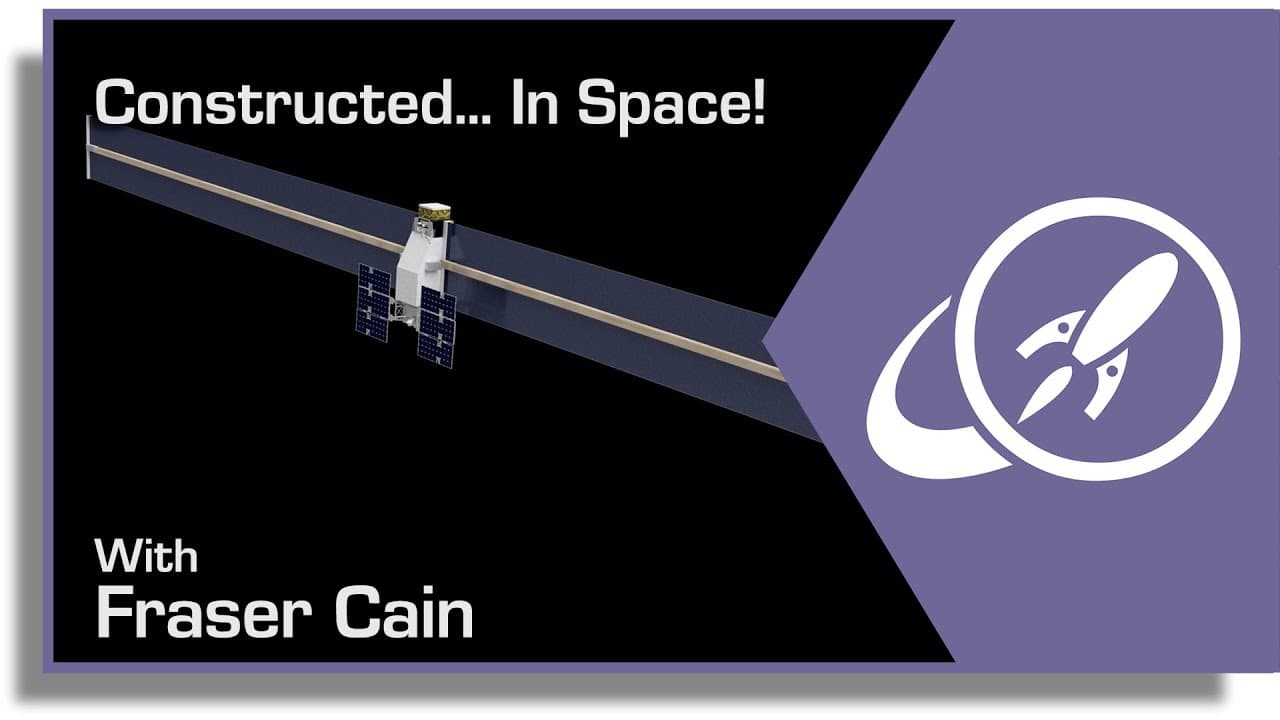
- 👾 Made In Space's Archinaut One spacecraft showcases in-space manufacturing capabilities for solar arrays.
- 👾 NASA's investment in space-based manufacturing with companies like Made In Space aims to reduce risks and enhance commercial space exploration.
- 🛰️ The future of space-based manufacturing involves building larger spacecraft entirely in orbit, revolutionizing space infrastructure.
- 👾 Space-based manufacturing enables the recycling of materials and the production of advanced components like optical fibers and spacecraft structures.
- 👾 Archinaut technology by Made In Space allows for the autonomous assembly of components in space, paving the way for larger space structures.
Install to Summarize YouTube Videos and Get Transcripts
Explore YouTube Video Summarizer or Get YouTube Transcript Extractor
Questions & Answers
Q: What are the current challenges with launching materials into space from Earth?
Launching materials from Earth into space is expensive, with costs reaching up to $10,000 per pound for orbit and 10 times more for the Moon.
Q: How does Archinaut One revolutionize space-based manufacturing?
Archinaut One will assemble its own power system in space using 3D-printing technology, showcasing the potential for efficient and cost-effective spacecraft production.
Q: What implications does space-based manufacturing have for future space exploration?
Space-based manufacturing allows for the construction of larger and more powerful spacecraft, enabling enhanced capabilities for missions to deeper regions of the Solar System.
Q: How does Made In Space's partnership with NASA contribute to space-based manufacturing?
Made In Space collaborates with NASA to develop advanced manufacturing systems like the Vulcan system, which can produce high-quality components in space autonomously.
Summary & Key Takeaways
-
Space-based manufacturing aims to build spacecraft components in space using advanced technology.
-
Made In Space's Archinaut One spacecraft will demonstrate in-space manufacturing and assembly by constructing solar arrays.
-
NASA is investing in space-based manufacturing to enable cost-effective and efficient space infrastructure.
Read in Other Languages (beta)
Share This Summary 📚
Summarize YouTube Videos and Get Video Transcripts with 1-Click
Try YouTube Summary with ChatGPT & Claude or YouTube Transcript Generator
Explore More Summaries from Fraser Cain 📚




Summarize YouTube Videos and Get Video Transcripts with 1-Click
Try YouTube Summary with ChatGPT & Claude or YouTube Transcript Generator