Forward Stock Splits vs Reverse Stock Splits - Stock Trading 101
TL;DR
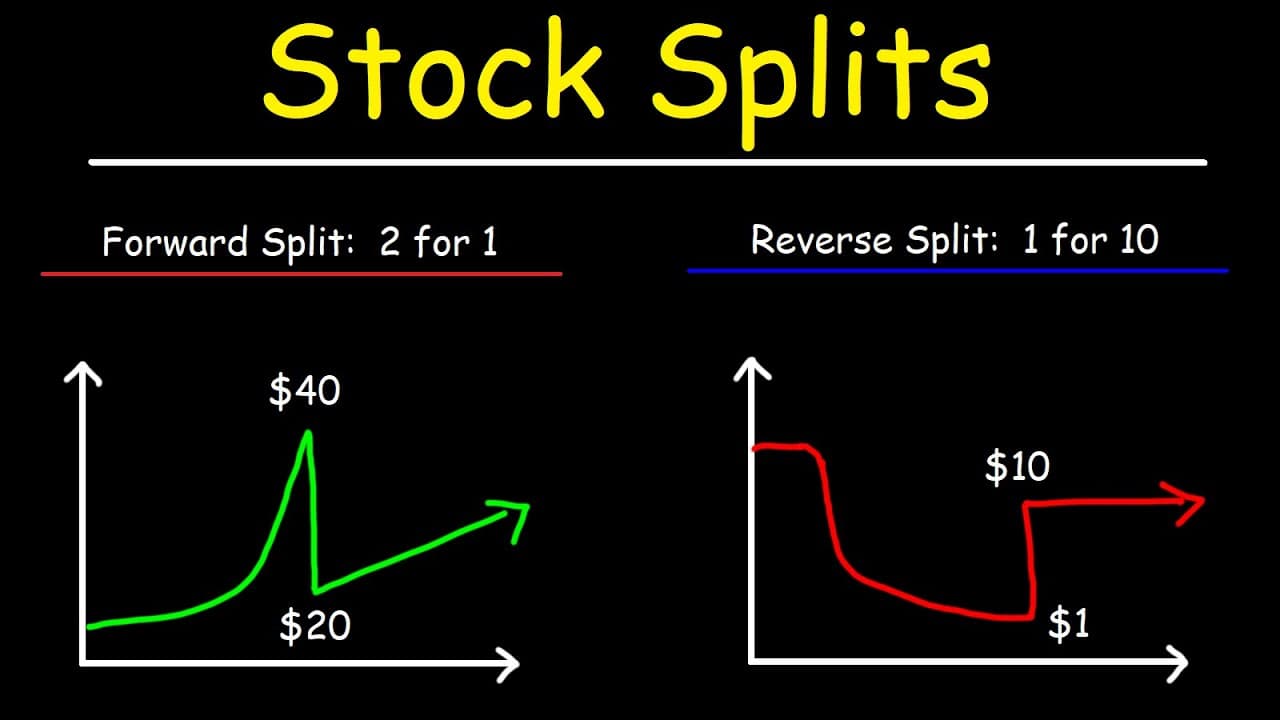
Stock splits increase the number of shares and decrease the price, while reverse stock splits decrease the number of shares and increase the price.
Transcript
in this video we're going to talk about the difference between a stock split and a reverse stock split so what happens when a company undergoes a stock split or also known as a forward stock split in a ford stock split the number of outstanding shares increases in a reverse stock split the number of outstanding shares decreases in a forward stock s... Read More
Key Insights
- 💄 Stock splits increase the number of shares and decrease the price, making shares more affordable for investors.
- ◀️ Reverse stock splits decrease the number of shares and increase the price, which can help prevent delisting.
- 🅰️ The total value of the investment and the market capitalization of the company remain the same in both types of splits.
- 👂 Forward stock splits are used to attract investors, while reverse stock splits are used to maintain compliance with stock exchange listing requirements.
Install to Summarize YouTube Videos and Get Transcripts
Explore YouTube Video Summarizer or Get YouTube Transcript Extractor
Questions & Answers
Q: What is the difference between a stock split and a reverse stock split?
A stock split increases the number of shares, while a reverse stock split decreases the number of shares.
Q: How does a forward stock split affect the price of shares?
In a forward stock split, the price of each share decreases proportionally as the number of shares increases.
Q: What happens to the price of shares in a reverse stock split?
In a reverse stock split, the price of shares increases proportionally as the number of shares decreases.
Q: Does the total value of the investment change in a stock split or reverse stock split?
No, the total value of the investment remains the same in both stock splits and reverse stock splits.
Q: Why would a company choose to undergo a forward stock split?
A company may undergo a forward stock split to decrease the price of shares and make them more appealing to investors when the share price has risen significantly.
Q: When would a company opt for a reverse stock split?
A company may choose a reverse stock split to increase the price of shares and avoid being delisted from a stock exchange when the share price has fallen significantly.
Summary & Key Takeaways
-
Stock splits, also known as forward stock splits, increase the number of outstanding shares, such as a two-for-one or three-for-one split.
-
Reverse stock splits decrease the number of outstanding shares, such as a one-for-four split.
-
In both cases, the total value of the investment, as well as the market capitalization of the company, remains the same.
Read in Other Languages (beta)
Share This Summary 📚
Summarize YouTube Videos and Get Video Transcripts with 1-Click
Try YouTube Summary with ChatGPT & Claude or YouTube Transcript Generator
Explore More Summaries from The Organic Chemistry Tutor 📚





Summarize YouTube Videos and Get Video Transcripts with 1-Click
Try YouTube Summary with ChatGPT & Claude or YouTube Transcript Generator