What Are the Main Functional Groups in Organic Chemistry?
TL;DR
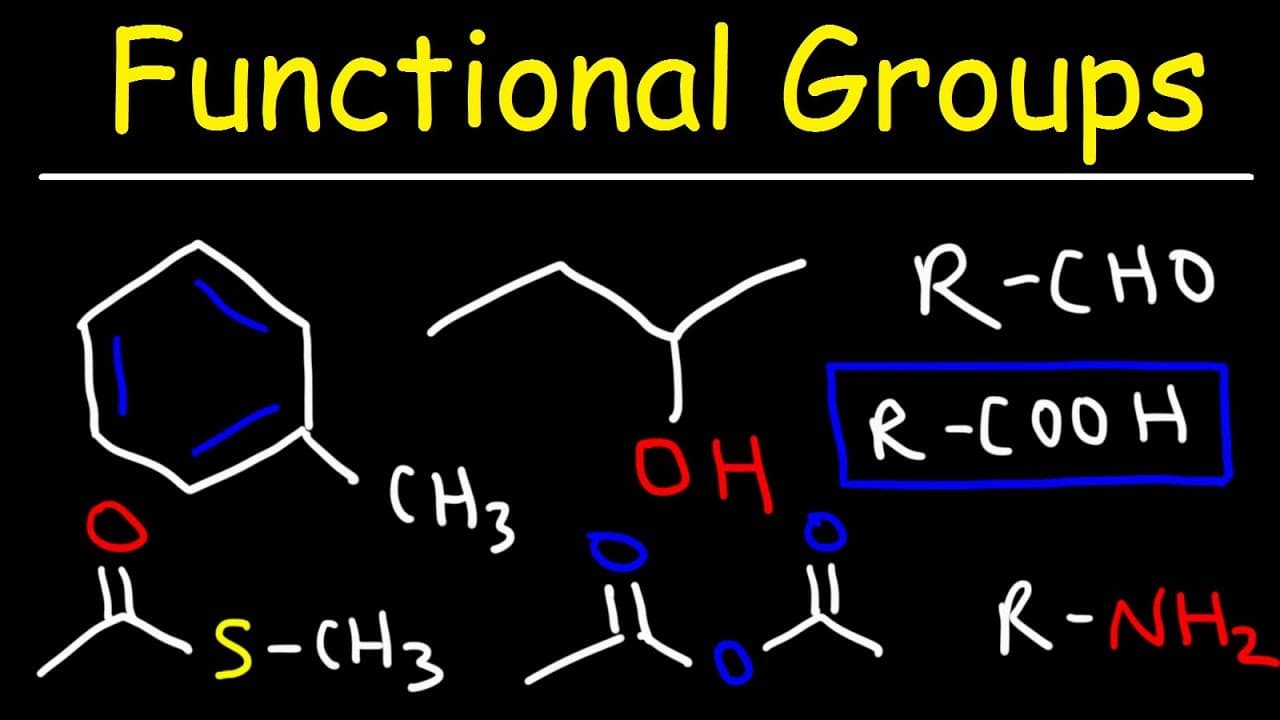
The main functional groups in organic chemistry include alkanes, alkenes, alkynes, cycloalkanes, aromatic rings, alkyl halides, ethers, alcohols, ketones, aldehydes, carboxylic acids, esters, amines, and nitriles. Each group has distinct structural characteristics and naming conventions that define their chemical properties and reactivity. Understanding these functional groups is essential for predicting behavior in organic compounds.
Transcript
in this video we're going to focus on the functional groups so this is the first functional group we need to be familiar with and this is an alkane an alkane is in hydrocarbon that only contain single carbon hydrogen bonds it doesn't have any double bonds or triple bonds just all single bonds this particular alkane is known as pentane because it ha... Read More
Key Insights
- 👥 Organic chemistry involves the study of various functional groups that define the properties and reactivity of organic compounds.
- 🫀 Functional groups are specific arrangements of atoms within a molecule that determine its chemical behavior and reactions.
- 👥 Different functional groups have distinct naming conventions and suffixes to identify their presence in a compound.
- 👥 Functional groups contribute to the polar or nonpolar nature of organic molecules, influencing their solubility and interactions with other substances.
- 👥 Functional groups can affect the acidity or basicity of organic compounds and participate in various chemical reactions.
- 👥 Understanding functional groups is crucial for organic chemists to predict and analyze the behavior of organic compounds.
- 🫀 Functional groups are classified based on the presence of specific atoms, such as carbon-carbon bonds, oxygen, nitrogen, halogens, and sulfur.
Install to Summarize YouTube Videos and Get Transcripts
Explore YouTube Video Summarizer or Get YouTube Transcript Extractor
Questions & Answers
Q: What is the functional group in an alkene molecule?
The functional group in an alkene molecule is a carbon-carbon double bond. It is named by selecting the smaller of the two carbon numbers and adding the suffix "-ene."
Q: How are cycloalkanes different from other hydrocarbons?
Cycloalkanes are hydrocarbons that form a ring-like or circular structure. They are still alkanes, as they only have single bonds, but their structure is cyclic.
Q: How can you distinguish between an aldehyde and a ketone?
An aldehyde has a carbonyl functional group at the end of the carbon chain, while a ketone has a carbonyl group somewhere in the middle of the chain. Aldehydes have the suffix "-al," while ketones have the suffix "-one."
Q: What is the functional group in an ether molecule?
An ether molecule consists of an oxygen atom bonded to two hydrocarbon groups (R groups). The functional group is the oxygen atom bonded to the two R groups.
Summary & Key Takeaways
-
The video introduces different functional groups in organic chemistry, such as alkanes, alkenes, and alkynes, which are hydrocarbons with different types of carbon-carbon bonds.
-
It explains cycloalkanes, which are cyclic hydrocarbons, and aromatic rings, specifically benzene.
-
The video also covers alkyl halides, ethers, alcohols, ketones, aldehydes, carboxylic acids, esters, amines, nitriles, acid anhydrides, and acid chlorides.
-
It concludes with a brief mention of additional functional groups like thiols, enols, enamines, imines, organic peroxides, and peroxy acids.
Read in Other Languages (beta)
Share This Summary 📚
Summarize YouTube Videos and Get Video Transcripts with 1-Click
Try YouTube Summary with ChatGPT & Claude or YouTube Transcript Generator
Explore More Summaries from The Organic Chemistry Tutor 📚





Summarize YouTube Videos and Get Video Transcripts with 1-Click
Try YouTube Summary with ChatGPT & Claude or YouTube Transcript Generator