Harvard Food+ Research Symposium: Michele Holbrook
TL;DR
Researchers have discovered a drought-tolerant soybean line with a water conservation trait, which can have a positive impact on crop yields.
Transcript
I thanks very much so I'm going to talk about p i4 16 937 so what's that it's one of thousands of USDA soybean lines are in the public domain and this one its origin is from a land race in Japan probably growing on the berms of paddy not from a particularly drought area but when planted out in fields in North Carolina several decades a load it jump... Read More
Key Insights
- 🐢 Drought-tolerant soybean lines, like what a slow will tur, are valuable for enhancing crop yields in water-limited conditions.
- 🥀 Throttling back on transpiration during low humidity in water-conserving plants can lead to increased transpiration over more days and delayed wilting.
- 🫥 Understanding the physiological basis of the water conservation trait allows for the development of screening methods and tools to incorporate it into high-yielding soybean lines.
- 😀 The trait can result in a yield increase in a fraction of the years, making it valuable for farmers facing varying rainfall conditions.
- 💦 Seed distribution companies, such as Pioneer and DuPont, are now incorporating the water conservation trait into their products and exploring its presence in other species.
- 💦 Breeding for high yields in crops eliminated the more conservative behavior of water-conserving plants, but the trait has newfound value in considering agricultural footprint and yields under different circumstances.
Install to Summarize YouTube Videos and Get Transcripts
Explore YouTube Video Summarizer or Get YouTube Transcript Extractor
Questions & Answers
Q: What is what a slow will tur, and why is it important?
What a slow will tur is a drought-tolerant soybean line that exhibits a water conservation trait. This trait is crucial because drought is a major limitation on crop production.
Q: Why were soybean breeders unable to make use of what a slow will tur?
Soybean breeders knew about what a slow will tur but couldn't utilize it due to inconsistent results in breeding and planting. Researchers aimed to understand the physiological basis of the trait to help breeders effectively incorporate it into high-yielding lines.
Q: How does water conservation in plants affect yield?
Water-conserving plants, like what a slow will tur, throttle back on transpiration when humidity is low. This behavior conserves water in the soil and can lead to delayed wilting and increased transpiration for more days. These factors contribute to higher crop yields.
Q: What have researchers learned about the water conservation trait in soybean plants?
Researchers found that the water conservation trait in soybean plants is most significant downstream in the leaf, before evaporation occurs. This knowledge allows for the development of screens to identify the trait without large-scale field experiments.
Summary & Key Takeaways
-
A drought-tolerant soybean line with a water conservation trait, called what a slow will tur, has been found in the public domain.
-
Crop production is limited by drought, but until recently, there were no commercially available drought-tolerant seeds.
-
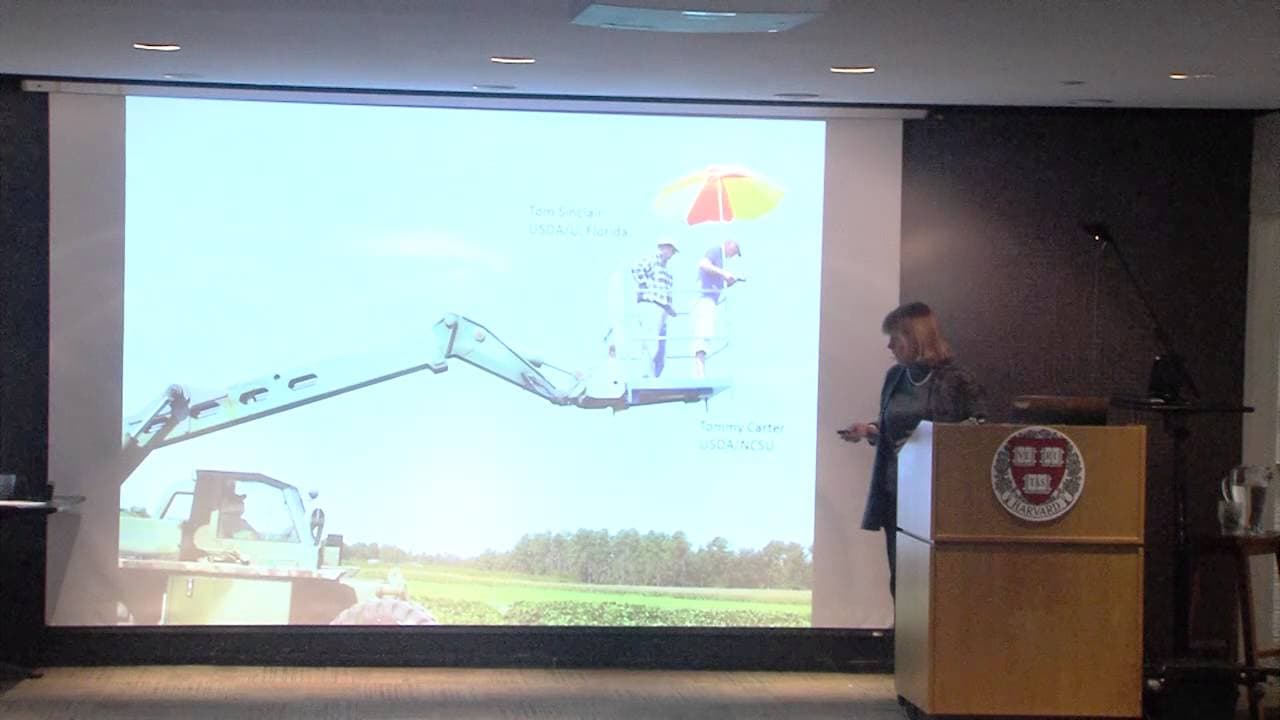
Researchers collaborated with USDA scientists to understand the physiological basis of the trait and develop tools for incorporating it into high-yielding soybean lines.
Read in Other Languages (beta)
Share This Summary 📚
Summarize YouTube Videos and Get Video Transcripts with 1-Click
Try YouTube Summary with ChatGPT & Claude or YouTube Transcript Generator
Explore More Summaries from Harvard University 📚






Summarize YouTube Videos and Get Video Transcripts with 1-Click
Try YouTube Summary with ChatGPT & Claude or YouTube Transcript Generator