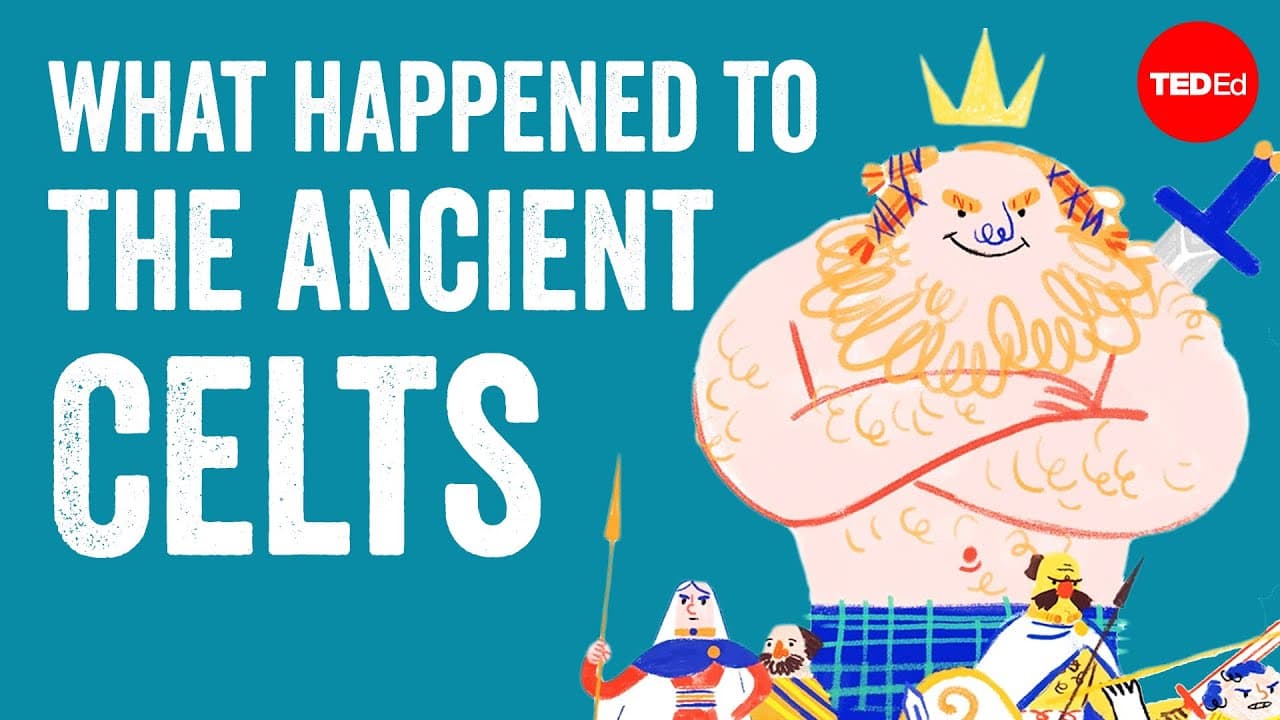
The rise and fall of the Celtic warriors - Philip Freeman
TL;DR
Ancient Celts, fearless warriors with rich cultural practices, resisted Roman conquests across Europe.
Transcript
One summer evening in 335 BCE, Alexander the Great was resting by the Danube River after a day of fighting the Scythian tribes when a band of strangers approached his camp. Alexander had never seen anything like these tall, fierce-looking warriors with huge golden neck rings and colorful cloaks— so he invited them to feast with him. They proud... Read More
Key Insights
- 🧑🚒 Celtic warriors were known for their fearlessness in battle, believing in reincarnation and fighting proudly without armor.
- 😉 The Celtic society was divided into independent tribes with warrior-kings, poets, craftsmen, and druids overseeing various aspects of life.
- 🖐️ Druids played a crucial role as priests, teachers, healers, judges, and scientists in Celtic society, revered for their wisdom and authority.
- 👏 Celtic bards preserved tribal history through poetry, praising heroic deeds and criticizing ineffective leaders, highlighting the importance of storytelling.
- 🇷🇴 Despite Roman conquests, Celtic tribes fiercely resisted, maintaining their cultural practices and unity against external threats.
- 🥺 The Celts valued their independence and tribal identity, leading to a lack of centralized empire and city-building efforts.
- 🥺 Roman encroachment in Celtic territories led to conflicts, with figures like Julius Caesar exploiting tribal divisions to conquer Celtic lands.
Install to Summarize YouTube Videos and Get Transcripts
Explore YouTube Video Summarizer or Get YouTube Transcript Extractor
Questions & Answers
Q: What qualities made Celtic warriors fearsome in battle?
Celtic warriors' fearlessness, belief in reincarnation, and preference for fighting naked and collecting severed heads made them formidable foes on the battlefield.
Q: What roles did druids play in Celtic society?
Druids were revered priests who oversaw religious practices, served as teachers, healers, judges, and scientists, and held the power to intervene in conflicts and stop battles among tribes.
Q: How did Celtic poets, known as bards, contribute to Celtic society?
Bards preserved the history of Celtic tribes through poetry, praising warrior-kings and criticizing ineffective rulers, showcasing the importance of storytelling and oral tradition in Celtic culture.
Q: How did the Celts resist Roman conquests?
Despite Roman aggression, Celtic tribes maintained tribal divisions until the last stand in Britain and Ireland, where figures like Boudicca led revolts against Roman invaders, showcasing resistance and unity in the face of conquest.
Summary & Key Takeaways
-
Alexander the Great encountered fierce Celtic warriors by the Danube River in 335 BCE, reflecting their fearlessness and unique culture.
-
Celts, spread across Europe, were diverse independent tribes with warrior-kings and religious centers, valuing poets, craftsmen, and druids.
-
Despite Roman conquests, Celtic tribes fiercely resisted, showcasing their unity and cultural resilience.
Read in Other Languages (beta)
Share This Summary 📚
Summarize YouTube Videos and Get Video Transcripts with 1-Click
Try YouTube Summary with ChatGPT & Claude or YouTube Transcript Generator
Explore More Summaries from TED-Ed 📚






Summarize YouTube Videos and Get Video Transcripts with 1-Click
Try YouTube Summary with ChatGPT & Claude or YouTube Transcript Generator