Jon Chaika
TL;DR
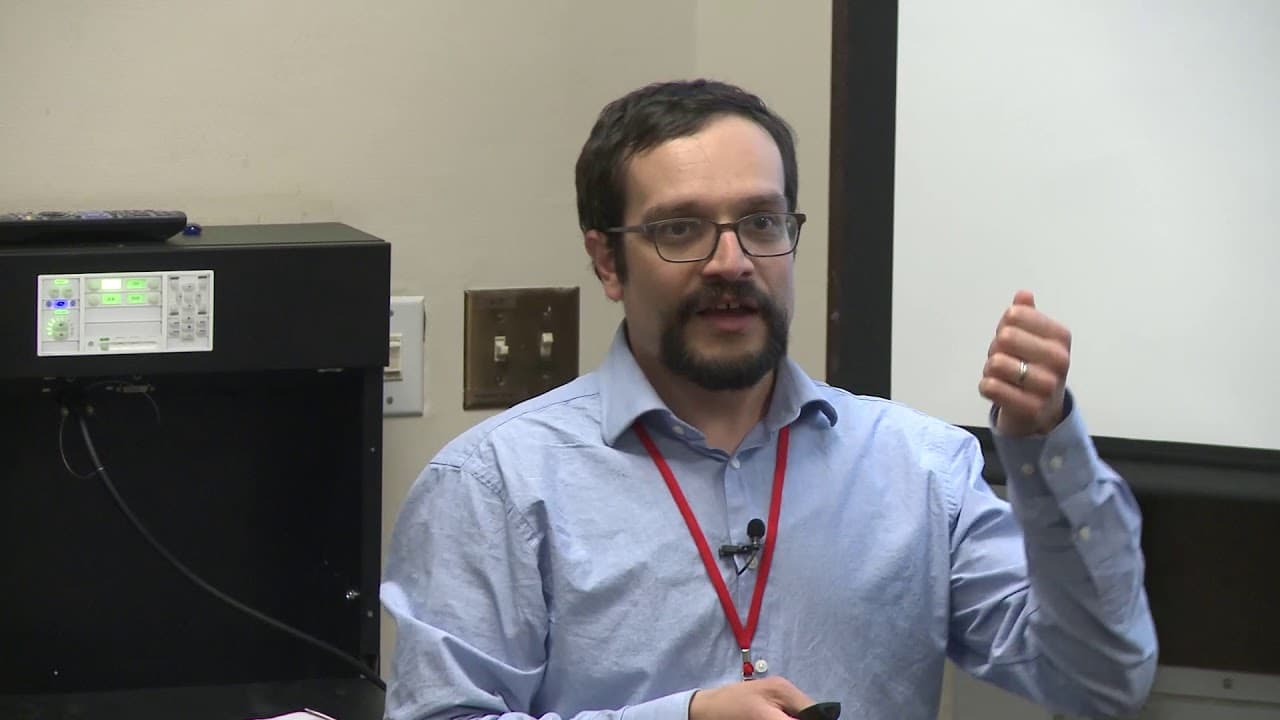
The analysis discusses the poor cycle flow on moduli spaces of translation surfaces, exploring its differences from the phenomenon observed in homogeneous spaces.
Transcript
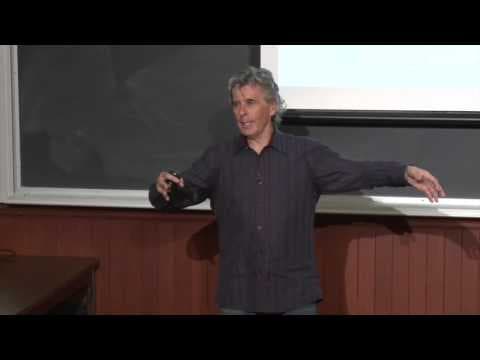
you've talked it's gonna tell us about poor cycle flow on moduli spaces translation so first of all thanks to the organizers for inviting me to give a talk here it's a really humbling experience I didn't know Miriam as well as many of the people who will be speaking here but I came out to Stanford wants to give a talk and I was surprised at how muc... Read More
Key Insights
- 👾 The hora cycle flow on moduli spaces of translation surfaces displays different features compared to homogeneous spaces.
- 🛰️ The tremor map, which commutes with the hora cycle flow, allows for the study of orbit closures and the behavior of points in the moduli space.
- 😥 Points can be generic for measures outside of their topological support by using the tremor map and the commute with the hora cycle flow.
- 🛰️ Orbit closures in the moduli space of translation surfaces can have fractional Hausdorff dimension but are properly nested.
Install to Summarize YouTube Videos and Get Transcripts
Explore YouTube Video Summarizer or Get YouTube Transcript Extractor
Questions & Answers
Q: How does the hora cycle flow on moduli spaces of translation surfaces differ from the phenomenon observed in homogeneous spaces?
While techniques from homogeneous dynamics have been successfully applied to the space of translation surfaces, there are cases where the hora cycle flow on moduli spaces has different features and does not exhibit the same behavior. This is the focus of the analysis.
Q: Can measures and orbit closures be defined for the space of translation surfaces?
Yes, measures and orbit closures can be defined for the space of translation surfaces. Theorems by Ratner, S. Converse Akane, and Mohammadi show that ergodic measures in this space arise from algebraic reasons and are associated with nicely structured orbit closures.
Q: Are there any significant differences between the hora cycle flow and the tremor map?
The hora cycle flow and the tremor map commute with each other, allowing for their study in conjunction. However, the tremor map introduces different dynamics and can push points off the original locus, leading to orbit closures with fractional Hausdorff dimension.
Q: Can points in the space of translation surfaces be generic for measures whose support is not contained in the topological support?
Yes, it is possible to find points outside the topological support of a measure but still be generic for that measure. By leveraging the tremor map and the commute with the hora cycle flow, one can construct points that are close to their starting locus, even if they move away along the flow.
Summary & Key Takeaways
-
The content focuses on the hora cycle flow on the moduli space of translation surfaces, comparing its features to the phenomenon observed in homogeneous spaces.
-
Theorems by Ratner, S. Converse Akane, and Mohammadi are presented, highlighting the classification of ergodic measures and the existence of orbit closures in the context of homogeneous spaces.
-
The analysis then introduces the tremor map, which commutes with the hora cycle flow, allowing for the exploration of orbit closures and the behavior of points in the moduli space.
Read in Other Languages (beta)
Share This Summary 📚
Summarize YouTube Videos and Get Video Transcripts with 1-Click
Try YouTube Summary with ChatGPT & Claude or YouTube Transcript Generator
Explore More Summaries from Stanford 📚
Summarize YouTube Videos and Get Video Transcripts with 1-Click
Try YouTube Summary with ChatGPT & Claude or YouTube Transcript Generator