What Are the Key Issues in Data Privacy and Ethics?
TL;DR
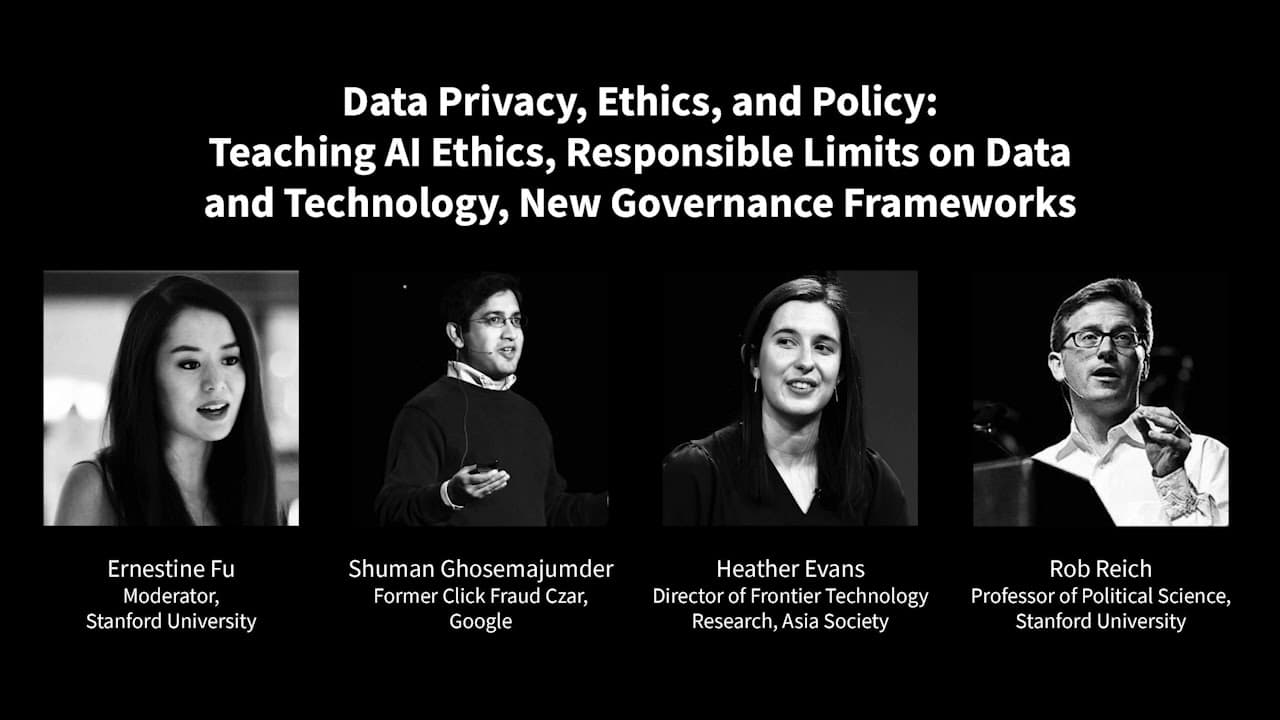
The discussion highlights the importance of integrating ethical considerations in AI development, especially regarding data privacy. Experts agree on the necessity of public health surveillance tools during crises while advocating for privacy protections. They emphasize the urgent need to address AI bias through diverse representation in tech development and the implementation of privacy-preserving techniques.
Transcript
Stanford University today's class session is on data privacy ethics and policy teaching AIS exponents on data and technology and new governance frameworks we have a fantastic group of panelists here today and quick context for today's class is that there's a lot of questions that surround the ethical use of AI and personal data and especially as AI... Read More
Key Insights
- 🧑⚕️ Public health surveillance tools are necessary during a pandemic, but privacy-protecting approaches and data minimization should be prioritized.
- 😤 Eliminating biases in AI systems requires diverse representation in technology development teams and proactive measures to identify and correct biases.
- 🗯️ Data minimization and privacy protection should be considered to limit the collection of personal data by businesses and governments and strike the right balance between data access and privacy.
- ❓ Government regulation should focus on internalizing externalities in the technology industry and promoting privacy-protecting approaches.
Install to Summarize YouTube Videos and Get Transcripts
Explore YouTube Video Summarizer or Get YouTube Transcript Extractor
Questions & Answers
Q: Should the US government increase surveillance to fight the coronavirus?
The panelists agree that public health surveillance tools, like contact tracing, are important during the pandemic, but emphasize the need for privacy-protecting approaches and data minimization to mitigate privacy concerns.
Q: How can we eliminate biases in AI systems?
The panelists suggest diverse representation in technology development teams, external audits to identify biases, and the creation of new roles, like "failure machine learning researchers," to identify and correct biases before systems are deployed.
Q: How much of our personal data should businesses and governments be able to own?
The panelists highlight the need for data minimization and privacy protection to limit the collection of personal data to what is necessary for a business purpose. They discuss the challenges of striking the right balance between data access and privacy.
Summary & Key Takeaways
-
The panelists discuss the importance of social scientists and humanists being involved in the development of AI technologies to ensure ethical use and protection of human interests.
-
They acknowledge the need for public health surveillance tools, like contact tracing, during the COVID-19 pandemic, while emphasizing the importance of privacy protection measures.
-
The conversation highlights the challenges of AI bias and the need to address biases through diverse representation and privacy preserving techniques.
Read in Other Languages (beta)
Share This Summary 📚
Summarize YouTube Videos and Get Video Transcripts with 1-Click
Try YouTube Summary with ChatGPT & Claude or YouTube Transcript Generator
Explore More Summaries from Stanford 📚





Summarize YouTube Videos and Get Video Transcripts with 1-Click
Try YouTube Summary with ChatGPT & Claude or YouTube Transcript Generator