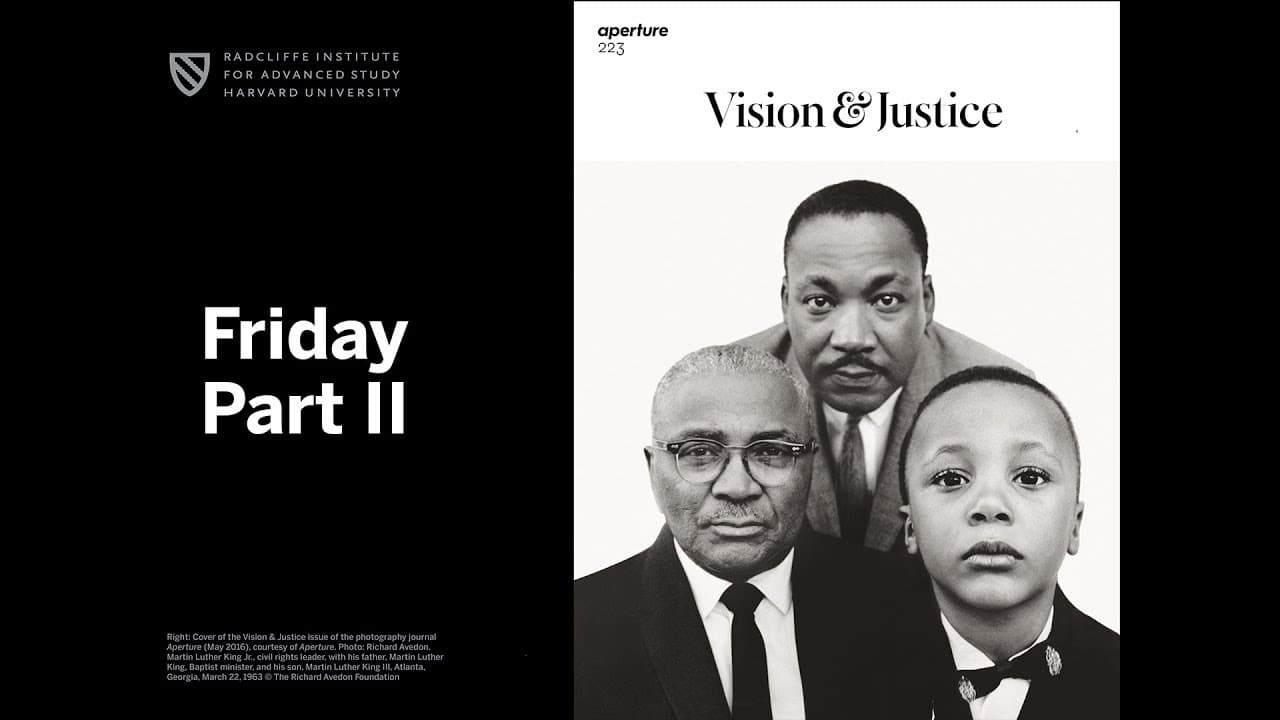
Vision & Justice | Friday | Part II || Radcliffe Institute
TL;DR
The Turnaround Arts Program, led by Damian Woetzel and Melody C Barnes, focuses on integrating arts into education to improve student outcomes and engagement. The program has seen positive results, with increased reading proficiency, improved math performance, and decreased disciplinary problems in participating schools.
Transcript
- Good afternoon. Good afternoon. It's such a pleasure to be here, to welcome you back to the Vision and Justice convening, hosted by the Radcliffe Institute for Advanced Study. I know that it's been, for me, an extraordinary morning. And I want to reiterate my thanks to Dean Tomiko Brown-Nagin and all those in the Radcliffe Institute for Advanced ... Read More
Key Insights
- 😘 The Turnaround Arts Program integrates arts education into low-performing schools, resulting in improved student outcomes.
- 🥰 The program provides resources, instruments, and professional development for teachers to implement arts education effectively.
- ☠️ Research has shown that students in Turnaround Arts schools have better academic engagement, attendance rates, and disciplinary records.
- 🧑🎓 The program emphasizes community engagement, involving families, community leaders, and artists in celebrating student achievements.
Install to Summarize YouTube Videos and Get Transcripts
Explore YouTube Video Summarizer or Get YouTube Transcript Extractor
Questions & Answers
Q: What is the Turnaround Arts Program and its main goals?
The Turnaround Arts Program is an initiative that brings arts education to low-performing schools to improve student outcomes. The main goals of the program are to increase reading proficiency, engage students in math and other subjects, enhance attendance rates, and reduce disciplinary problems.
Q: How is the program implemented in schools?
The program provides resources, instruments, and professional development for teachers to incorporate arts into their classrooms. It also involves partnerships with artists and cultural institutions to enhance the learning experience. Students participate in performances, talent shows, and community events to showcase their artistic abilities.
Q: What impact has the Turnaround Arts Program had on student achievement?
Research has shown that students in Turnaround Arts schools have improved reading proficiency, increased math engagement, and higher attendance rates compared to non-participating schools. There has also been a decrease in disciplinary problems, indicating enhanced students' overall well-being.
Q: How does the program promote community engagement?
The program emphasizes collaboration and involvement from the local community. Culminating events, such as talent shows and student showcases, bring families, community leaders, and artists together to celebrate student achievements. This sense of community support fosters a positive learning environment for students.
Summary & Key Takeaways
-
The Turnaround Arts Program started with eight pilot schools and has since expanded to serve 57,000 students in 79 schools across 17 states and the District of Columbia.
-
The program incorporates arts into education, providing resources, instruments, and professional development for teachers to support student learning.
-
Research has shown that students in Turnaround Arts schools have improved reading proficiency, increased math engagement, higher attendance rates, and reduced disciplinary problems.
-
The program engages the community and includes culminating events such as talent shows and student showcases, promoting a sense of pride and achievement.
Read in Other Languages (beta)
Share This Summary 📚
Summarize YouTube Videos and Get Video Transcripts with 1-Click
Try YouTube Summary with ChatGPT & Claude or YouTube Transcript Generator
Explore More Summaries from Harvard University 📚
Summarize YouTube Videos and Get Video Transcripts with 1-Click
Try YouTube Summary with ChatGPT & Claude or YouTube Transcript Generator