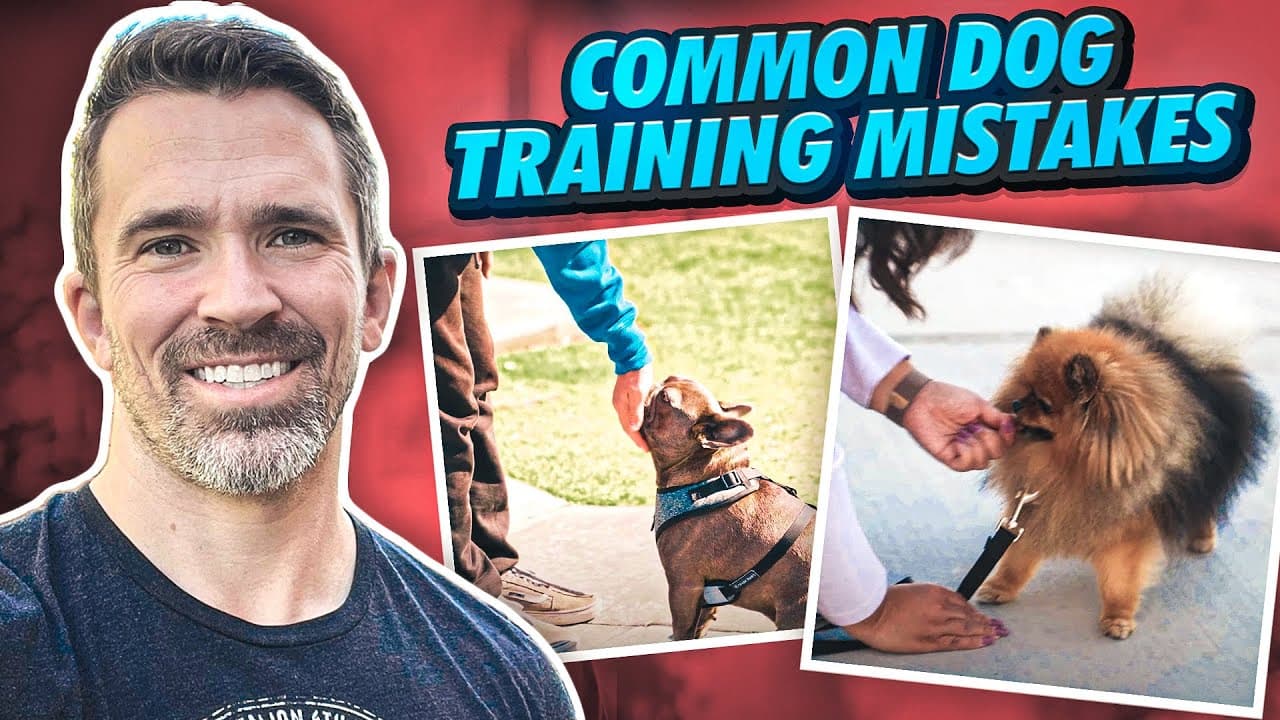
How to Avoid Common Dog Training Mistakes
TL;DR
Avoid common dog training mistakes by understanding the importance of timing and consistency. Ensure you mark and reward the exact moment your dog performs the desired behavior. Use physical cues before adding verbal commands, and reward effort to build perseverance. Adjust your techniques based on your dog's response to improve training outcomes.
Transcript
in this video I'm going to show you some of the most common mistakes we make as trainers now knowing what to do is equally as important as knowing what not to do so in this video you're going to see these mistakes and some of the ways that you can avoid making them yourself to ensure that the training goes as smooth as possible and you reach your d... Read More
Key Insights
- Timing is crucial in dog training; reward your dog immediately after the desired action.
- Physical cues should be mastered before introducing verbal commands to your dog.
- Consistency in marking and rewarding helps dogs associate actions with rewards.
- Effort should be rewarded to encourage perseverance in dogs during training.
- Use leash pressure strategically to teach commands without relying solely on verbal cues.
- Adjust your hand movements to guide your dog into the correct position efficiently.
- Dogs connect sequences of events, so consistent actions help them learn faster.
- Recognize and reward small steps towards the desired behavior to keep dogs motivated.
Install to Summarize YouTube Videos and Get Transcripts
Explore YouTube Video Summarizer or Get YouTube Transcript Extractor
Questions & Answers
Q: How to improve timing in dog training?
Improving timing in dog training involves marking the exact moment your dog performs the desired behavior and immediately rewarding them. This helps the dog associate their action with the reward, reinforcing the behavior. Consistent timing is key to effective communication and learning in dogs.
Q: Why use physical cues before verbal commands?
Using physical cues before verbal commands helps dogs focus on the trainer's movements, which are often easier for them to interpret. Once the dog reliably responds to physical cues, verbal commands can be added, ensuring the dog understands and performs the behavior consistently.
Q: How to reward effort in dog training?
To reward effort in dog training, acknowledge and reward small steps towards the desired behavior, even if the task is not completed perfectly. This encourages perseverance and helps the dog understand that effort is valued, motivating them to continue trying and learning.
Q: What is the role of leash pressure in training?
Leash pressure is used to guide dogs into performing desired behaviors without relying solely on verbal commands. By applying pressure first and then giving the command, dogs learn to associate the pressure with the expected behavior, making training more effective and predictable.
Q: How to guide a dog into position effectively?
Guide a dog into position by adjusting hand movements to be clear and consistent. Use smooth, deliberate motions to lead the dog into the desired position, ensuring that the physical cues are easily understood and followed by the dog, improving training efficiency.
Q: Why is rewarding small steps important?
Rewarding small steps is important because it encourages dogs to continue trying, even if they don't perform the full behavior immediately. This approach helps build confidence and perseverance, making it easier for dogs to learn complex tasks over time by gradually building on their successes.
Q: How to ensure consistent training outcomes?
Ensure consistent training outcomes by maintaining precise timing, using clear physical cues, and rewarding desired behaviors immediately. Consistency in these elements helps dogs understand what is expected of them, reinforcing learning and improving their ability to perform tasks reliably.
Q: What is the importance of sequence recognition in dogs?
Sequence recognition is important because dogs learn by connecting sequences of events. Consistent actions and rewards help them understand the relationship between their behavior and the outcome, facilitating faster learning and more reliable performance of desired behaviors over time.
Summary & Key Takeaways
-
Effective dog training requires precise timing and consistency. Reward your dog immediately after they perform the desired action to strengthen the association between the behavior and the reward. Use physical cues before introducing verbal commands to ensure clear communication.
-
Encouraging perseverance in dogs is vital. Rewarding effort, even if the task is not completed perfectly, helps build a dog's determination. This approach is particularly useful for complex tasks, such as those required of service dogs.
-
Leash pressure can be an effective tool in teaching commands. Start with the pressure, then give the command, allowing the dog to associate the pressure with the expected behavior. Adjust hand movements to guide your dog into the correct position, making training more efficient.
Read in Other Languages (beta)
Share This Summary 📚
Summarize YouTube Videos and Get Video Transcripts with 1-Click
Try YouTube Summary with ChatGPT & Claude or YouTube Transcript Generator
Explore More Summaries from Nate Schoemer 📚





Summarize YouTube Videos and Get Video Transcripts with 1-Click
Try YouTube Summary with ChatGPT & Claude or YouTube Transcript Generator