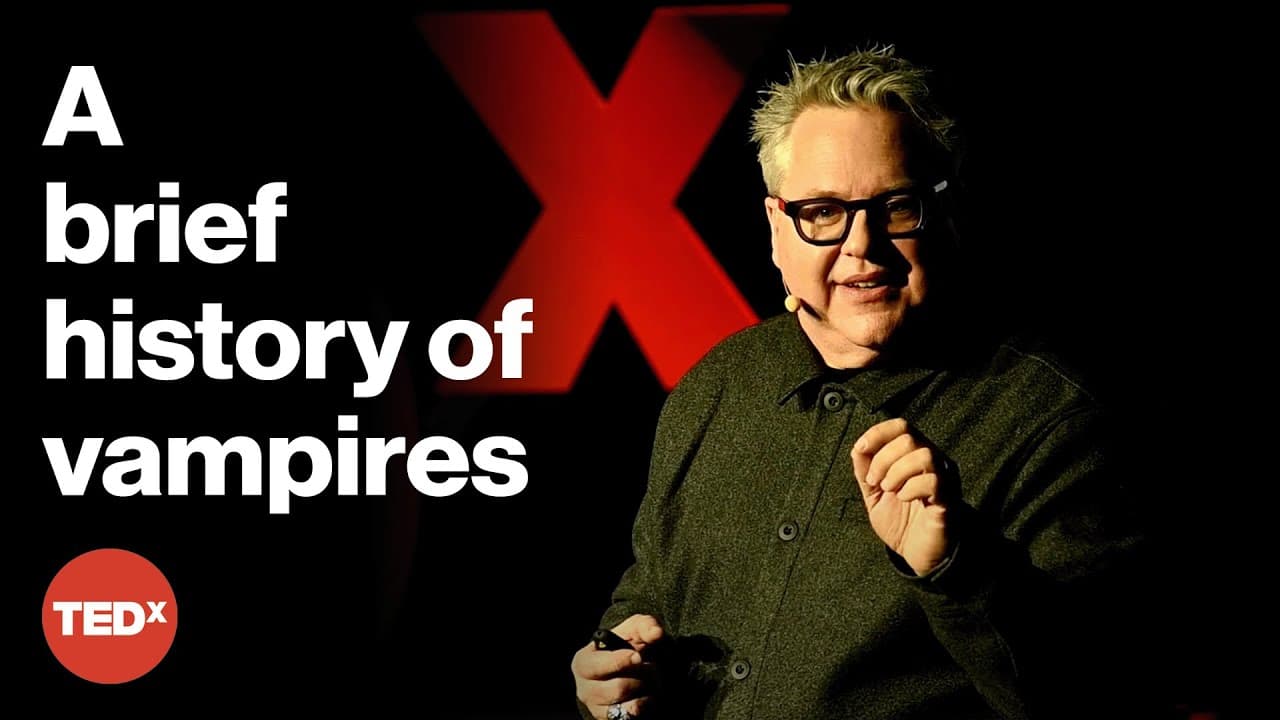
Why don’t vampires cast reflections? | Eric Nuzum | TEDxAsburyPark
TL;DR
Explore the evolution of vampire beliefs and their reflection of societal fears throughout history and in cinema.
Transcript
so we're here today to hear compelling ideas new Innovations and thinking and science and medicine and innovative solutions to our most vexing problems in society so they said to me Eric do you have anything that you can add to this compelling list of stories or and ideas something you can talk about here on the 10 stage and I said of course I do a... Read More
Key Insights
- 🧛 Vampire mythology varies across cultures, with each having its version of supernatural creatures.
- 🥺 Misunderstandings of decomposing bodies led to the vampire myth in the 16th century.
- 😨 Vampires in films reflect societal fears and morals of the time, evolving to fit the cultural context.
- 💱 Changes in vampire characteristics over time mirror changing societal anxieties and fears.
- 😨 Vampires in cinema have evolved to adapt to different eras, reflecting the fears and beliefs of contemporary society.
- 🧛 The portrayal of vampires in over 700 films highlights the enduring fascination with these mythical creatures.
- 😨 The lack of reflection in mirrors for vampires may symbolize deeper societal fears and issues.
Install to Summarize YouTube Videos and Get Transcripts
Explore YouTube Video Summarizer or Get YouTube Transcript Extractor
Questions & Answers
Q: Why don't vampires cast reflections in mirrors?
The lack of reflection may symbolize vampires being a reflection of our fears and unchecked power without accountability, serving as a metaphor for societal villains.
Q: How did the portrayal of vampires change over time?
Vampires adapted to reflect societal fears in different eras, from representing the end of Victorian morals to fears of Eastern European immigration and communism.
Q: What impact did the Dracula movie in 1931 have on vampire films?
It established a trend for horror movies and paved the way for vampire movies to become a mainstream hit, shaping the genre for over two decades.
Q: How do vampire movies reflect societal fears?
Vampire movies often mirror society's anxieties of the time, with surges in vampire movie production coinciding with events like the AIDS crisis.
Summary & Key Takeaways
-
Vampires in history vary across cultures, often rooted in misunderstandings of death and supernatural beings preying on the living.
-
The 18th-century rabies outbreak influenced common vampire traits like aversion to light, water, garlic, and aggression.
-
The portrayal of vampires in over 700 films reflects changing societal fears and morals over time.
Read in Other Languages (beta)
Share This Summary 📚
Summarize YouTube Videos and Get Video Transcripts with 1-Click
Try YouTube Summary with ChatGPT & Claude or YouTube Transcript Generator
Explore More Summaries from TEDx Talks 📚






Summarize YouTube Videos and Get Video Transcripts with 1-Click
Try YouTube Summary with ChatGPT & Claude or YouTube Transcript Generator