How Are We Searching For Dark Matter? And How Do We Even Know It’s Real?
TL;DR
Astronomers dedicate their lives to prove dark matter's existence through various experiments worldwide.
Transcript
Whenever I mention dark matter in anyway in the Guide to Space, or in a questions show, I get a bunch of responses that have essentially the same point. Astronomers are just speculating, why do they even think dark matter is a thing? They’re sure going to be embarrassed in the future when they realize they were wasting all this time. Oh, astronomer... Read More
Key Insights
- 🕶️ Dark matter's discovery stemmed from anomalies in galaxy clusters' motion and individual galaxy rotations.
- 🥶 The search for dark matter focuses on cold, slow-moving particles through experiments like SuperCDMS and particle accelerators.
- 🕶️ Gravitational lensing helps astronomers visualize dark matter distributions in galaxy clusters.
- 💥 The Bullet Cluster observations showcase dark matter's non-interaction with regular matter during collisions.
- 🌥️ The dispersion of dark matter in the universe is non-uniform, affecting the large-scale structure of galaxies.
- 🕶️ Cosmic Microwave Background Radiation surveys reveal dark matter's proportion compared to regular matter as 26.8%.
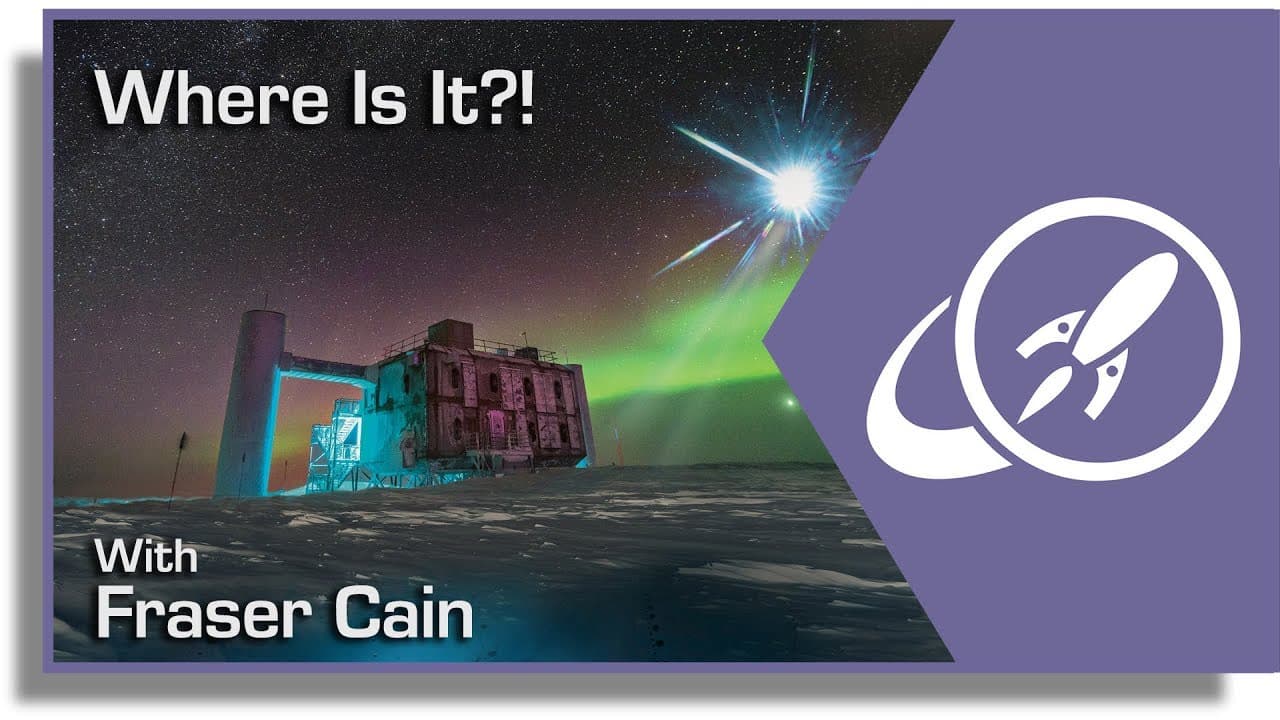
- 🥹 Dark matter remains elusive, but ongoing experiments like IceCube and Alpha Magnetic Spectrometer hold promise for discovery.
Install to Summarize YouTube Videos and Get Transcripts
Explore YouTube Video Summarizer or Get YouTube Transcript Extractor
Questions & Answers
Q: How did astronomers discover the existence of dark matter?
Astronomers, like Fritz Zwicky and Vera Rubin, observed anomalies in galaxy cluster motion and rotations, leading to the realization of missing mass influencing them.
Q: Why is cold dark matter more likely than hot dark matter?
Hot dark matter particles, like neutrinos, move too fast to clump together like observed dark matter structures, suggesting slower-moving particles are the main component.
Q: What are some experiments exploring dark matter particles?
Experiments like SuperCDMS and OSQAR are searching for interactions of cold dark matter particles using sensitive detectors and particle accelerators.
Q: How does gravitational lensing aid in mapping dark matter?
Gravitational lensing techniques allow astronomers to map dark matter distributions like in the Bullet Cluster, where dark matter does not interact with regular matter during collisions.
Summary & Key Takeaways
-
Astronomers have dedicated years to analyzing evidence for dark matter, backed by complex math and observations.
-
Dark matter's reality is supported by gravitational lensing, galaxy motion, and galaxy cluster collisions.
-
Scientists are conducting experiments worldwide to detect cold dark matter particles, utilizing particle accelerators and gravitational lensing.
Read in Other Languages (beta)
Share This Summary 📚
Summarize YouTube Videos and Get Video Transcripts with 1-Click
Try YouTube Summary with ChatGPT & Claude or YouTube Transcript Generator
Explore More Summaries from Fraser Cain 📚




Summarize YouTube Videos and Get Video Transcripts with 1-Click
Try YouTube Summary with ChatGPT & Claude or YouTube Transcript Generator